Problem
Noise is one of the most common complaints to 311. Residents report it and rarely hear back. You get a ticket number, and you never learn if anyone came or if it ended.
About 610,000 noise complaints reach 311 every year. You report it, 311 says "Received," and then silence. Heard plugs into 311 and adds what comes after: the live journey, a plain outcome, and one question. Is it quiet now?
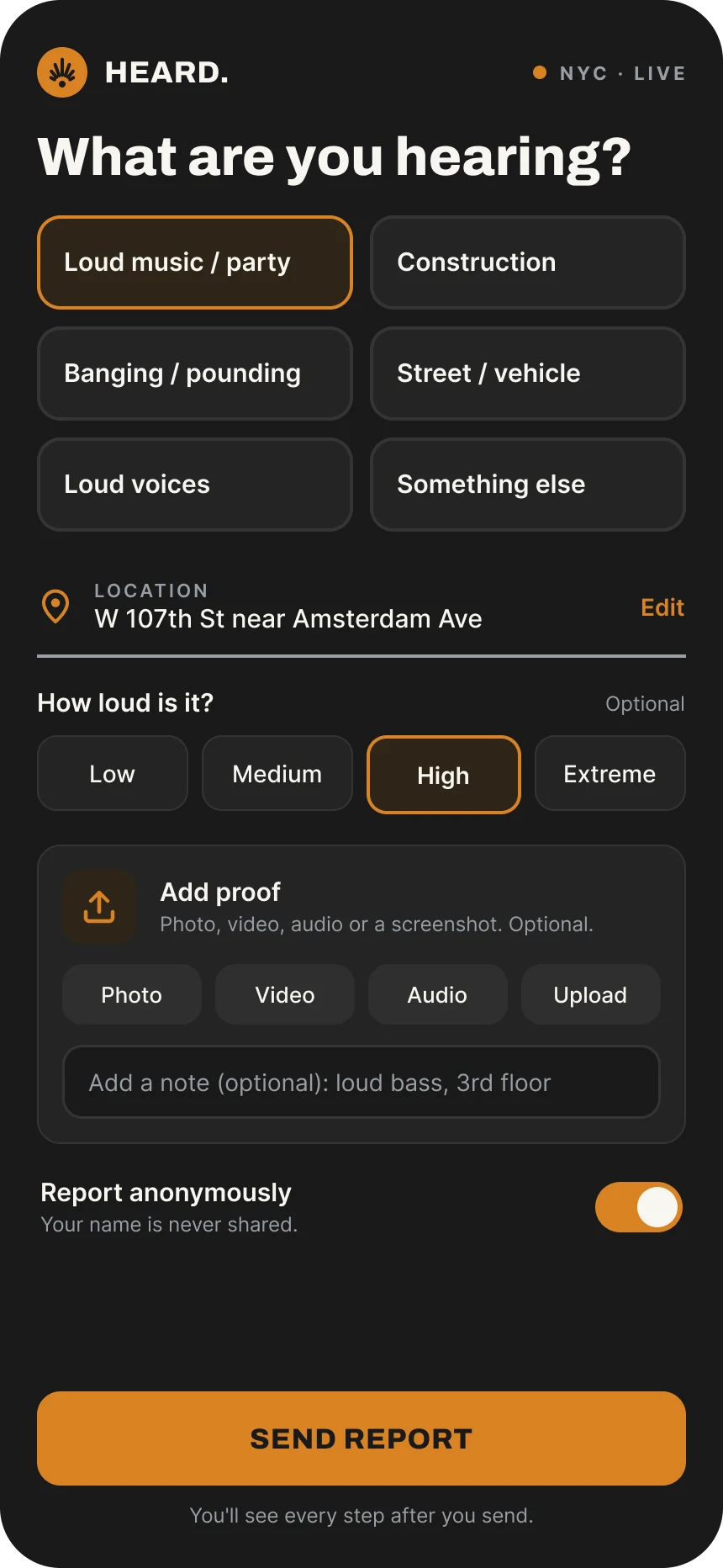
This is a working HTML build of both sides of Heard. The phone and the console share one report, so what you do on one shows up on the other. All the data is example data, and nothing leaves your browser.
On a phone, the city's side plays itself. The dispatcher console is a desktop tool, so open it on a bigger screen to run the whole loop yourself.
Noise is one of the most common complaints to 311. Residents report it and rarely hear back. You get a ticket number, and you never learn if anyone came or if it ended.
311 takes the report
Received.
Heard adds the ending
Heard.
Heard doesn't ask New York to rebuild anything. 311 stays the system of record, and the complaint, the request number and the agencies don't change. Heard is a closure layer on top: it gives the report a context, a route and a handoff, and it brings the outcome back to the person who asked.
 01 · Report
Pick the kind of noise and how loud it is. Add a photo, video or audio clip if you want. Reports are anonymous by default.
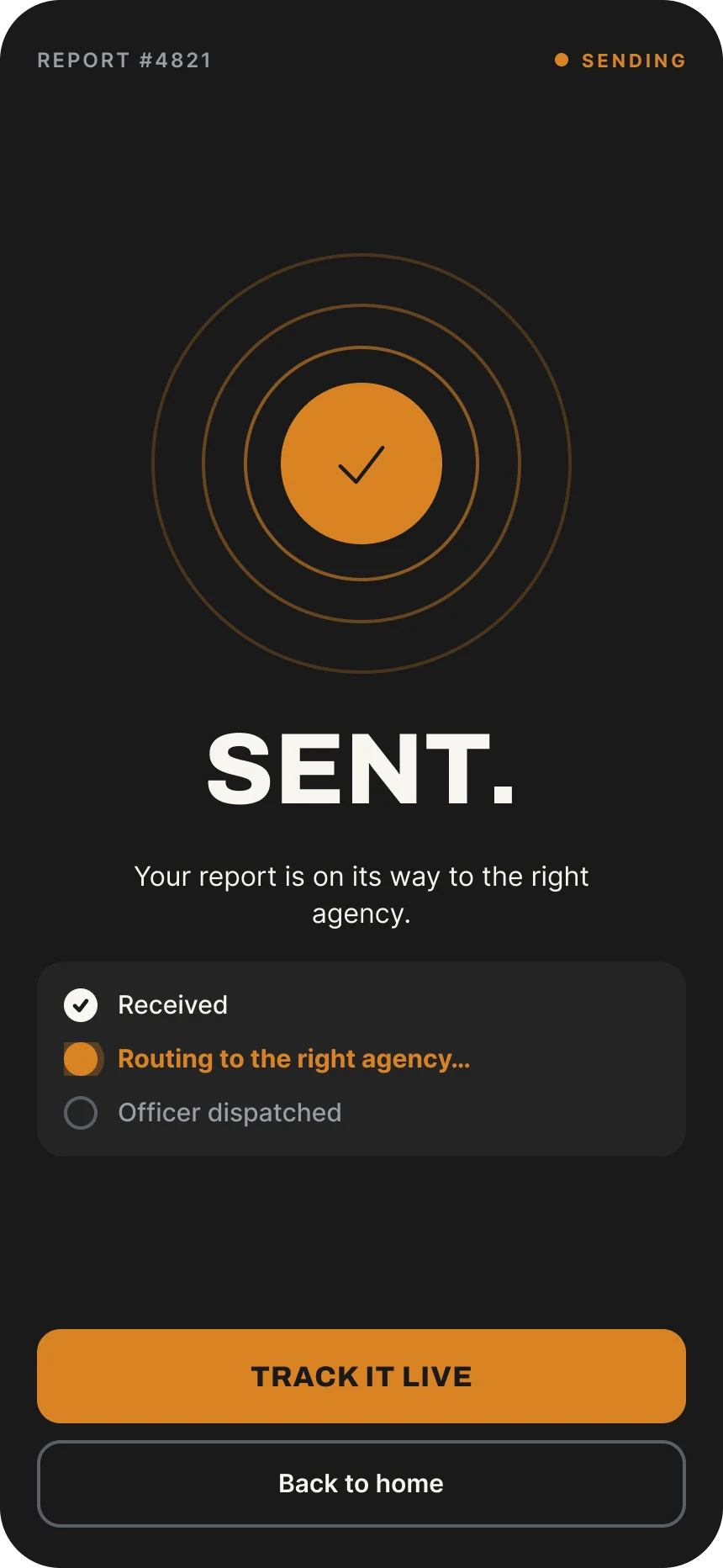
01 · Sent
"Sent." comes with the next steps: received, routing to the right agency, officer dispatched. The main action is tracking it live.
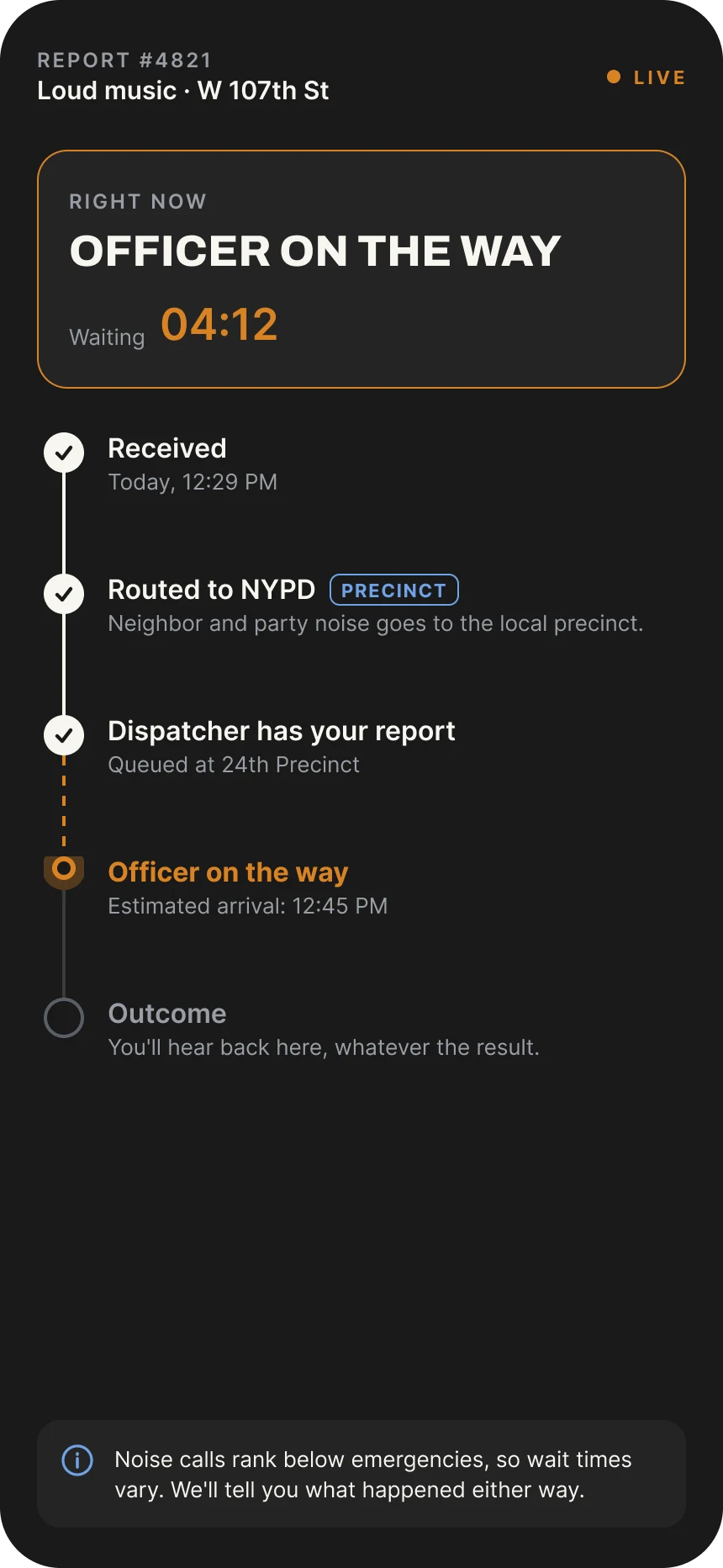
02 · Live tracker
Received, routed to NYPD or DEP, officer on the way. Nobody has to guess who to call or call 311 to ask. Noise ranks below emergencies, so waits vary, and the app says so.
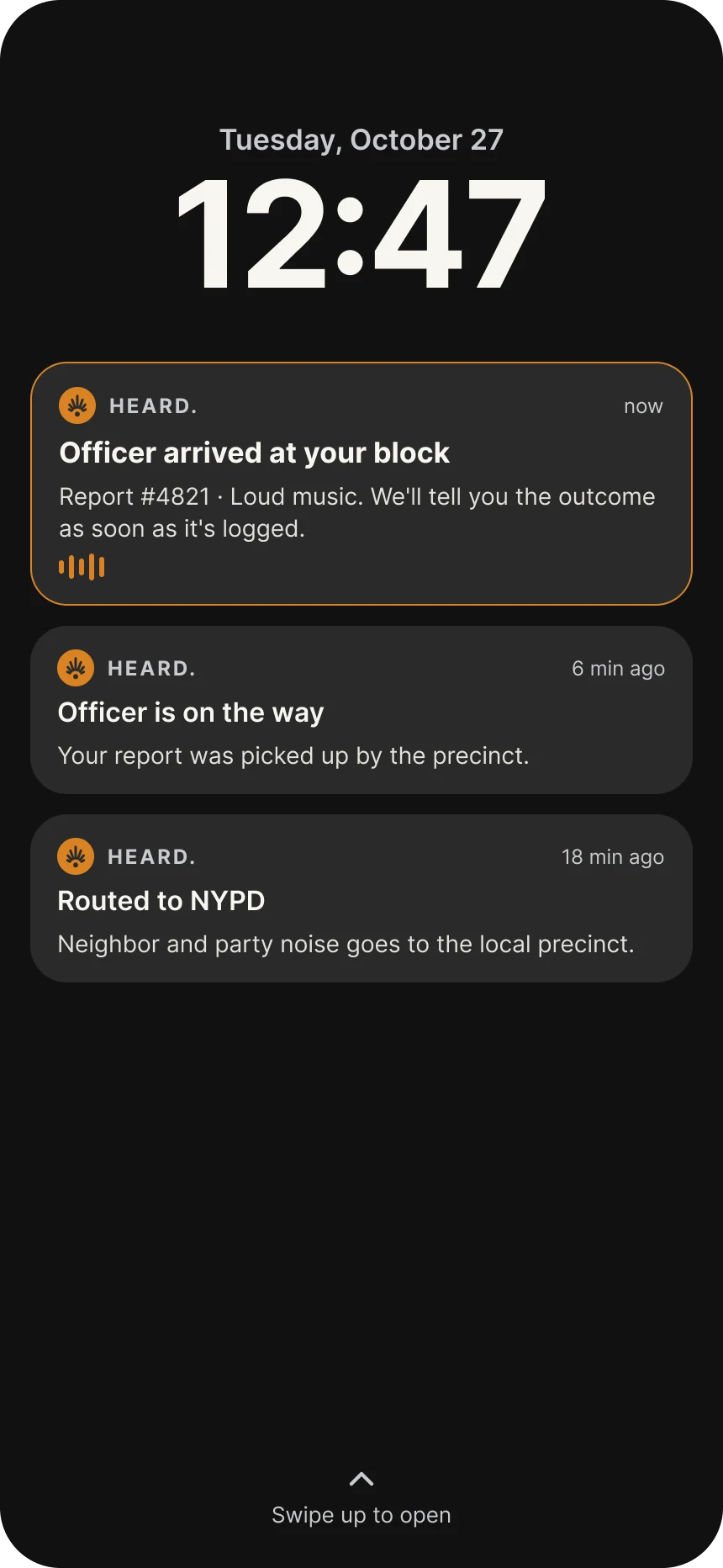
03 · Arrival
One notification, when an officer or inspector reaches the address. Plain wording, no codes, in your own language. You stop watching the window and the phone does the waiting.
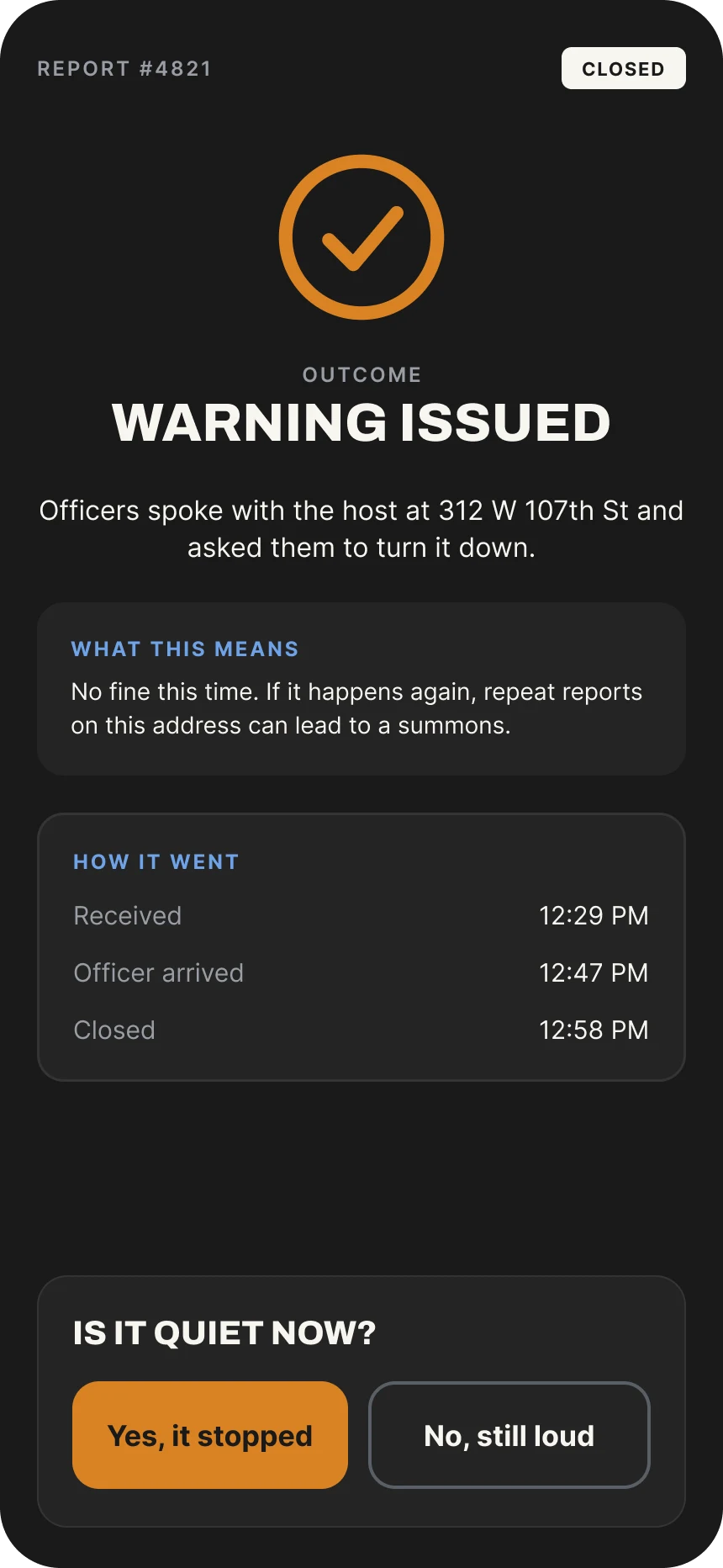
04 · Outcome
What happened, what it means and how it went, with timestamps. Then "Is it quiet now?" One tap closes the loop, or tells the city it's still loud.
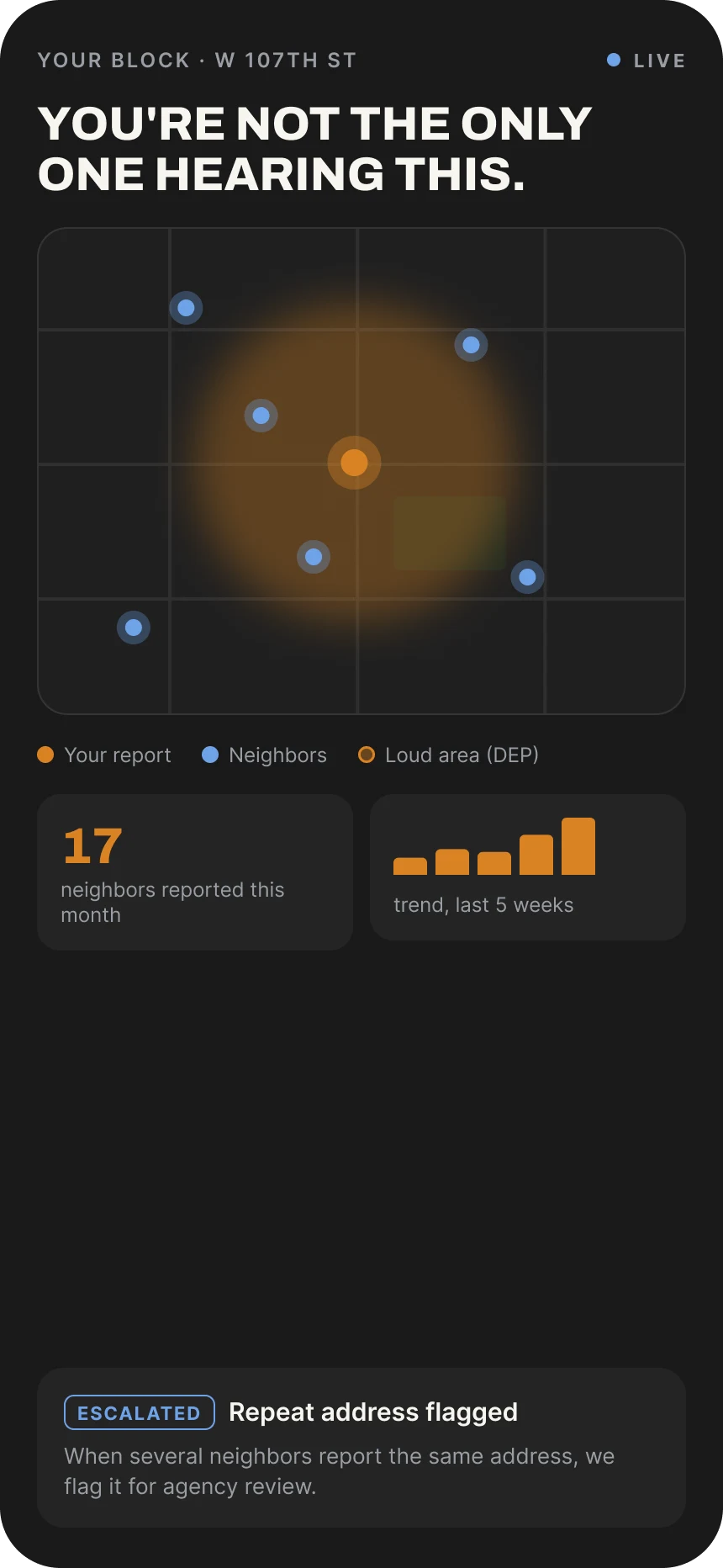
04 · Not the only one
Repeat reports on one block are flagged for agency review, so one tired complaint turns into evidence.
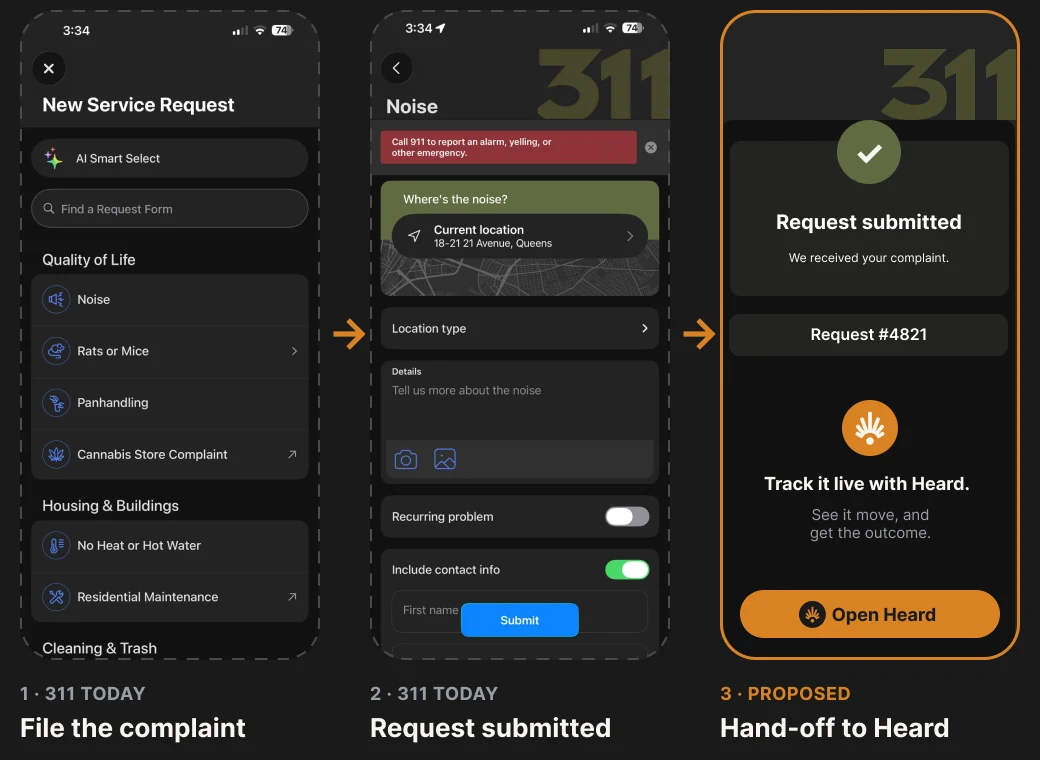
You can still file the way you do today. A one-tap hand-off from the 311 confirmation screen carries the same request number into Heard. The first two screens below are the real 311 app. The third is my proposed addition, a concept for the pilot.
A resident only hears back if answering is easy for the people on shift. The dispatcher sees repeat reports, a likely source from public DEP noise data, and the suggested agency. The officer gets a text ticket on the phone they already carry, with no new app, and one reply code closes the loop and tells the resident.
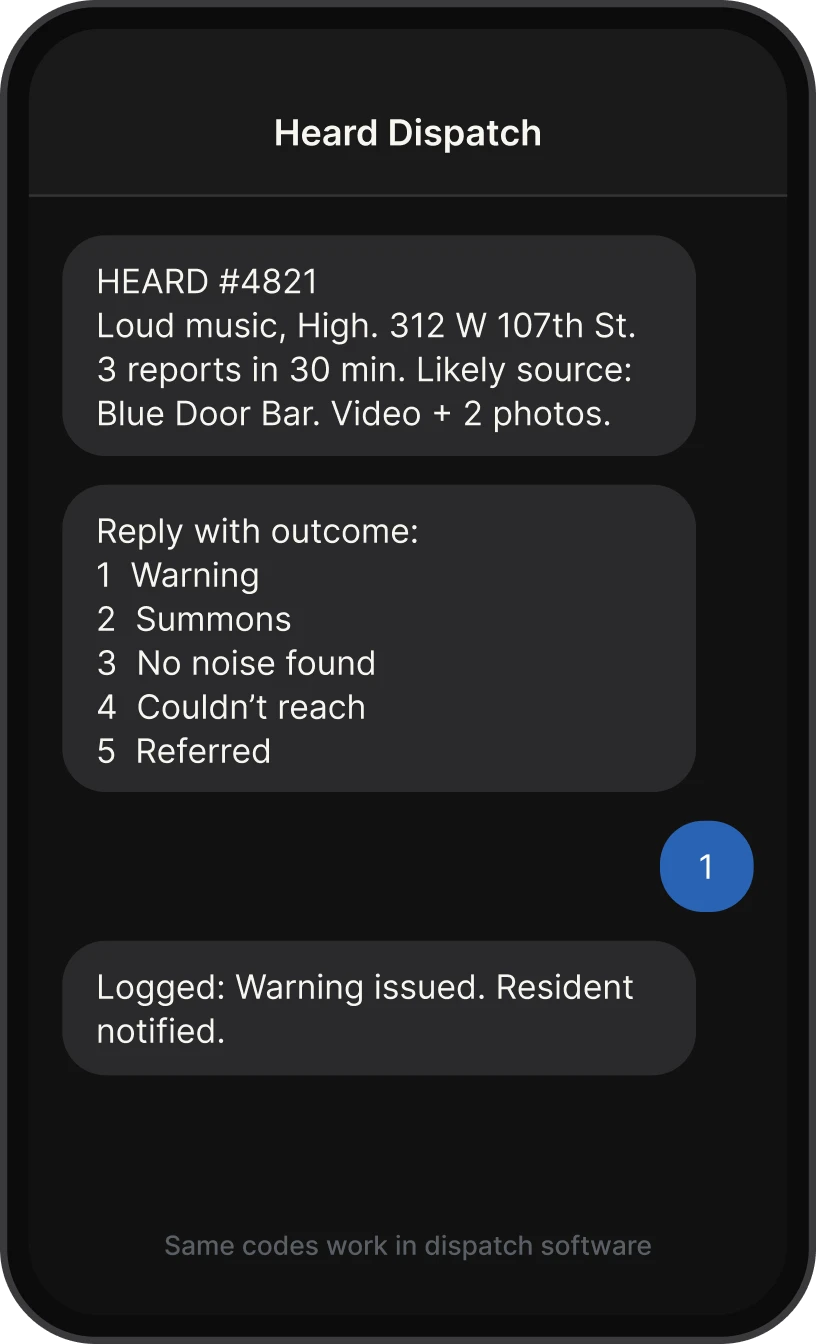
Same codes as dispatch software. Design target: under 10 seconds of officer effort. Agency integration is proposed, not built.
The missing step: the outcome comes back. The agency replies with one code, it's written to the same 311 ticket, and the resident is asked: is it quiet now?
The outcome reaches the resident in their own language. English, Spanish, Chinese and Arabic at launch, and Arabic reads right to left.
Heard. Officers arrived at 9:42 PM. Is it quiet now?
Yes, it's quiet
One mark, many colors, many angles. The animation shows the logic: loud is an exclamation, quiet is a period. Keep one dot of clear space on every side, 32 px or 12 mm at minimum, and don't recolor, rotate or add effects.
#1A1A1AThe calm. Backgrounds and text on light.#F7F5F0Paper and light. Text on dark, the logo's rays.#D98324The sound. Anything that must be heard.#9A9EA5The quiet. Secondary text and resolved states.#FFD100The city. Only where Heard plugs into 311.You reported it. Then nothing.
HEARD.
Received · Routed to the right agency.
Four posters, one line each, and a QR code on every one. Scan it on the platform and you land on this page, with the prototype ready to use.
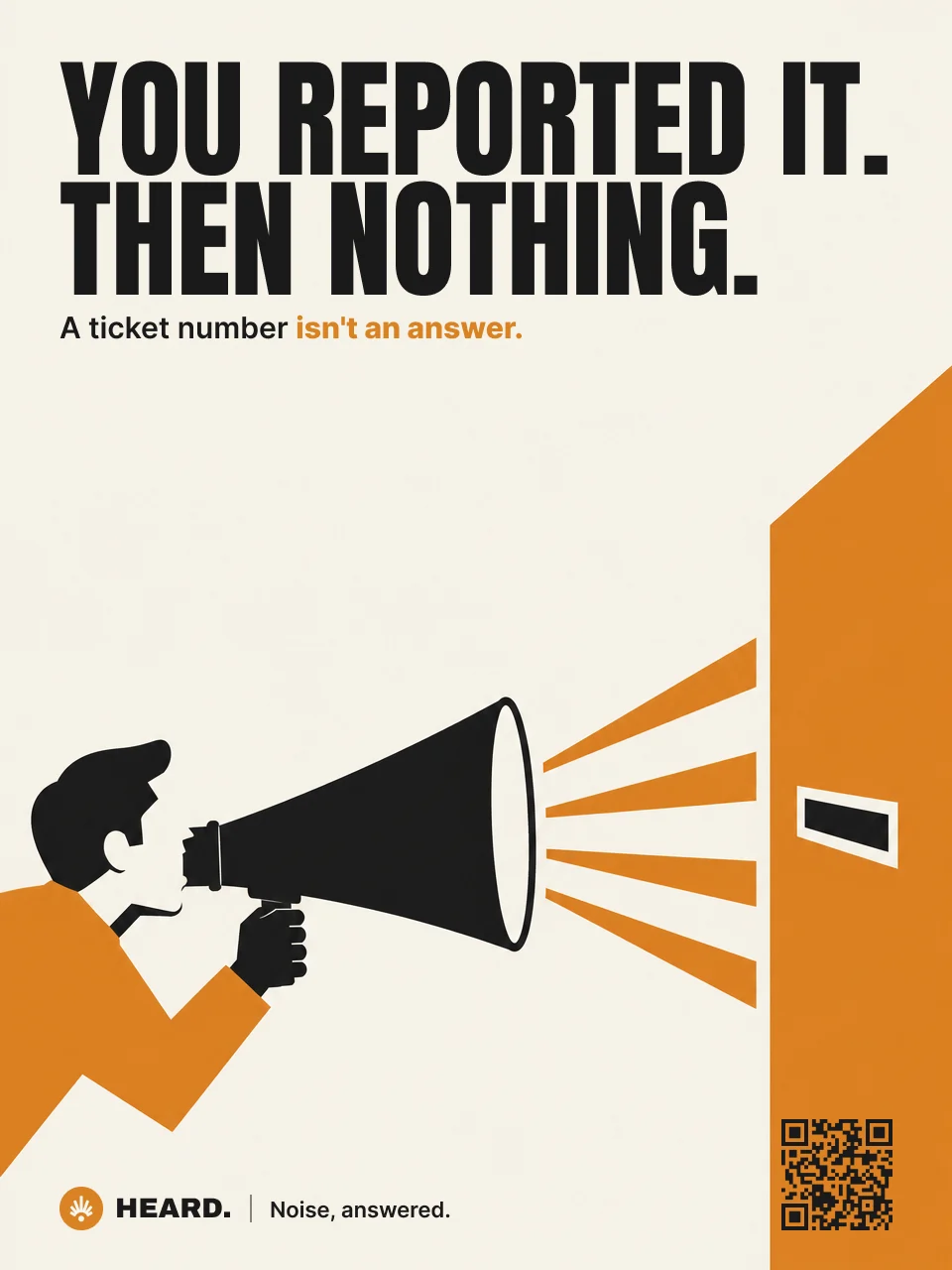
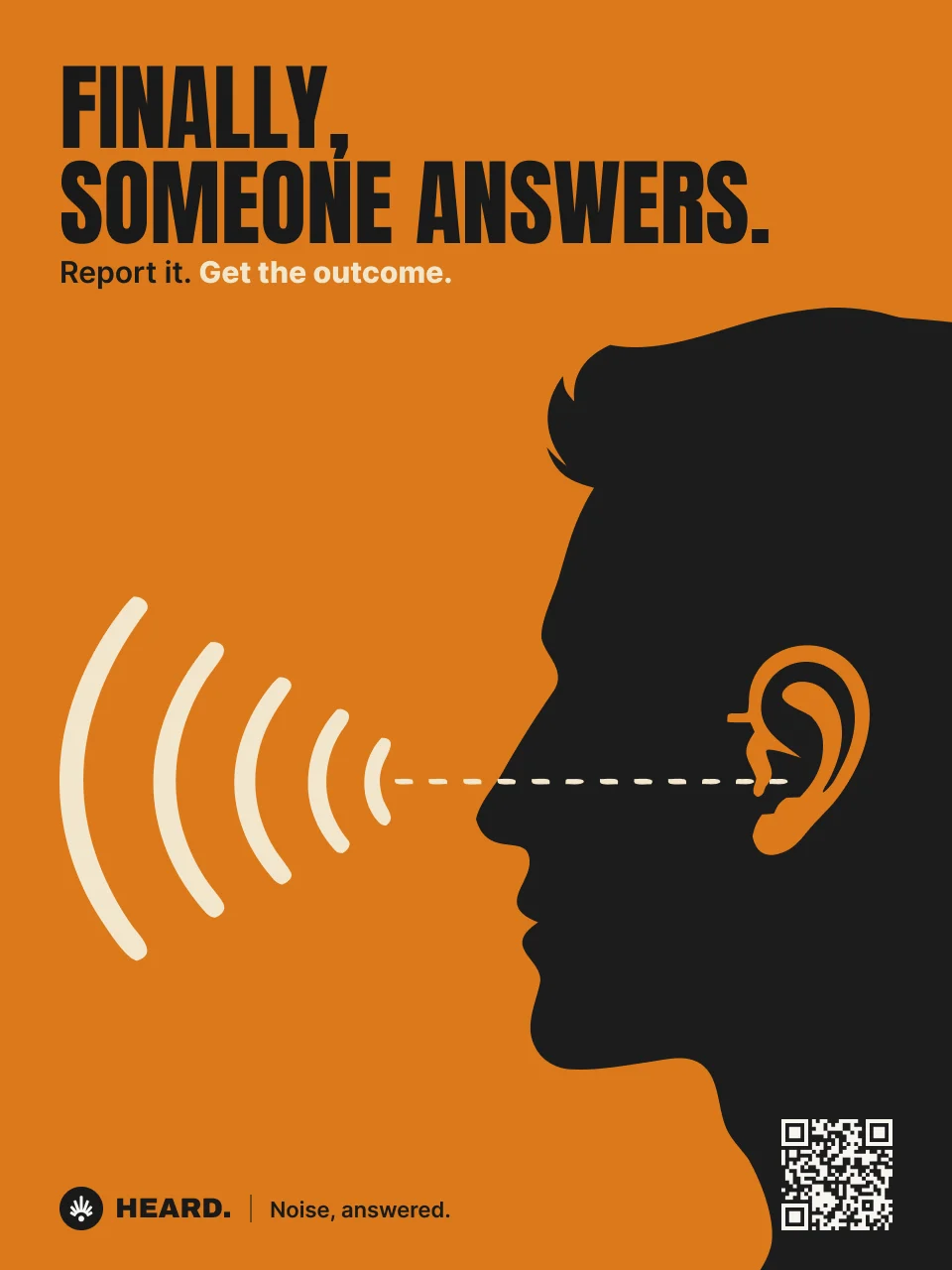
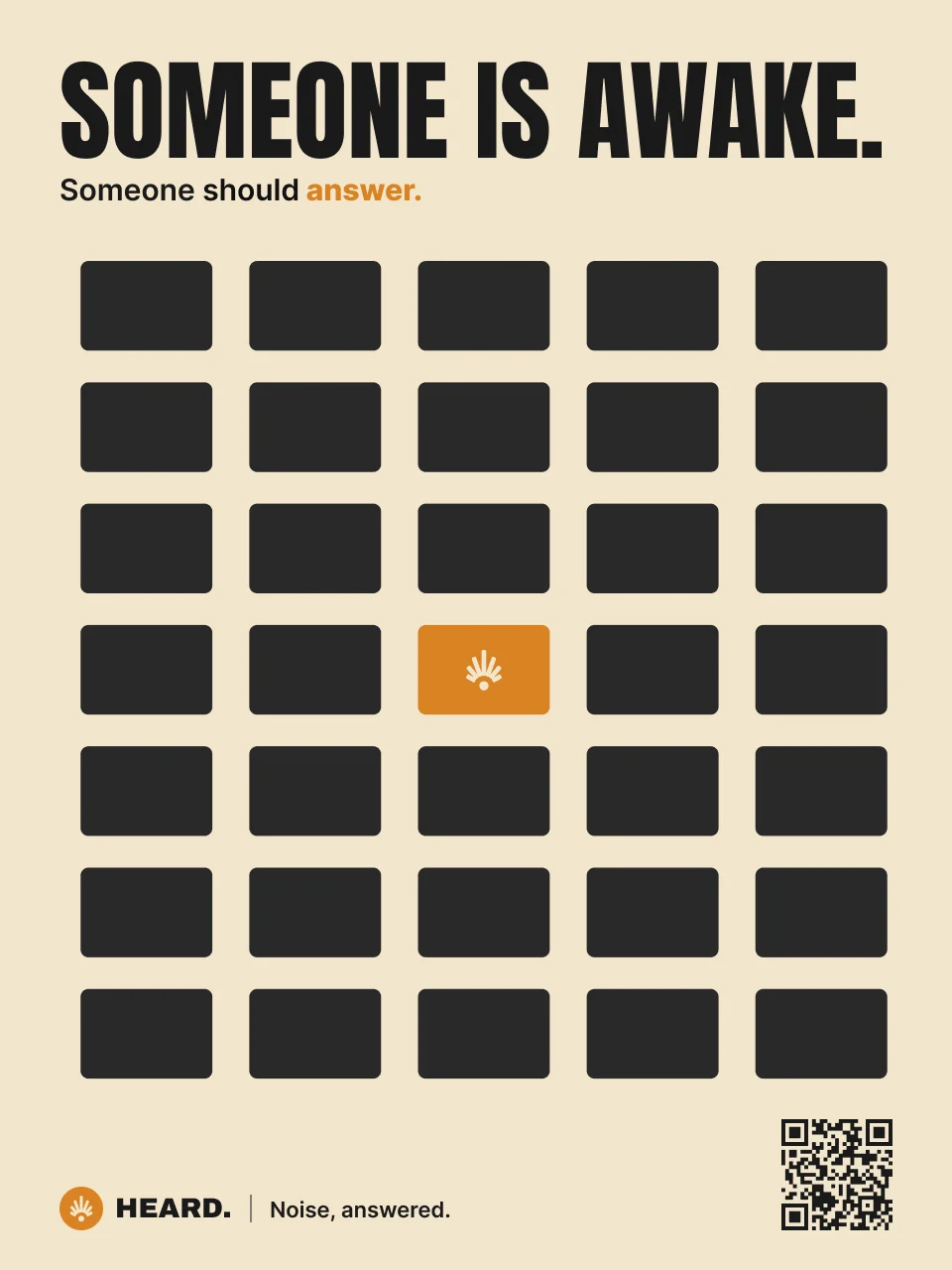
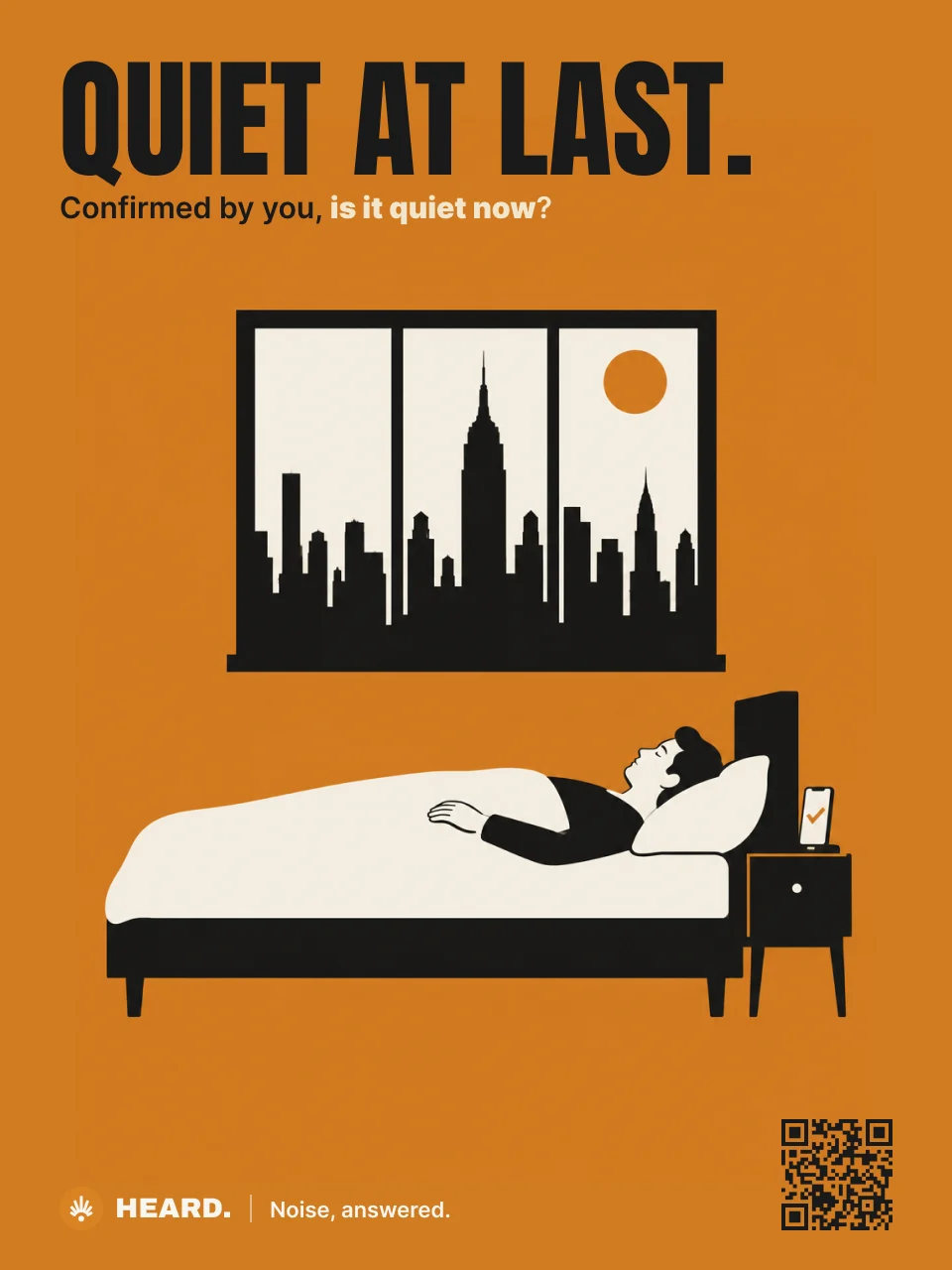
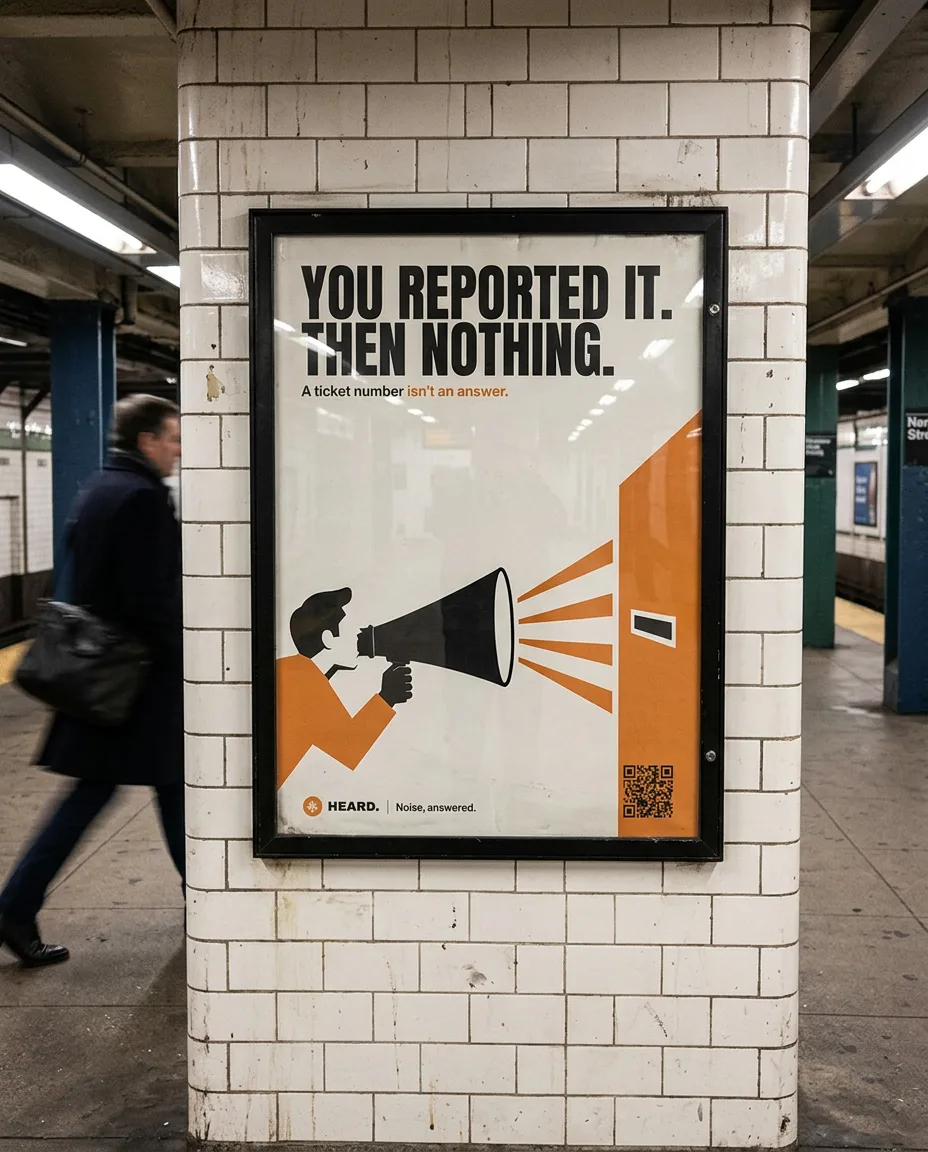
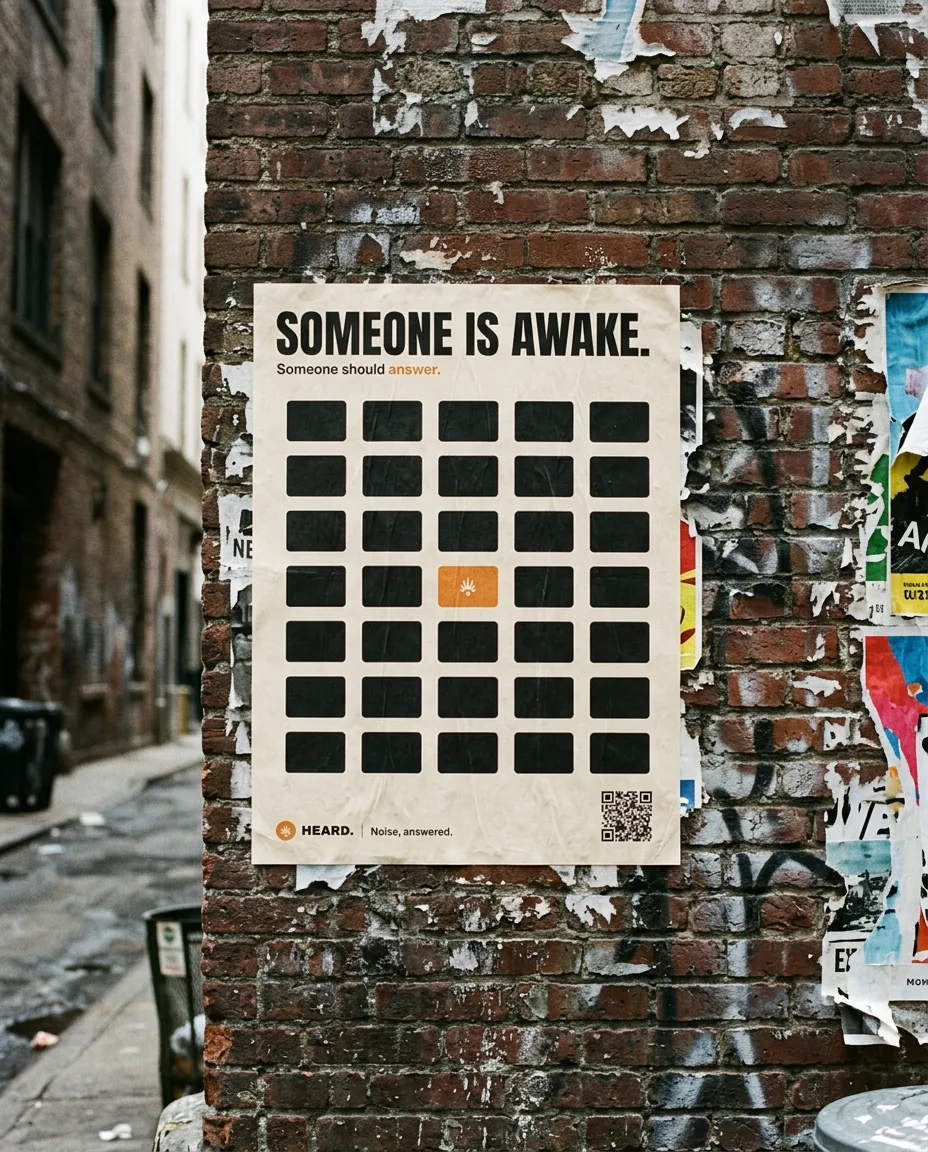
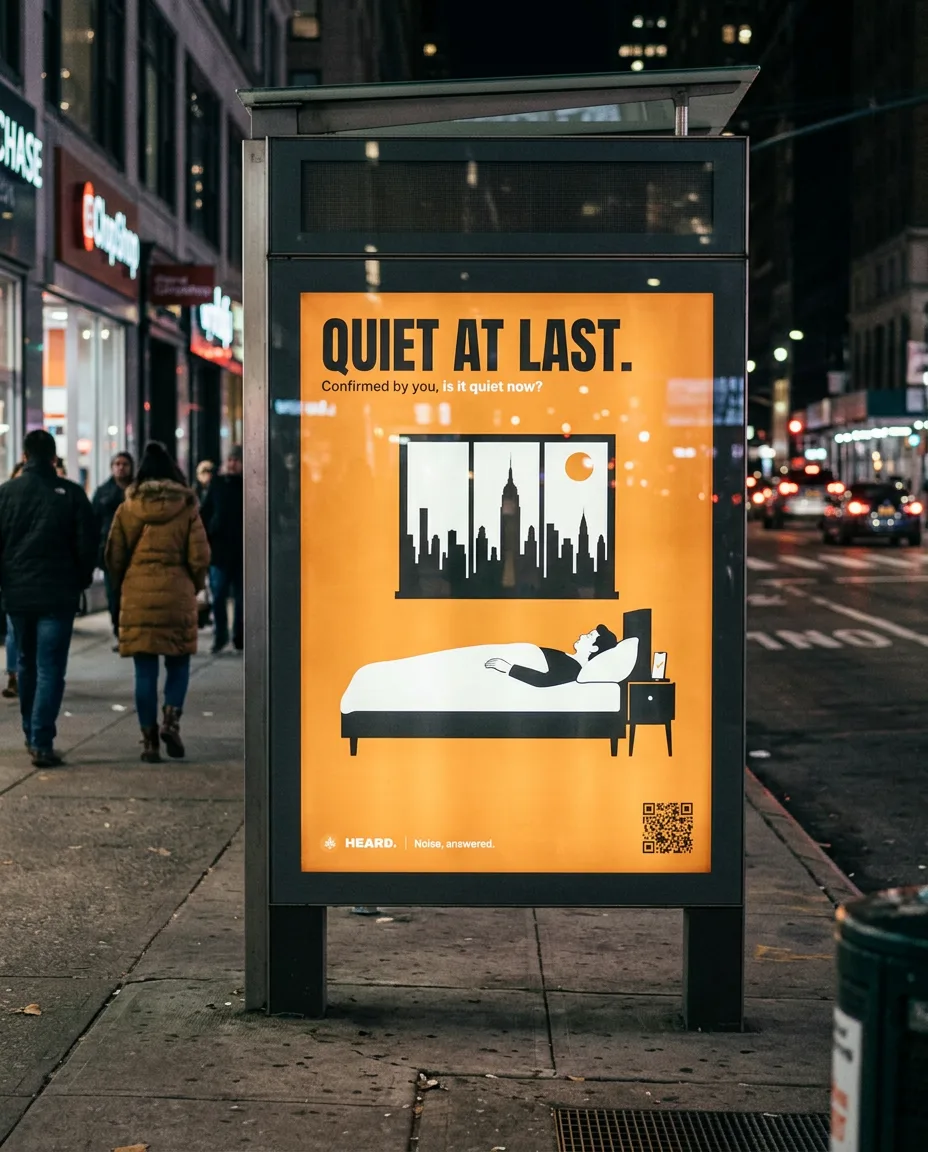
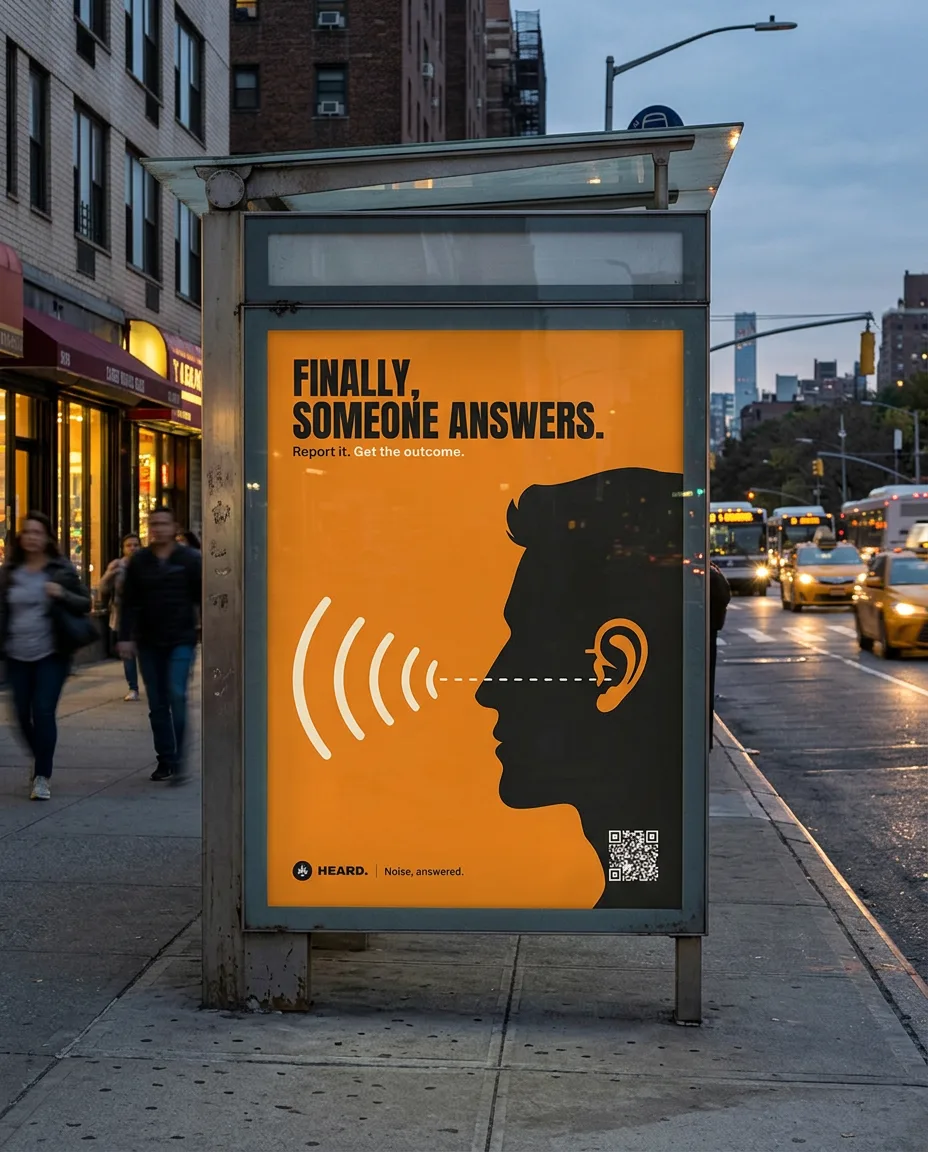
Placement mockups, made with AI image tools (Magnific). These posters haven't been installed in the city.
Heard app and SMS intake near the 24th Precinct. It reads open 311 data and hands off by SMS. No city system changes needed.
Officers reply with one code. Residents see the outcome and answer: is it quiet now?
Dispatchers get the likely-source lead and repeat-address flags. Review results with the city.
Complaints that end with a visible outcome.
Median time from report to outcome.
"Is it quiet now?" answered yes.
Repeat complaints should fall.
Would you report again?
Design target: under 10 seconds.
These are the measures I'd use. The pilot hasn't run, so there are no results yet.
Your name is never shared with the neighbor or the public.
The likely source helps the officer. It is never shown as proof.
Outcomes tracked by neighborhood to spot uneven service.
English, Spanish, Chinese and Arabic at launch.
SMS works on any phone. Large type, clear labels.
Noise ranks below emergencies, so waits vary. The app says so.
Every noise complaint gets an ending.
A concept made for the Civic by Design challenge. Agency integration is proposed, not built. Names, addresses, venues, people and numbers in the screens and the prototype are example data. The 610,000 figure comes from the challenge brief. The 311 app screens are screenshots of the real NYC311 app. 311, NYC311, NYPD and DEP belong to the City of New York, which isn't affiliated with this project and hasn't endorsed it.