Problem
Pickup football runs on group chats and goodwill. Who's actually coming, who plays with whom, how long each match lasts, and who sits out are all argued on the spot.
Reserve a spot, balance the teams, pick a format that fits the pitch time, and run a clock nobody argues with. A complex system, kept simple for the person holding the phone at the pitch.
Pickup football runs on group chats and goodwill. Who's actually coming, who plays with whom, how long each match lasts, and who sits out are all argued on the spot.
Every weekly pickup game has the same problems. I play in one every Friday, so the first ideas came from my own games: "it's usually 10 minutes or 3 goals," and "a real keeper gives his team a big edge."
FairFive isn't a league platform or a betting app. The motto that guided every screen: complex system, simple experience. One main action per screen.
Primary: the organiser of a weekly pickup game. They book the pitch, collect the names, and get blamed when the teams are unfair. Usually 10 to 25 players, 5 or 6-a-side with a keeper, and a 1 to 2 hour booking. Secondary: the regular player, who wants to know they're in, see the teams and trust the clock, without joining another social network.
The context: friends' groups of 20 to 40 people, a strong Egyptian and Arab community, first launched in New York City and built to work anywhere. The personas come from the real people and situations that shaped the features, not from a formal survey.

30, runs a Friday 5-a-side for a crew of about 30 and books the pitch for 2 hours. Chases confirmations, loses players last minute, and gets accused of stacking teams.
Built for them: one link to share, a waitlist that fills itself, private tiers, fair teams in seconds, a plan that fits the booking, early teams.

Strong in goal, average outfield. Based on my own case: "I'm a flying keeper, but my hand hurts, so I play outfield now."
Built for them: separate in-goal and outfield levels, In goal or Outfield chosen each game, and No keeper, take turns.

Doesn't organise. Wants to tap a link, see You're in, know the kick-off and the place, and see his team.
Built for them: Have a code?, join and waitlist alerts, the teams and plan, the live table, Can't make it.

Helps run a 40-person group. Isn't always hosting, but helps when she plays.
Built for them: Groups, invites, admins who become co-hosts when they're in the game, Remove from game.
Turns up at the pitch on the night.
Built for them: added by name at check-in with a default tier, and kept as a guest on the teams.
It started as Pitchside, a tournament organiser. Each step below came from a real game, a tester or a host.
What never changed: fairness first, the organiser is whoever made the game, players never see their own tier, and there's no chat, feed, betting, penalties or bans.
Round-robin pairing, re-pairing semi-finals across tournaments, streak limits, extra time against penalties, stoppage time. It became a rules engine with 230 unit tests, run with 3, 4 and 5 teams, 15 to 25 players and 90 or 120 minute bookings.
The sum of skill tiers per team, with subs counted at the squad average. "Good balance" means at most 0.4 tiers apart per place on the pitch. The app never shows a fake accuracy percentage.
No-shows, late arrivals, games never closed, too few players, overlapping games, people with the same name. All written down and decided on 9 Nov.
How people actually talk about a game and a tournament, so the Arabic reads naturally, not like a translation. Changa and IBM Plex Sans Arabic, with Barlow Condensed for timers.
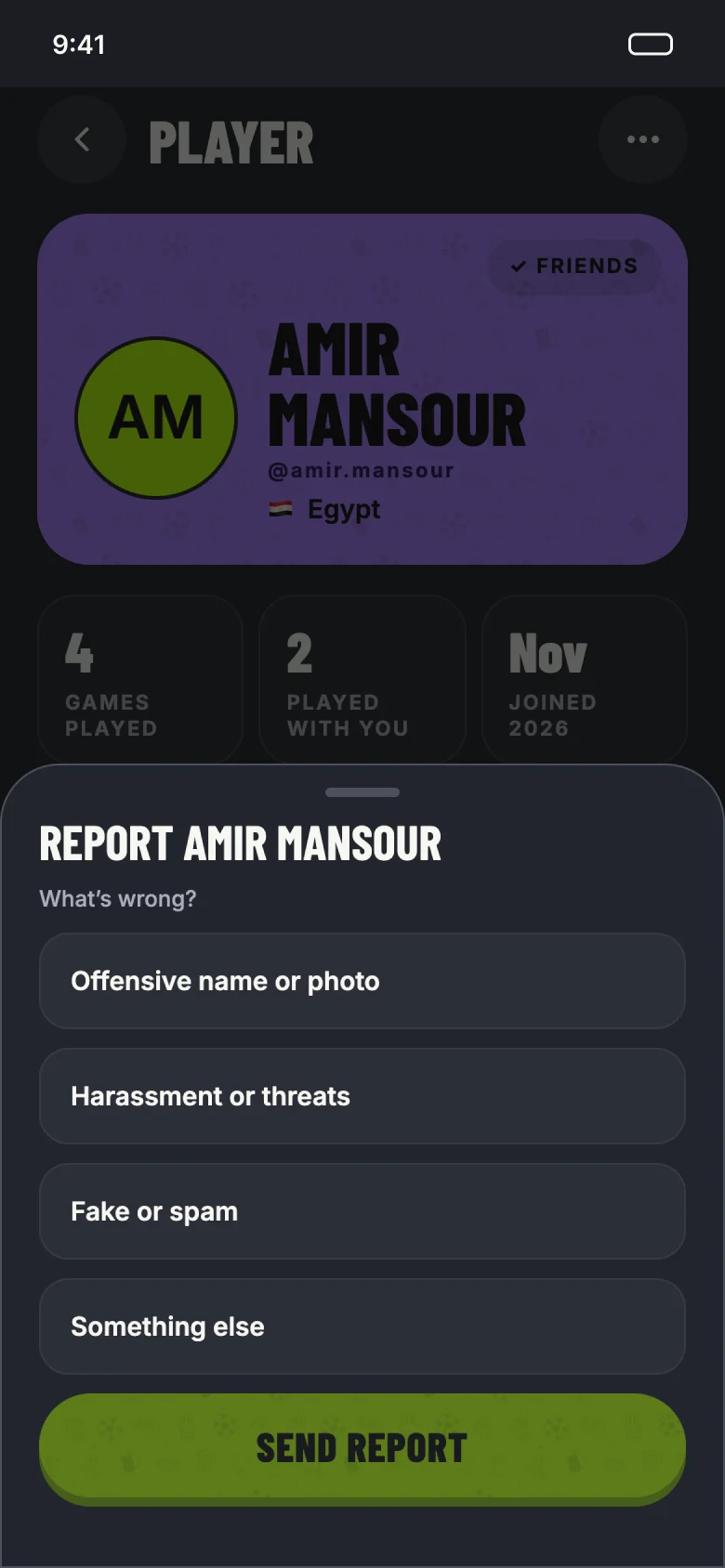
Sign in with Apple, account deletion, Report and Block, Live Activities for the Lock Screen clock, and how TestFlight updates reach testers.
NYC Open Data for every park with an active soccer field, plus indoor centres checked by hand. FairFive points to the booking, it doesn't sell it.
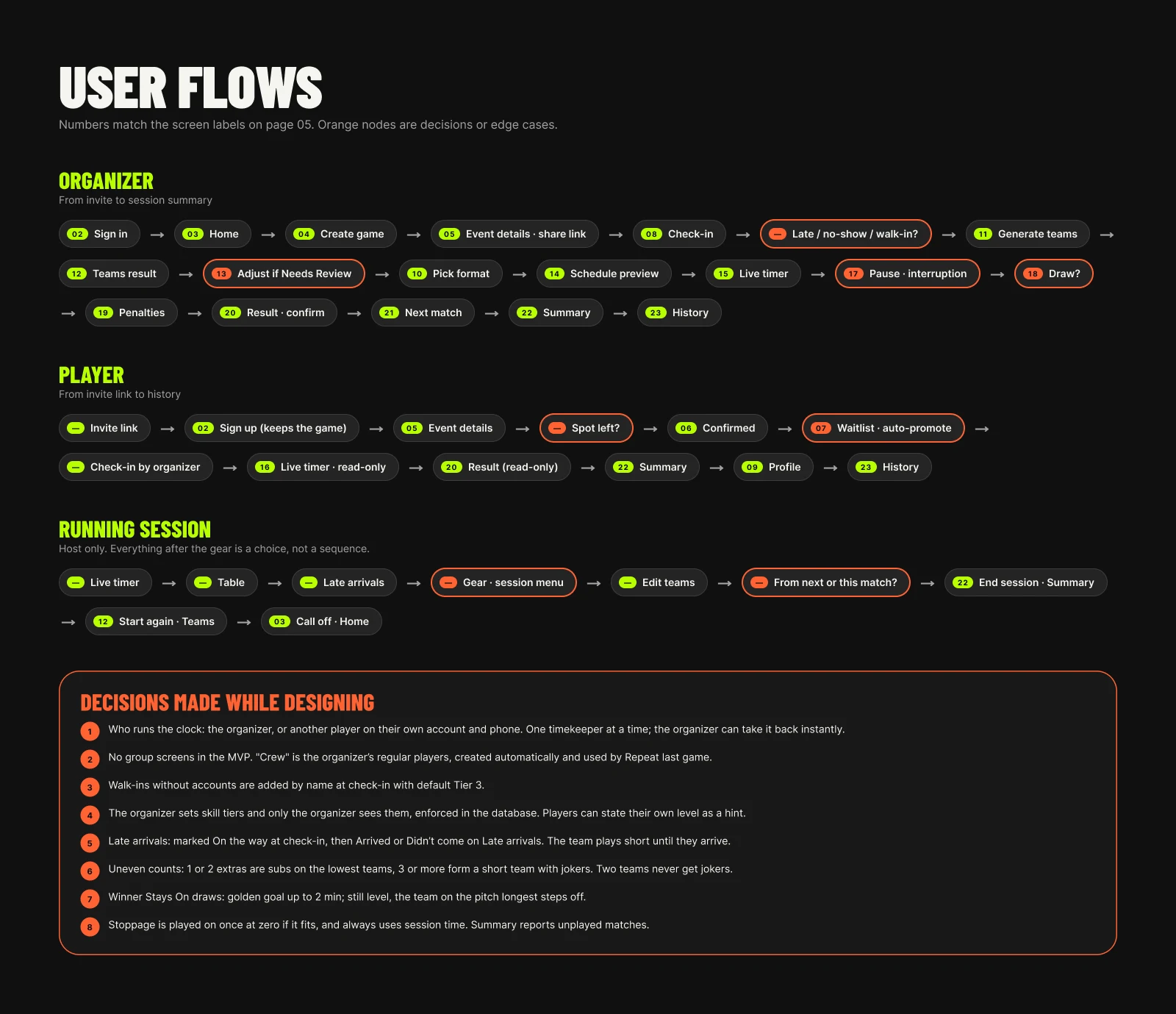
Pick a flow, then scroll through it. Each flow runs from first tap to the end of that job, including the empty and edge-case screens.
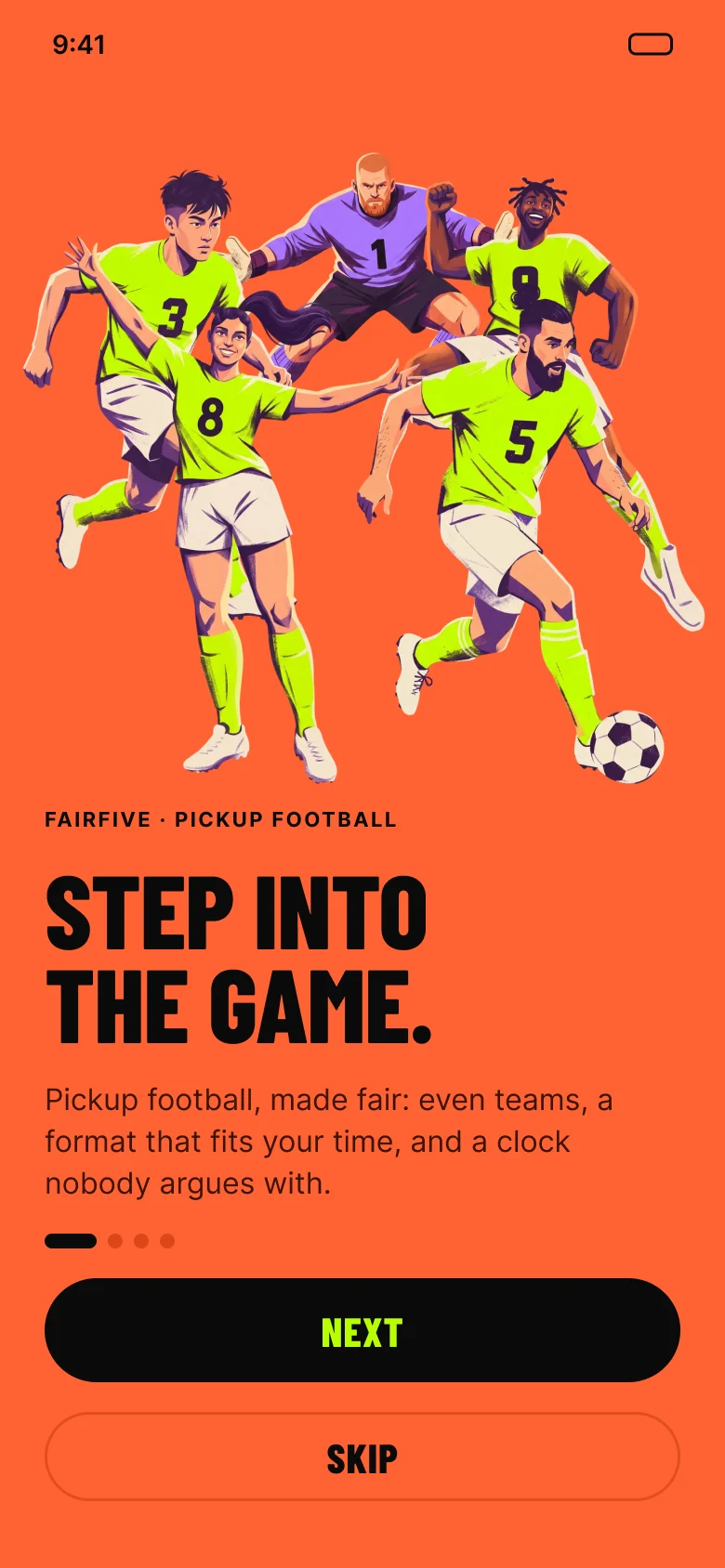
Four pages before sign-in, each with its own animated graphic, then sign in with Apple or an email code.
01Step into the game
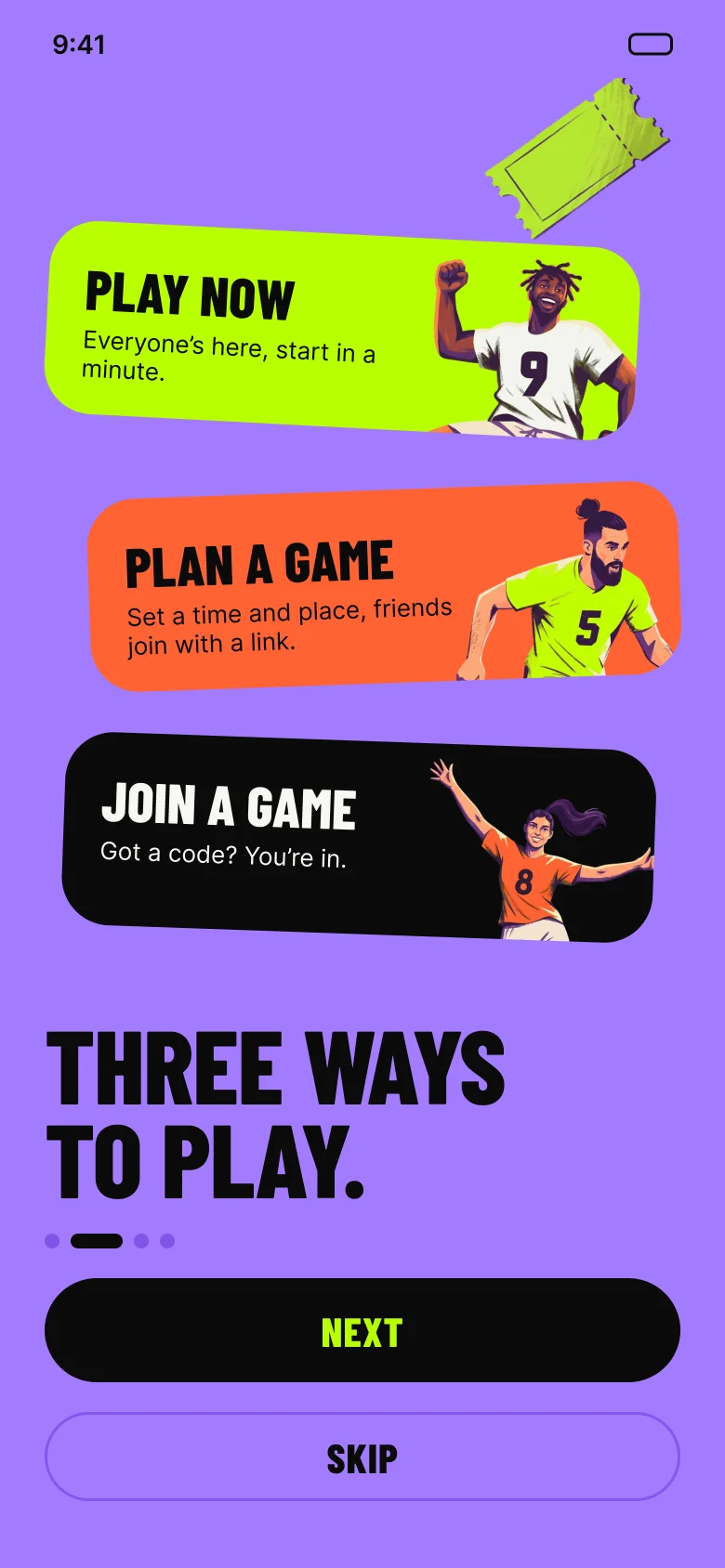
02Three ways to play
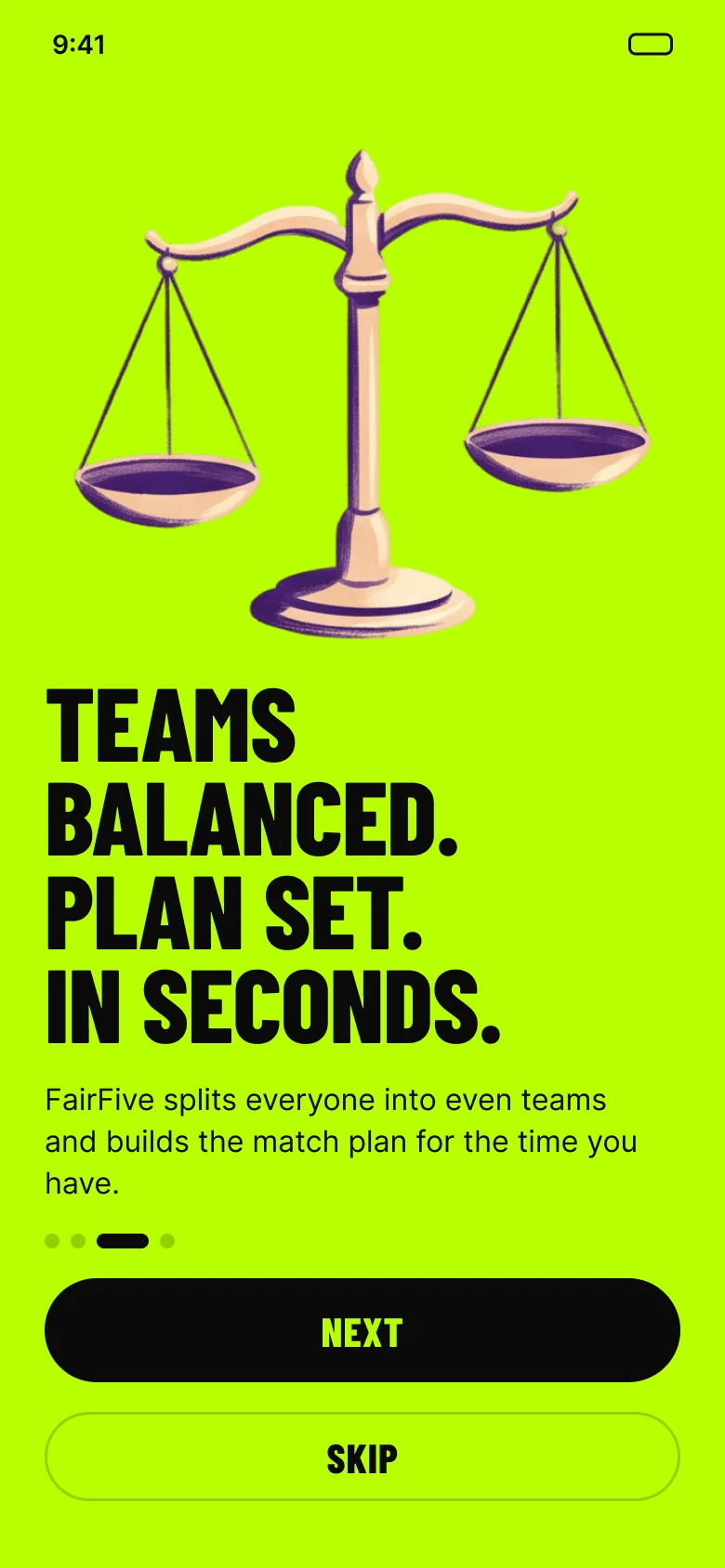
03Teams balanced
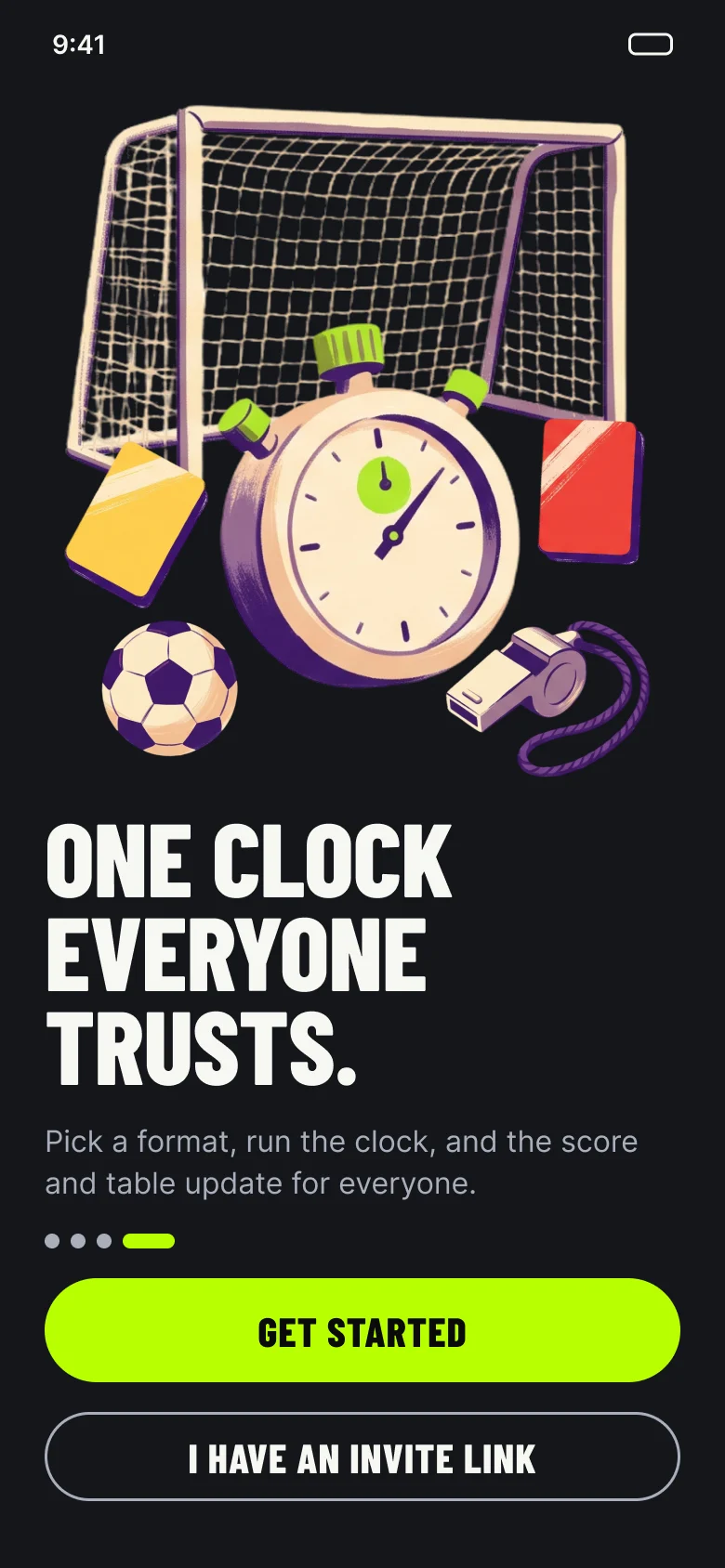
04One clock
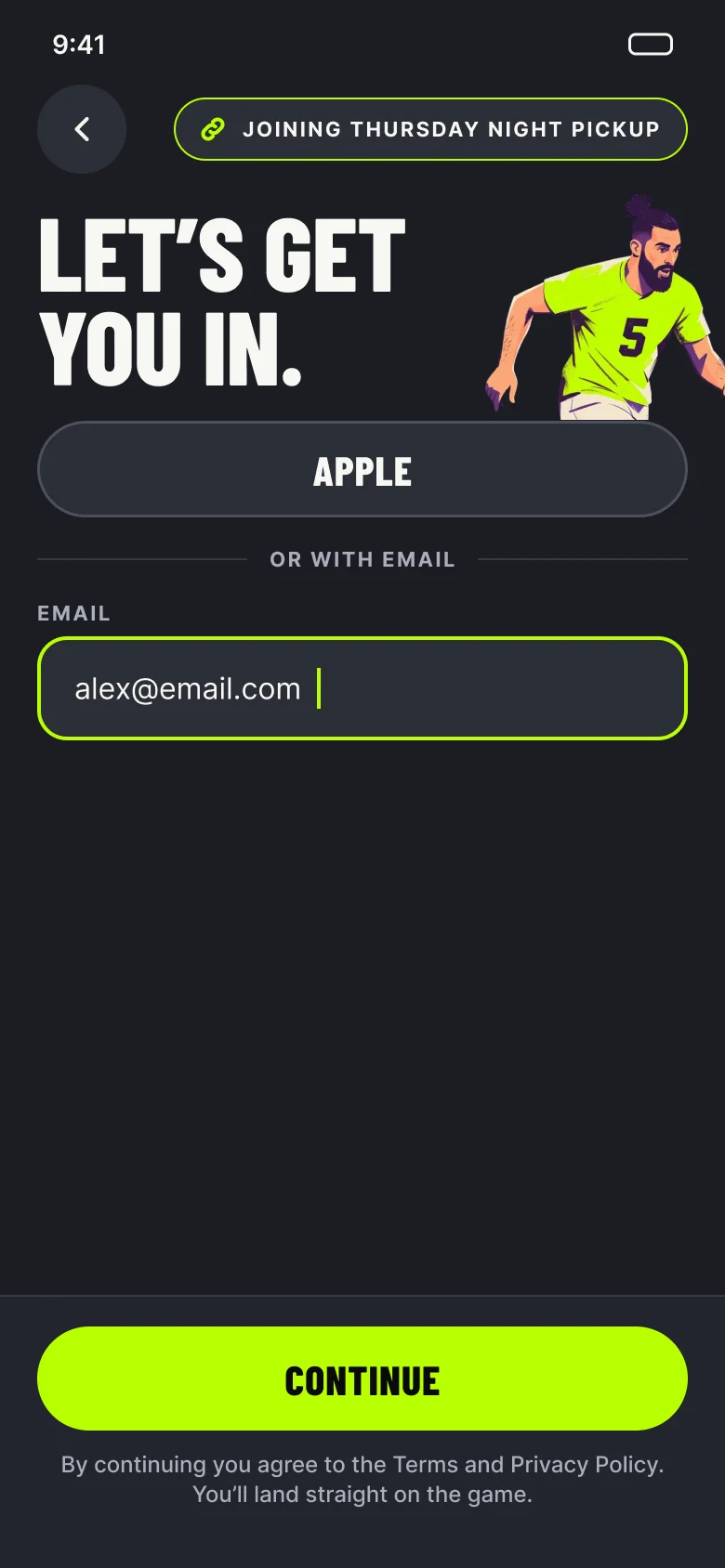
05Sign in
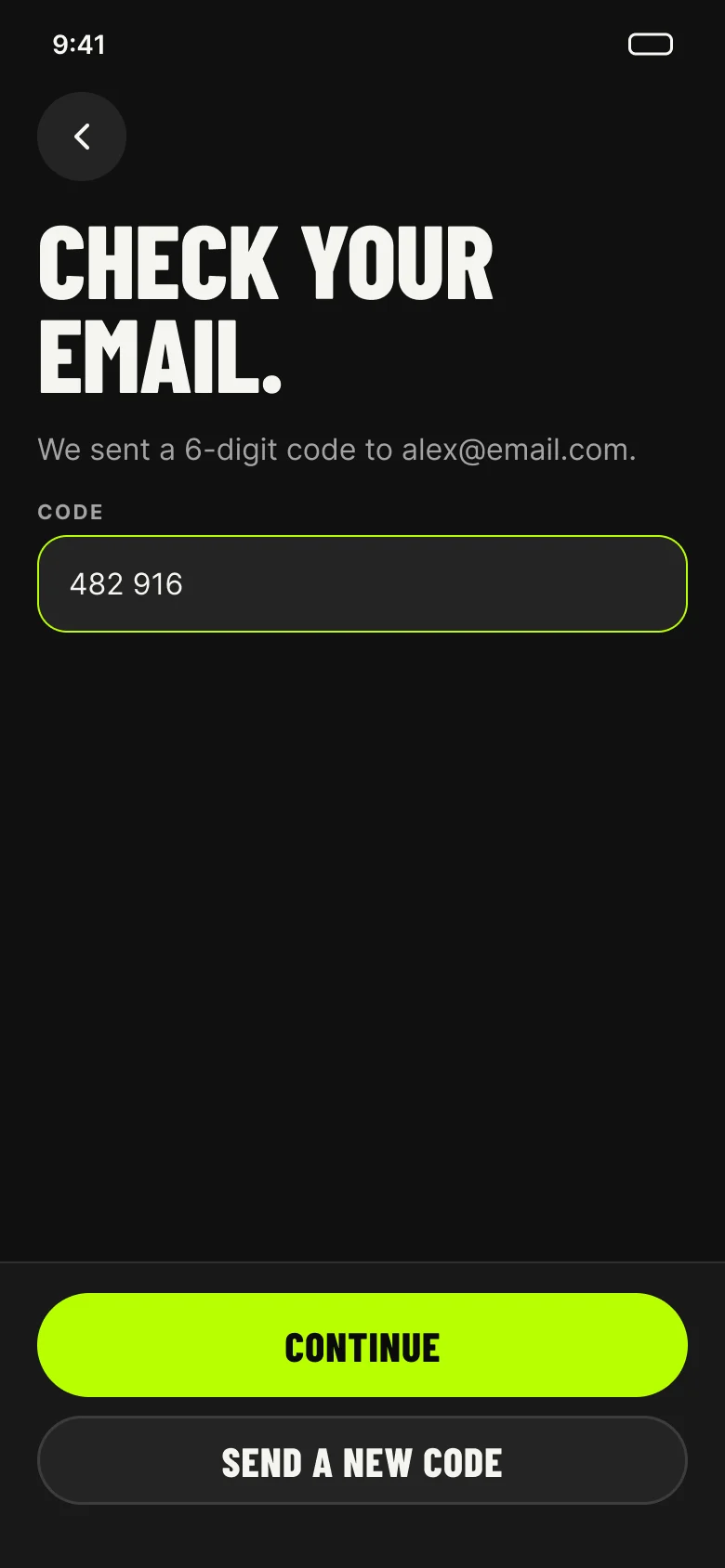
06Verify email code
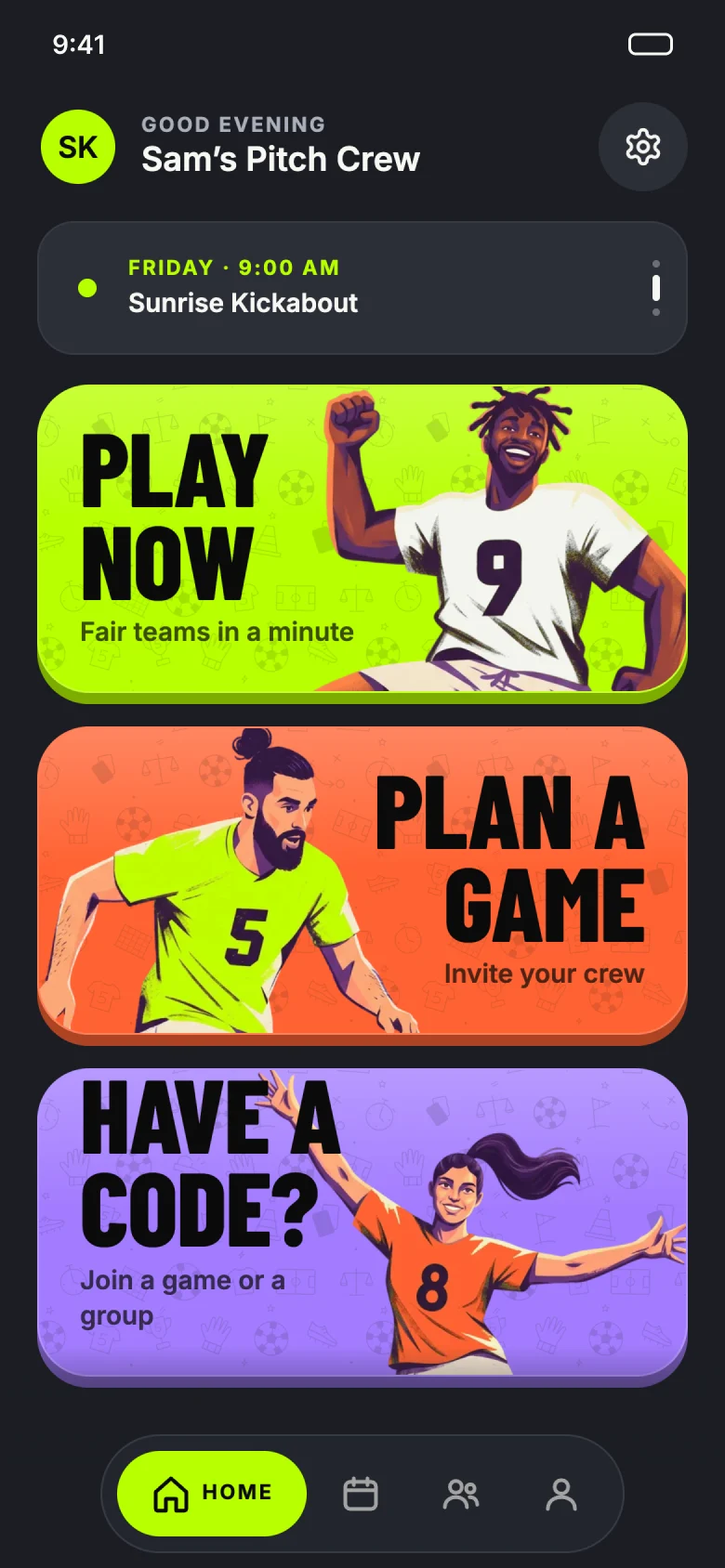
Three big ways in: Play now, Plan a game, Have a code. Up next slides through your coming games; the big game card lives on the Games tab.
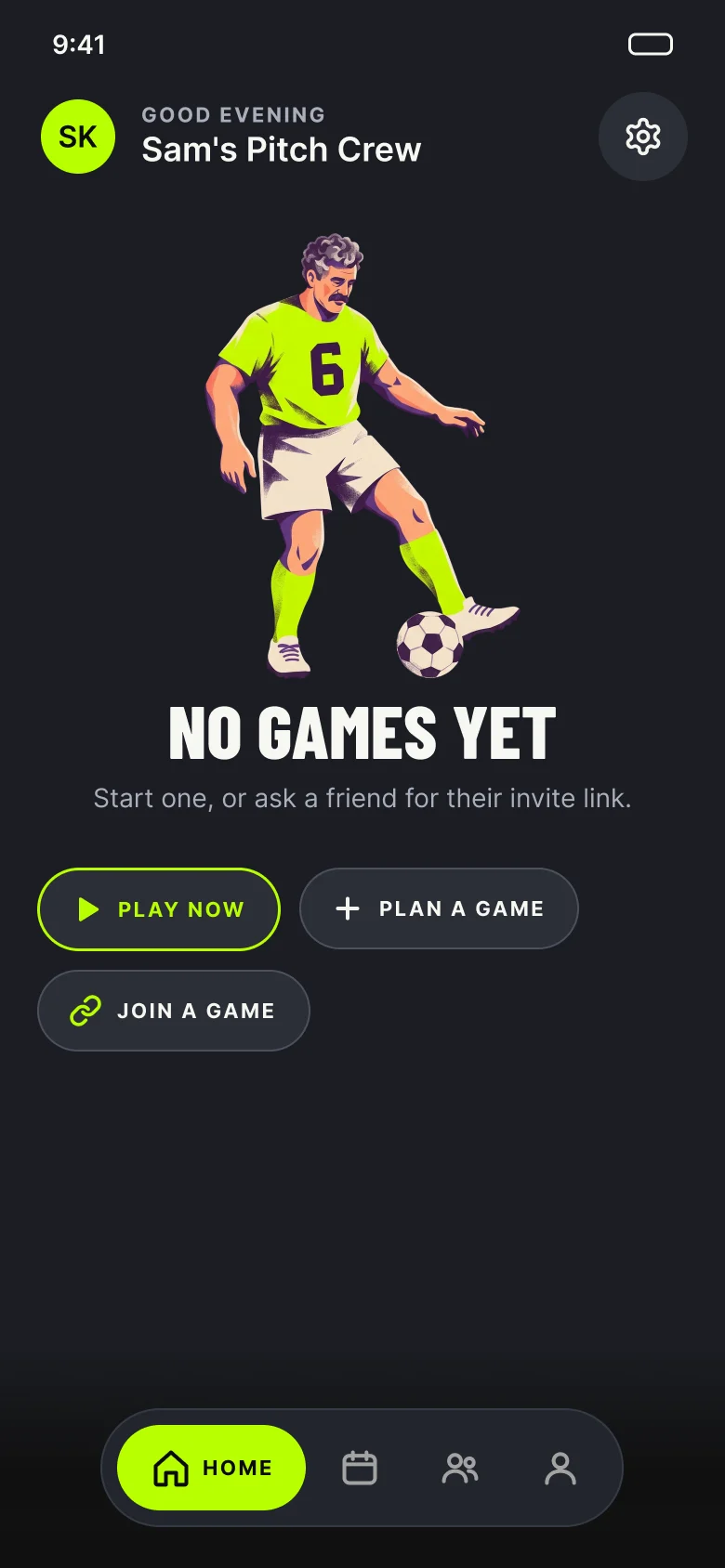
01Home · new account
02Home · up next
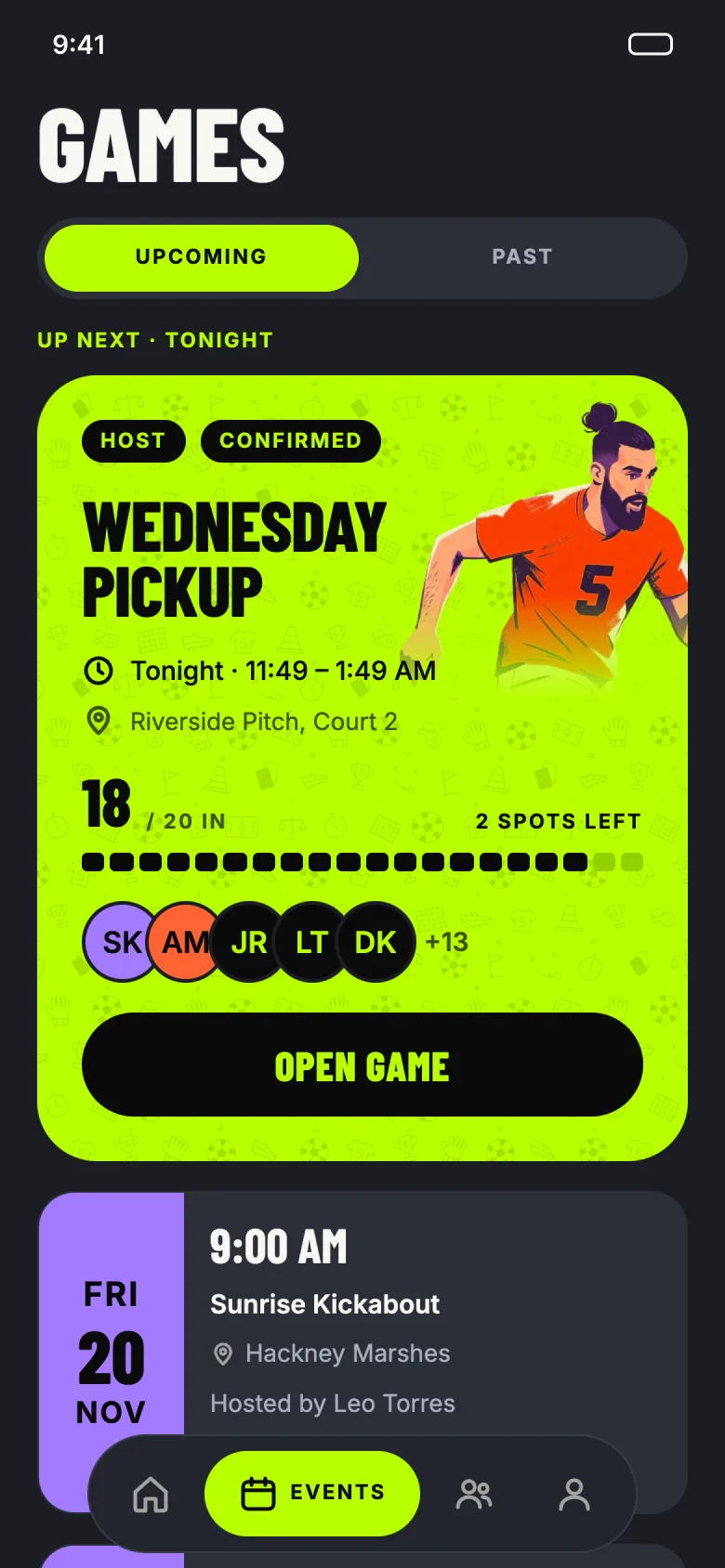
03Games · up next
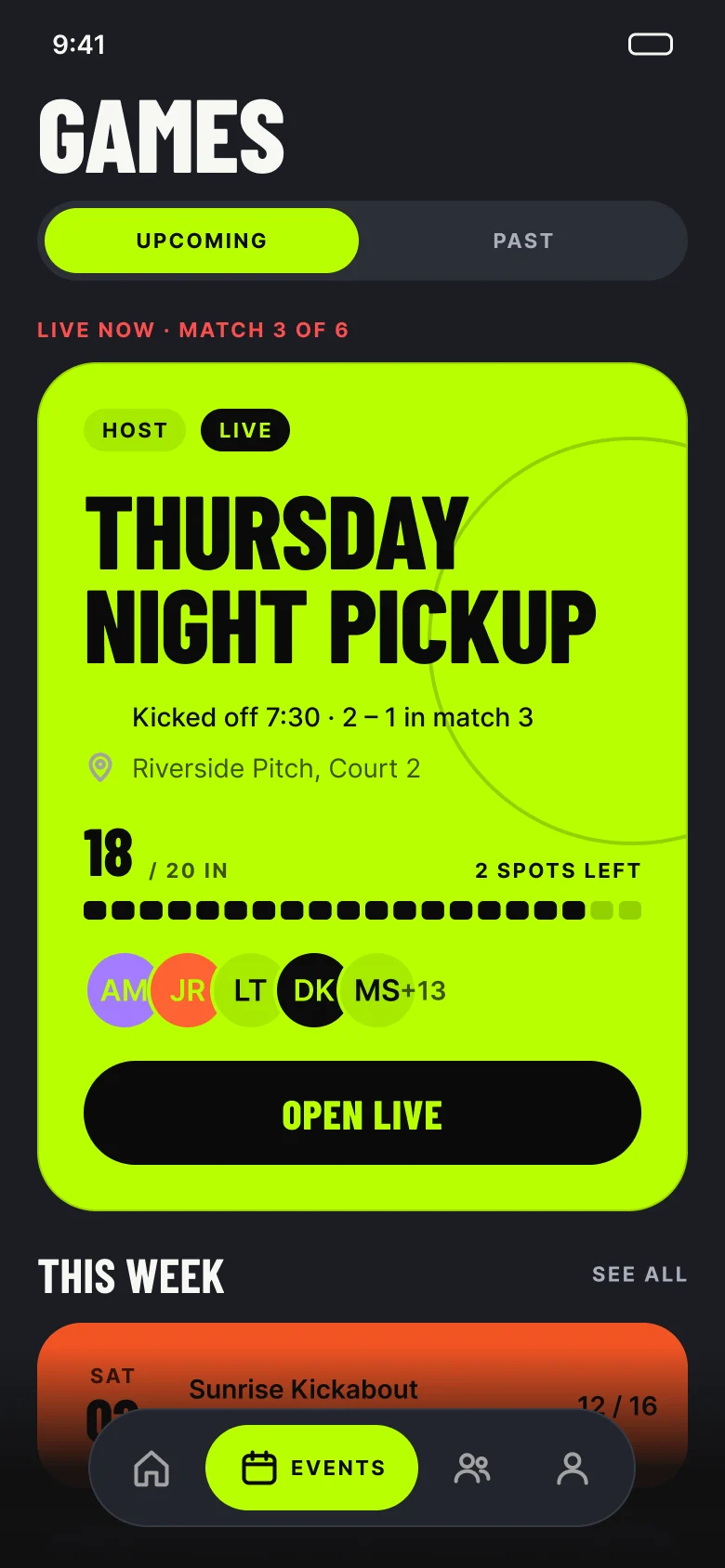
04Games · live now
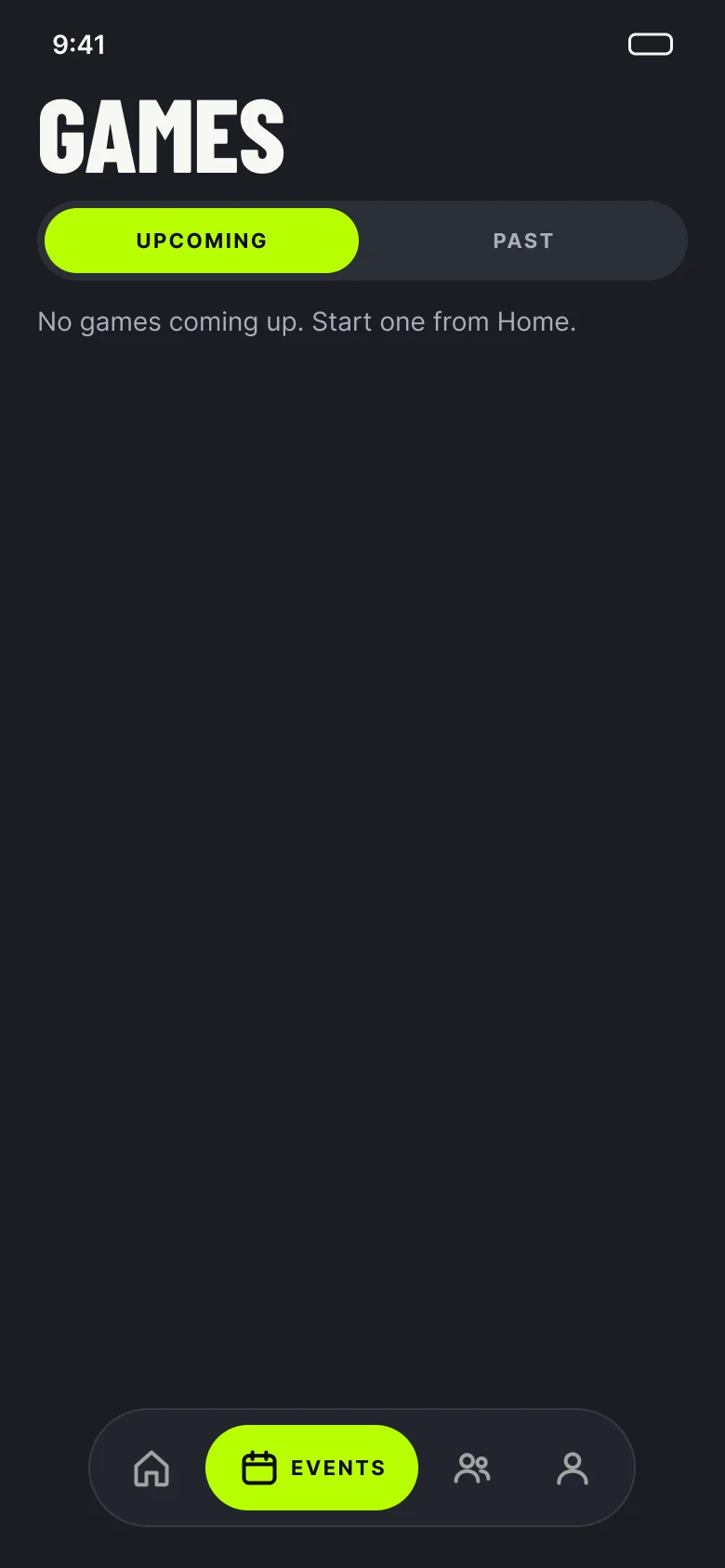
05Games · nothing yet
Everyone is already at the pitch. From an empty account to match 1: set the time, add who’s here, make teams, pick a format, play.
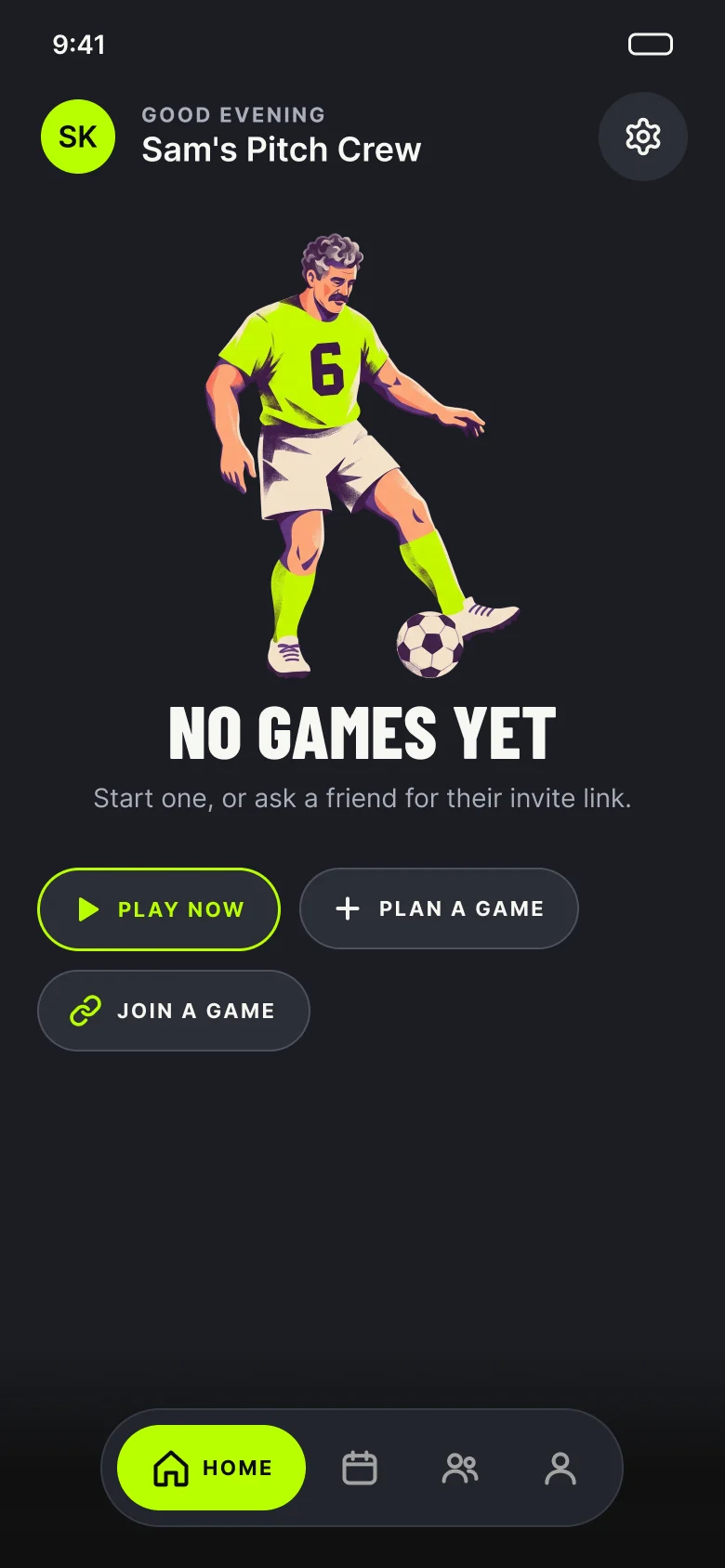
01Home, tap Play now
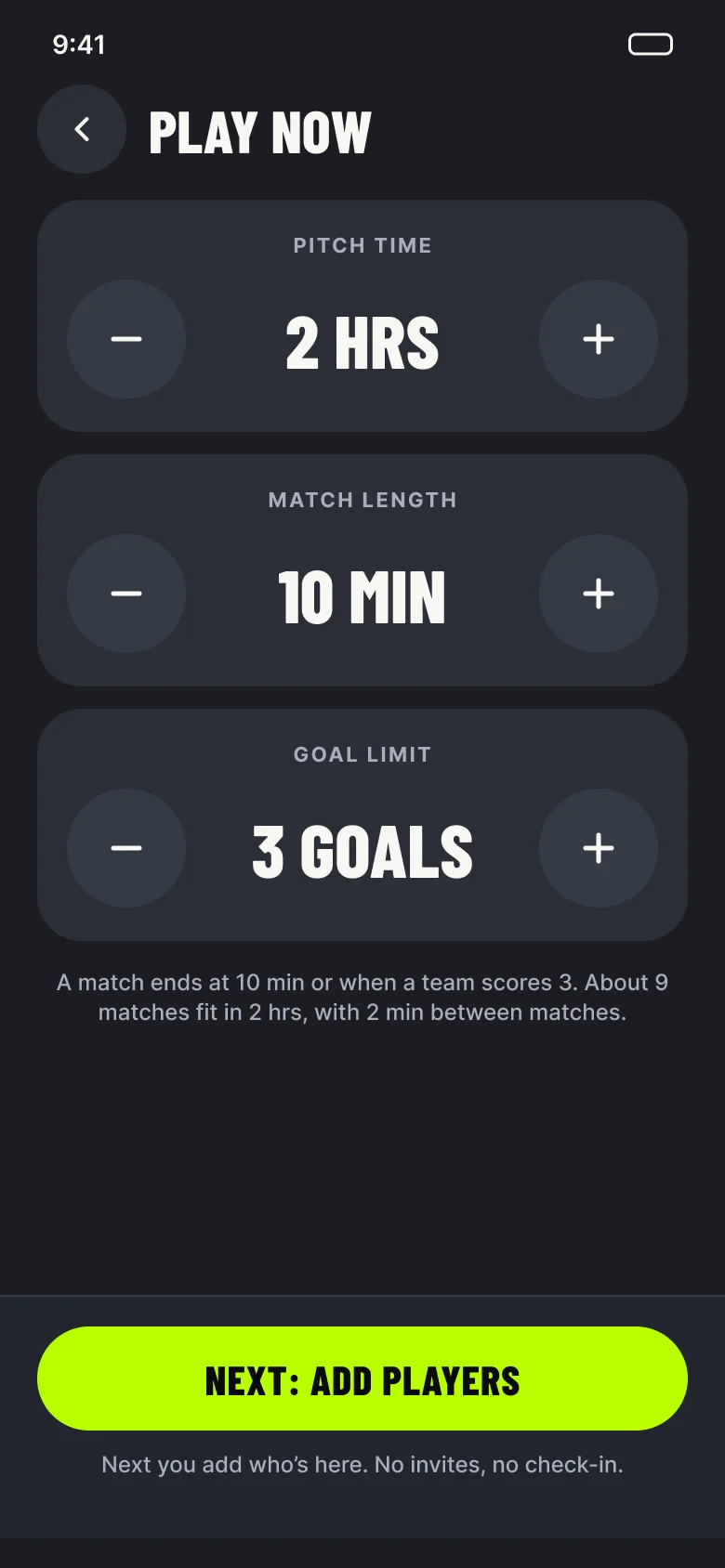
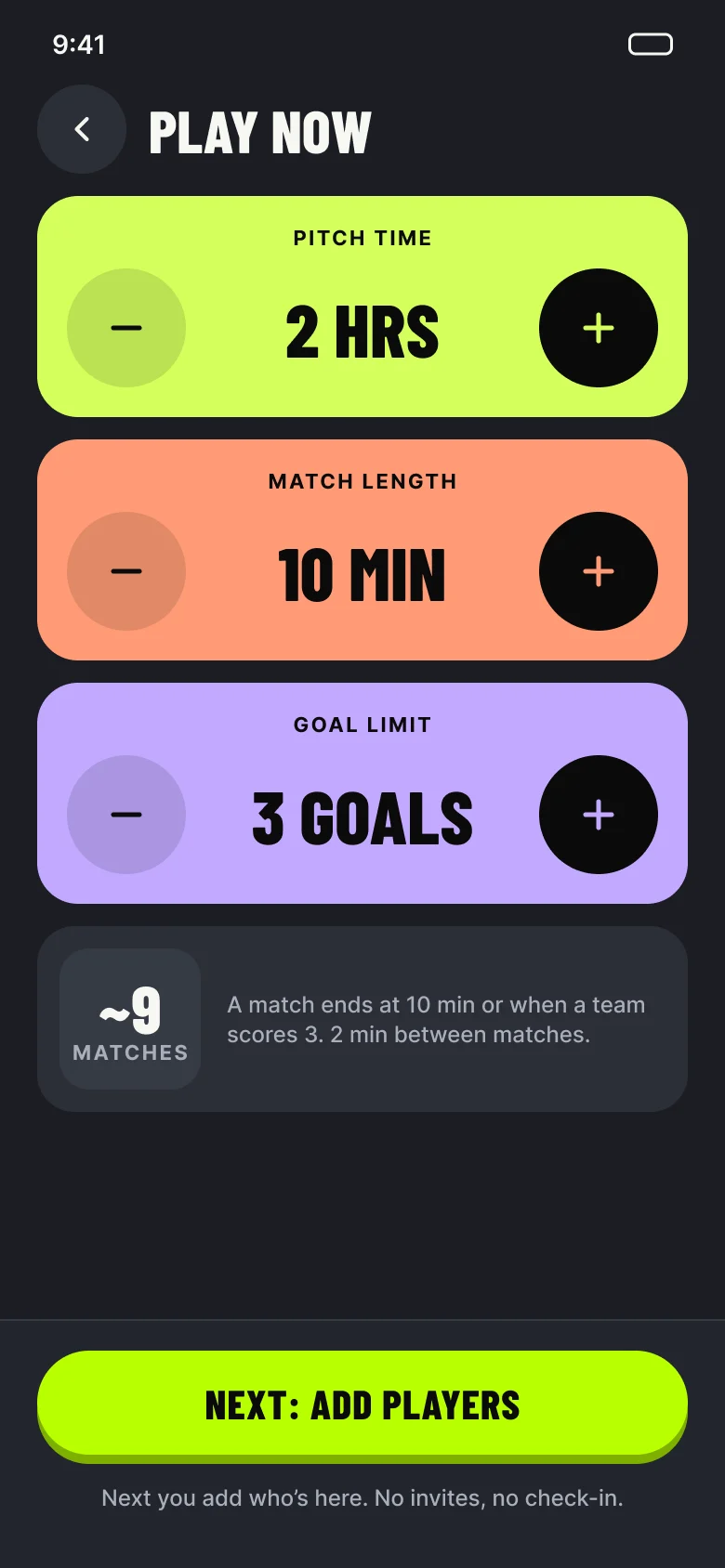
02Set the time
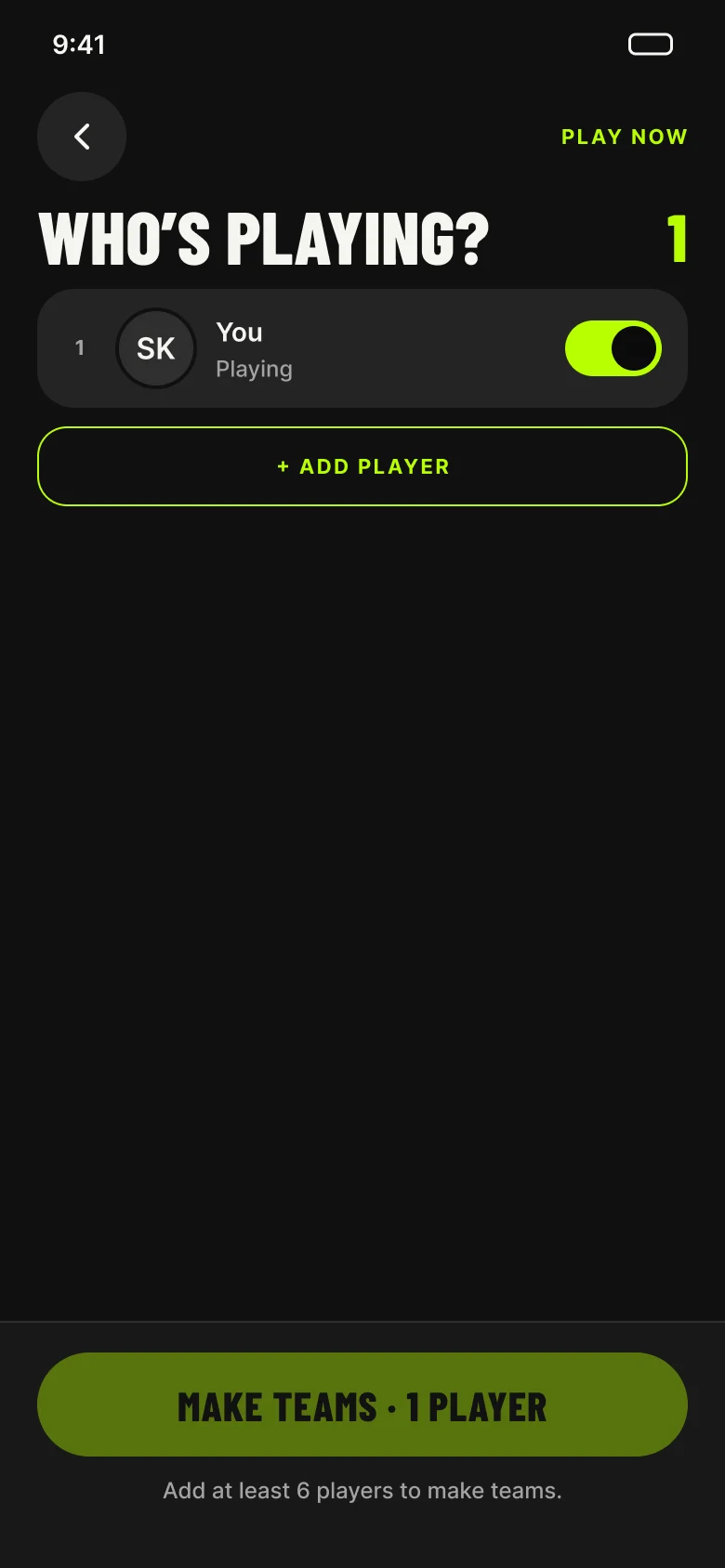
03Just you so far
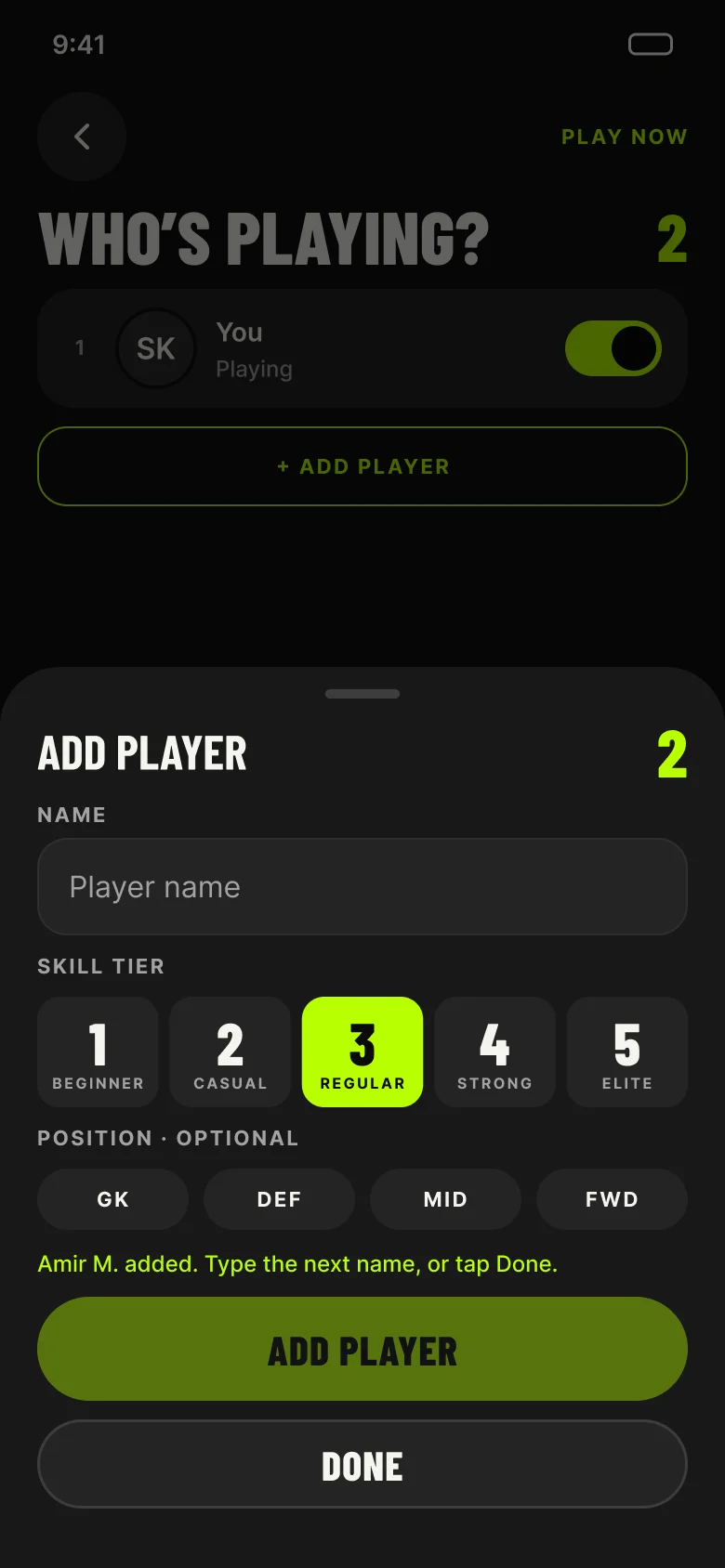
04Add each friend
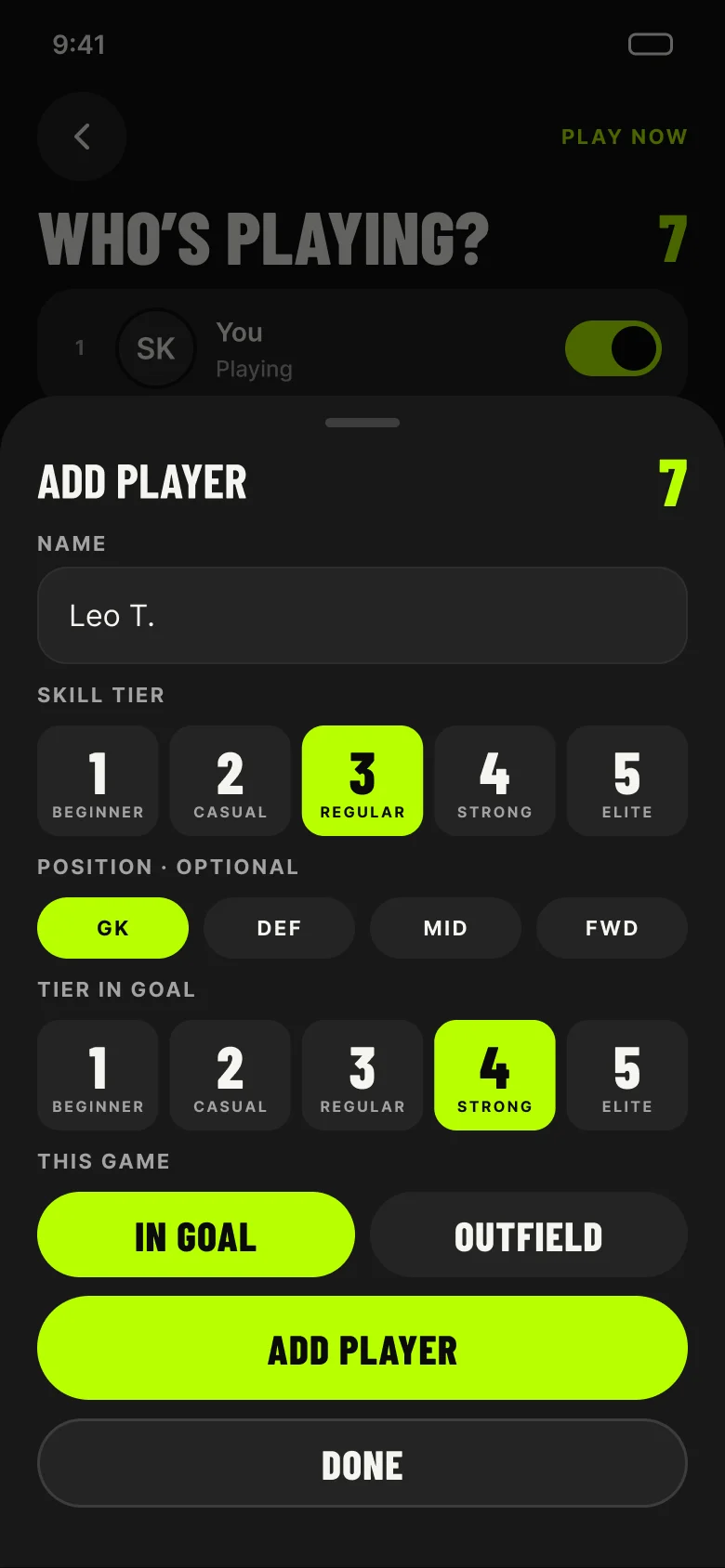
05Add player · in goal or outfield
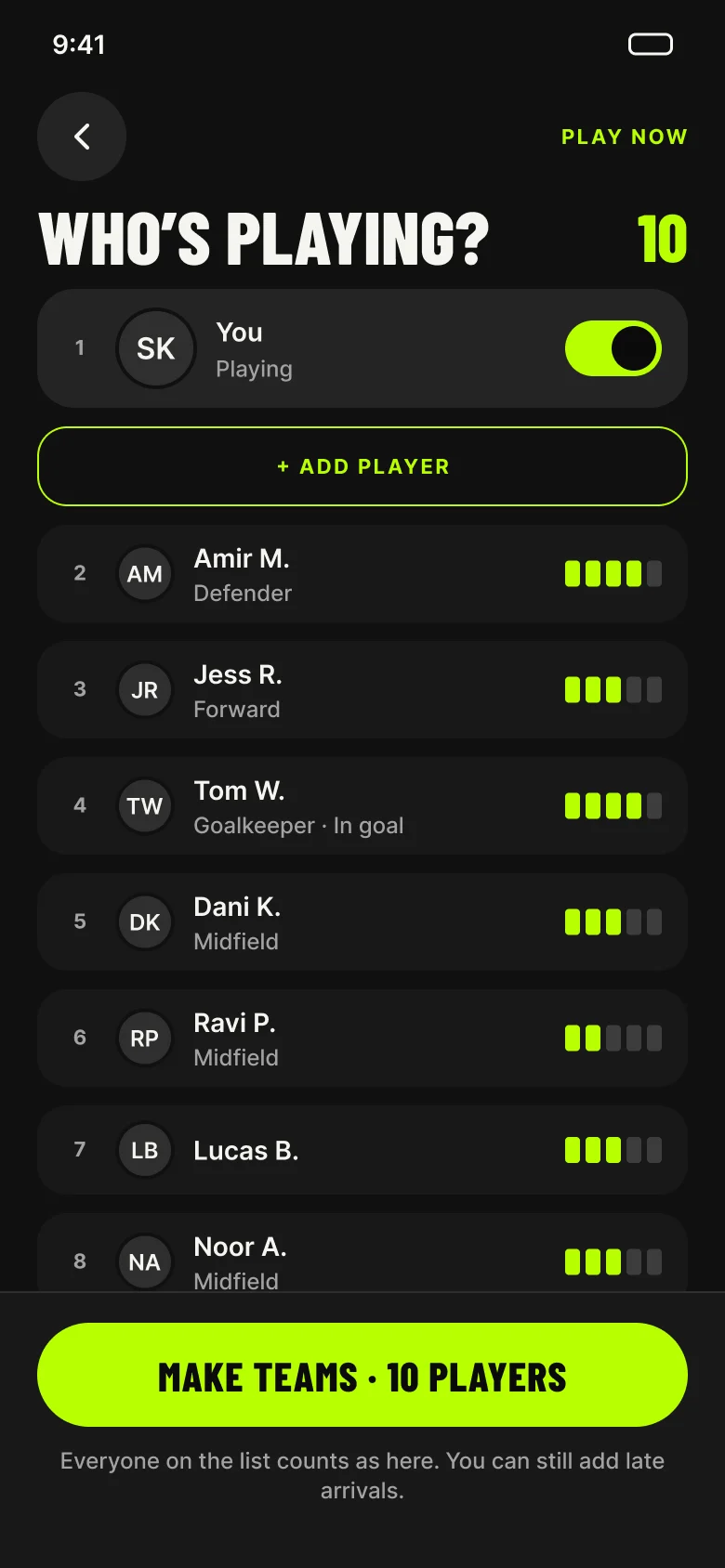
06Everyone’s in
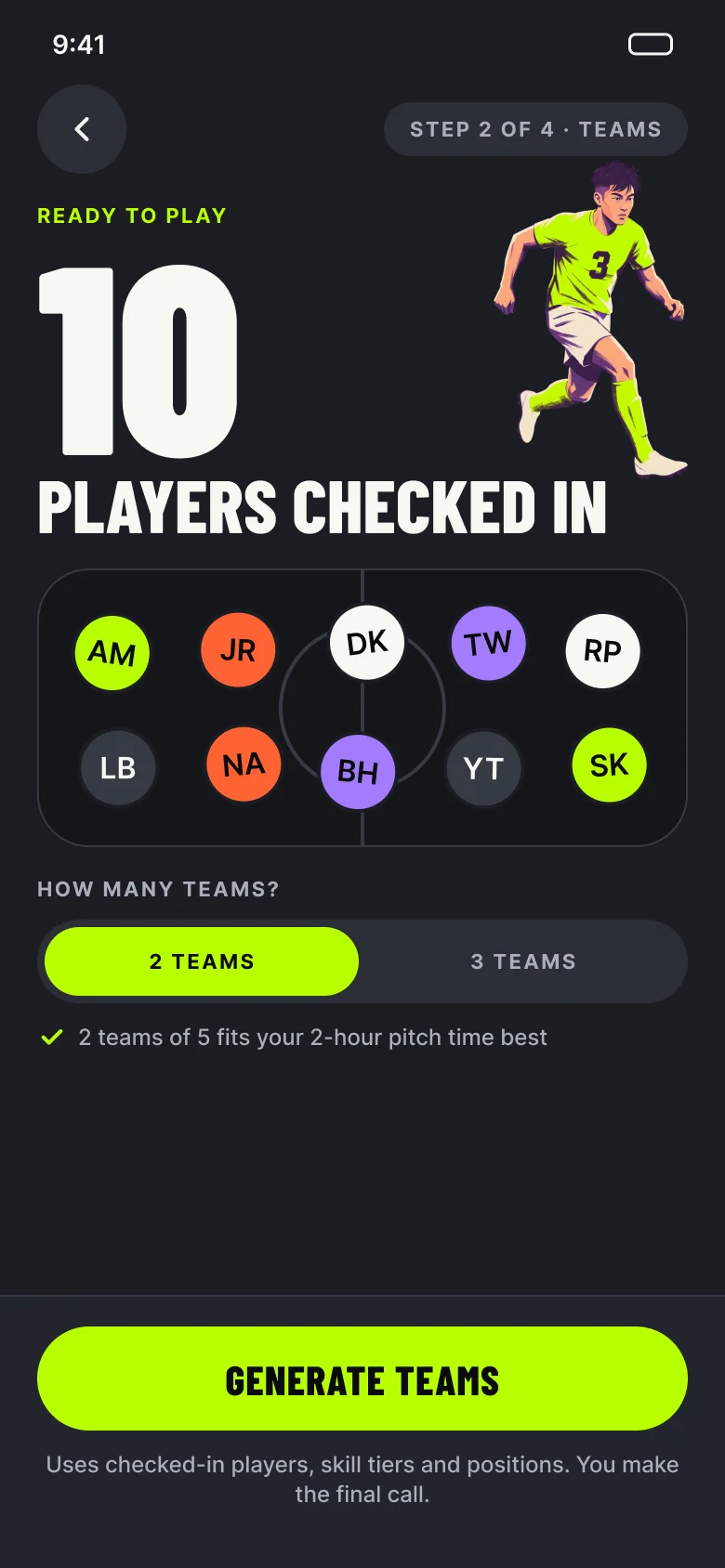
07Pick the teams
08Teams are made
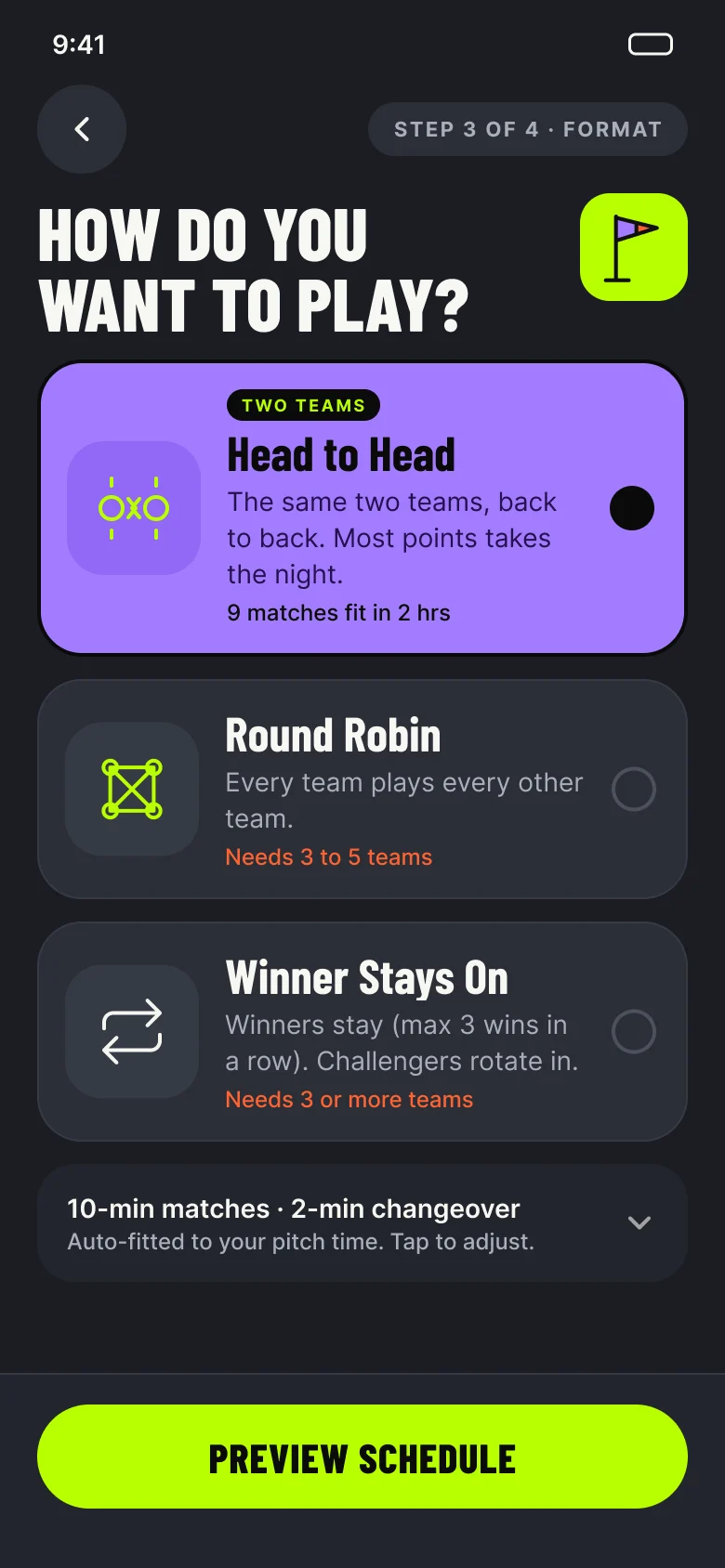
09Choose how to play
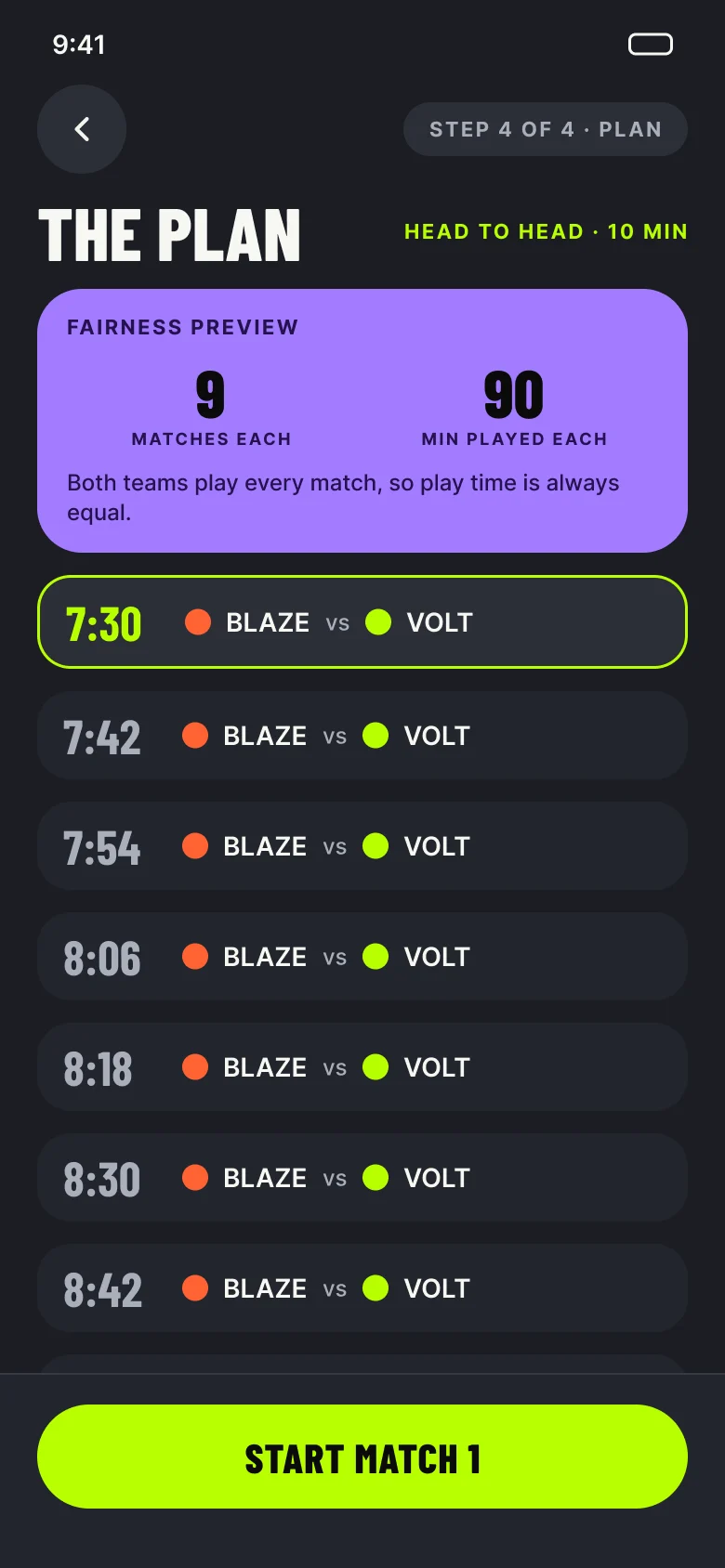
10The plan
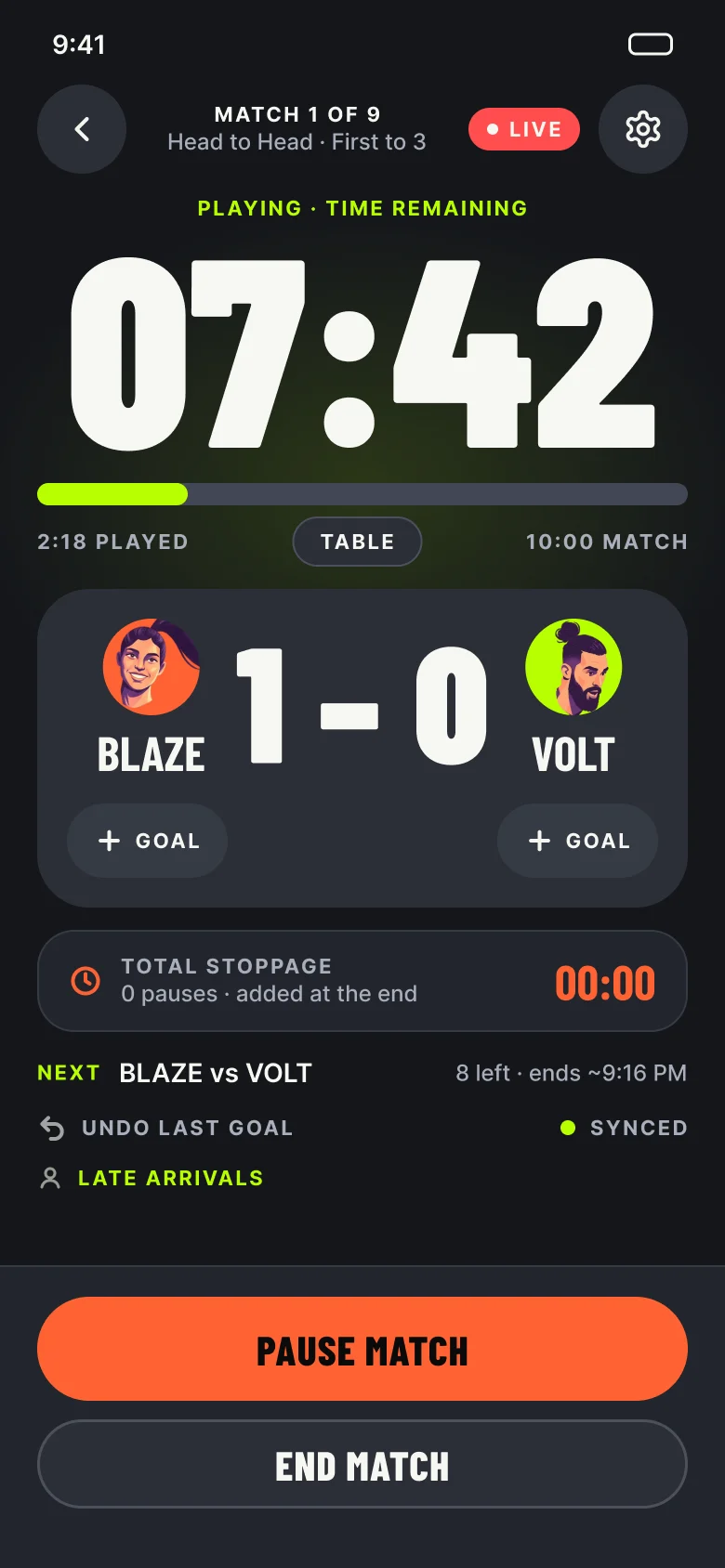
11Match 1 is on
For a game later in the week: time, place and team size, then share the link or the 6-digit code. Place search puts known pitches first, with Book on the pitch’s own site.
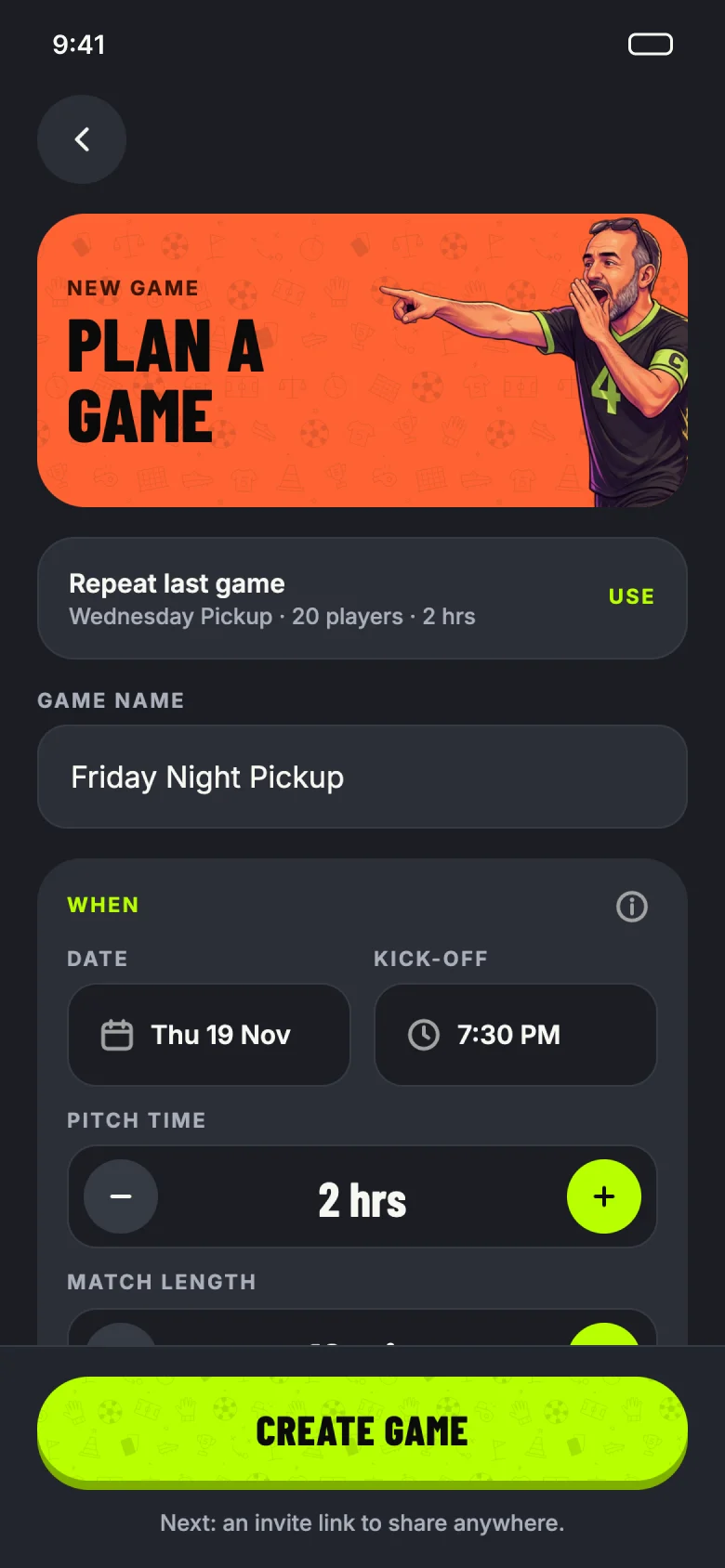
01New game
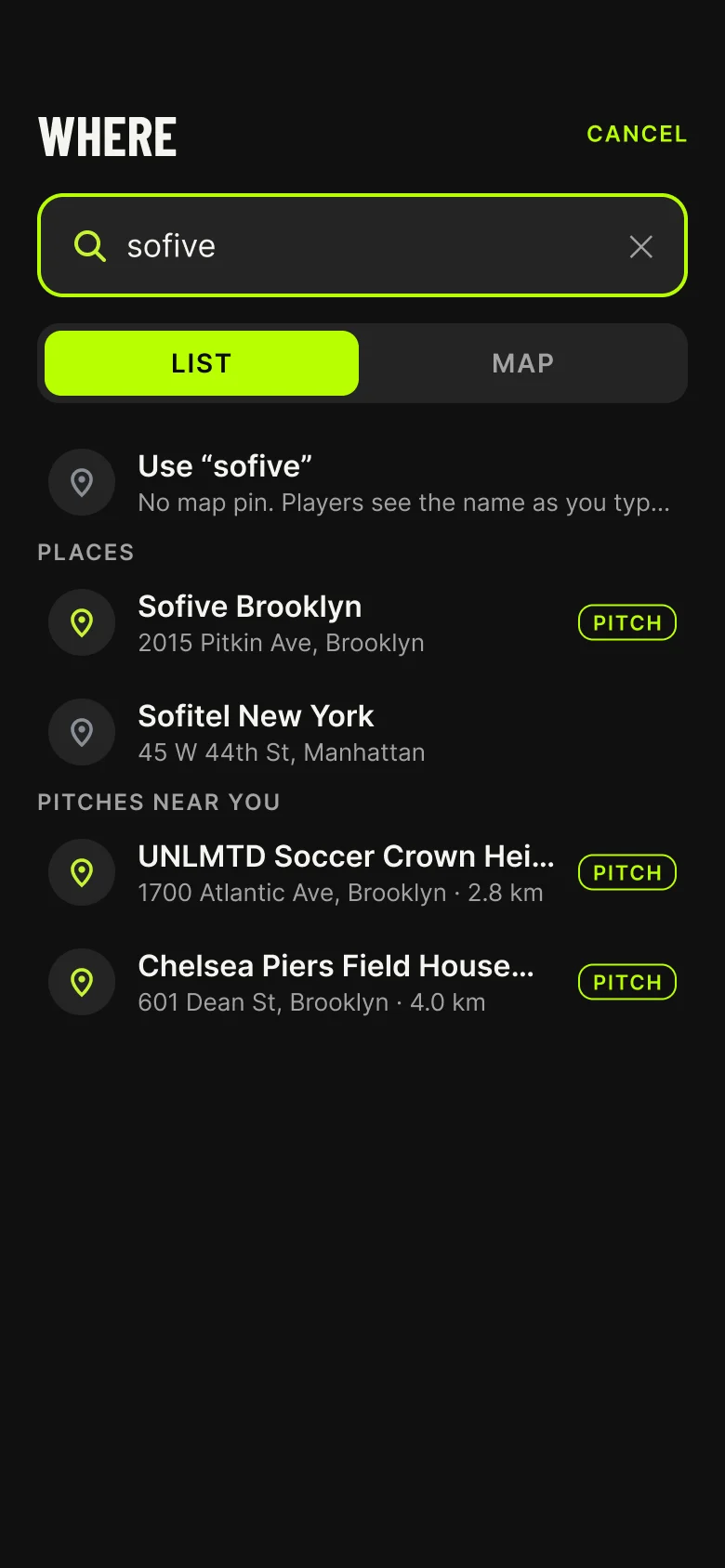
02Where · search with pitches
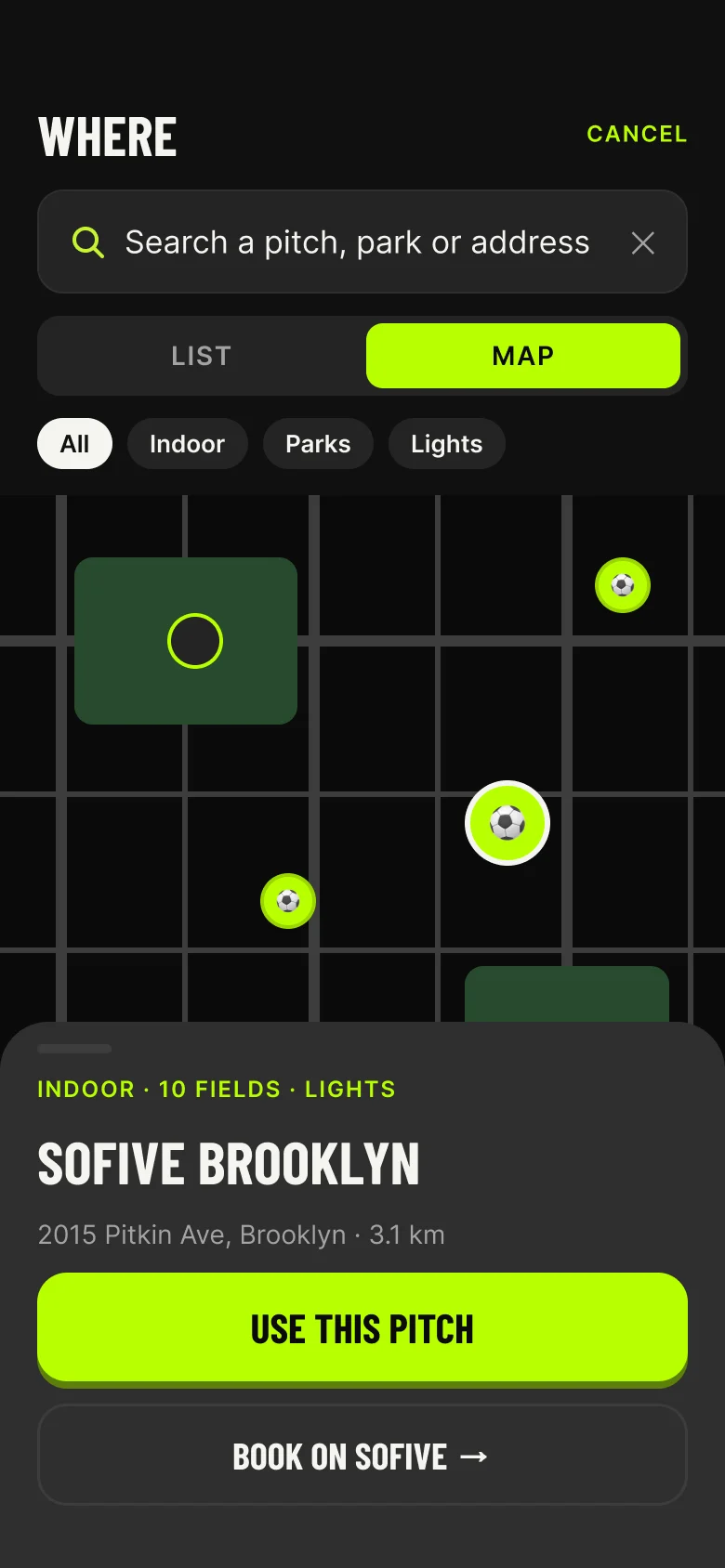
03Where · map of pitches
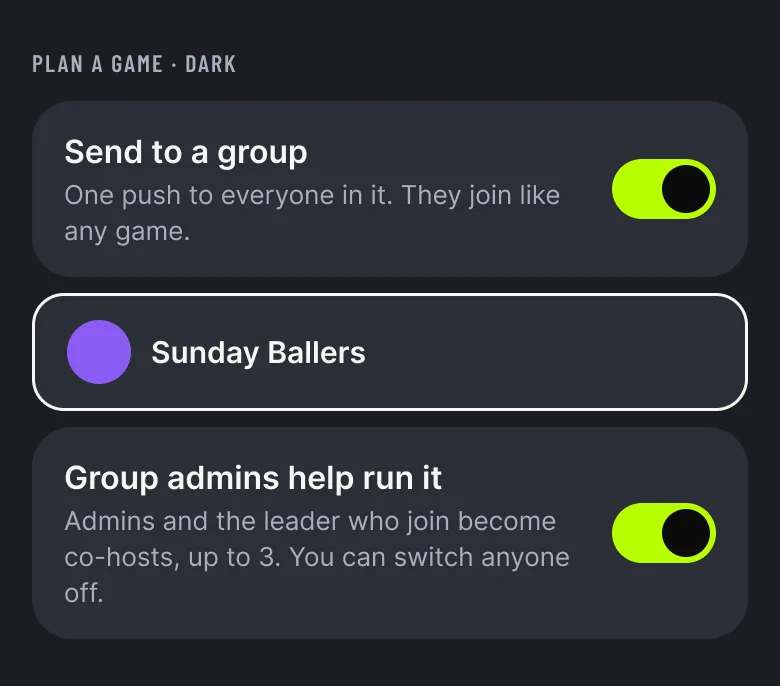
04Sent to a group · admins help run it
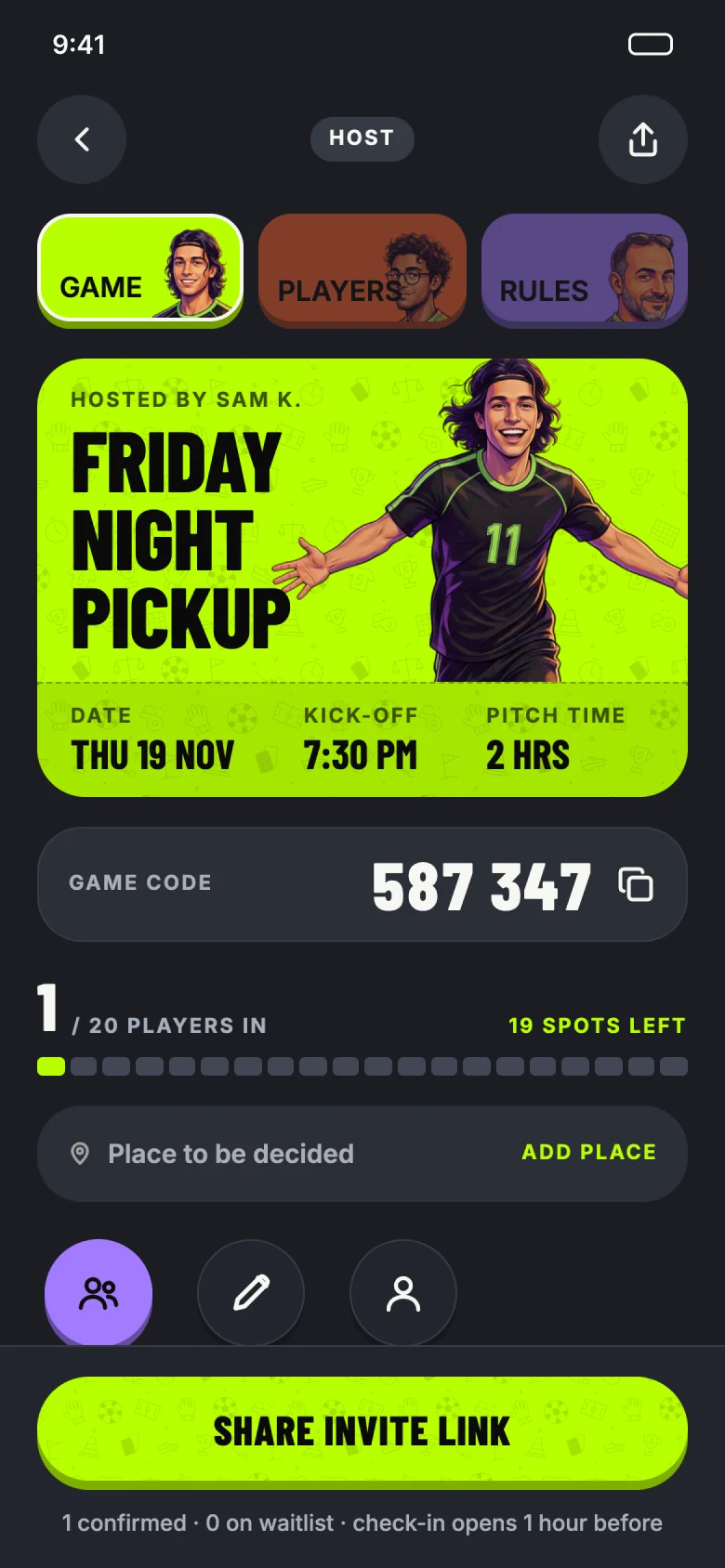
05Game page · just created
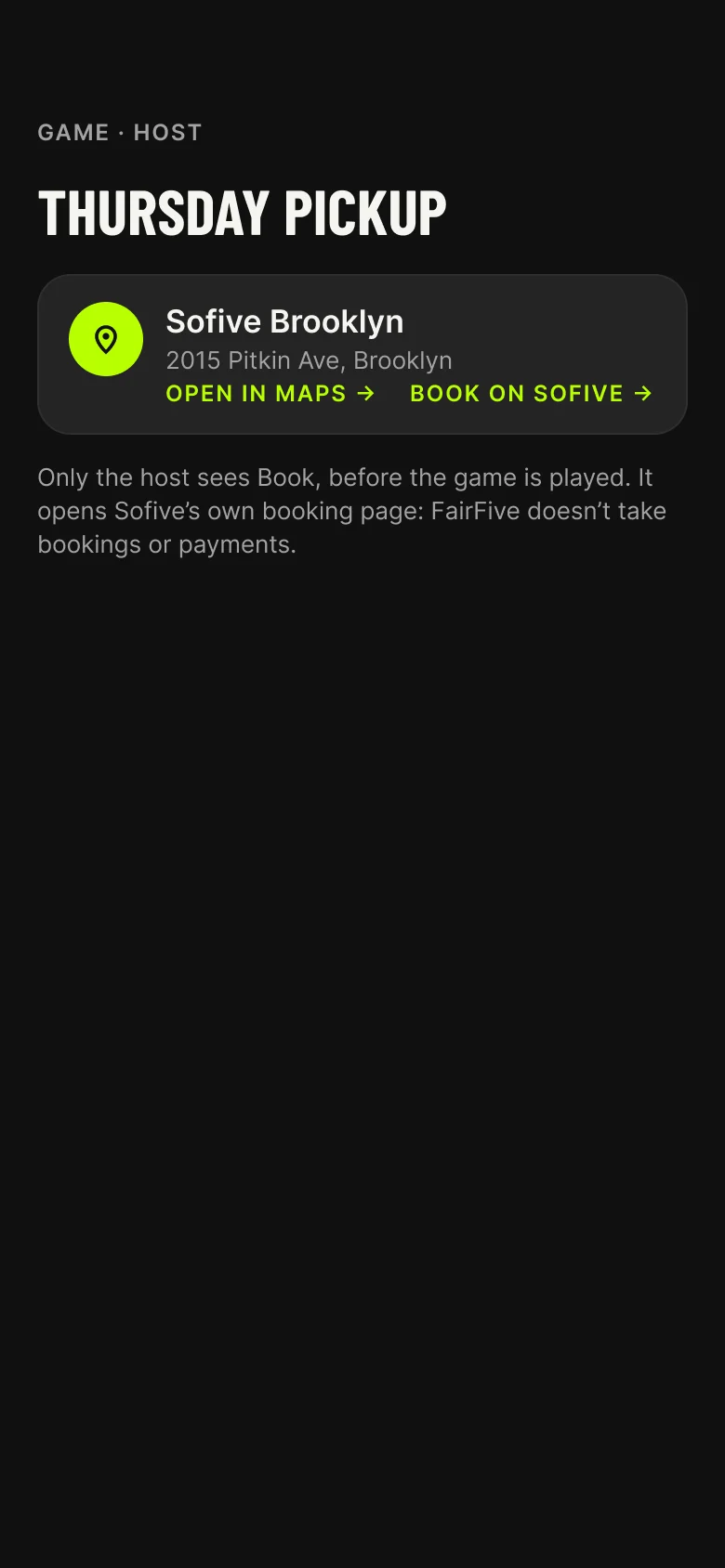
06Game page · book this pitch
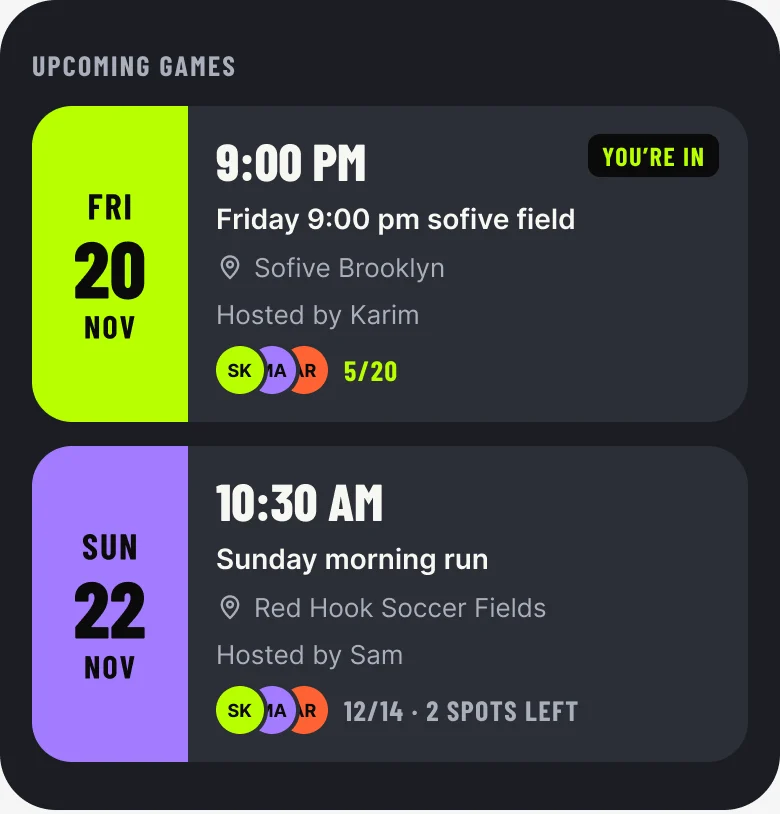
07Upcoming game cards
One box for every code. Join, land on the waitlist when it’s full, and privately pick one teammate a few hours before kick-off.
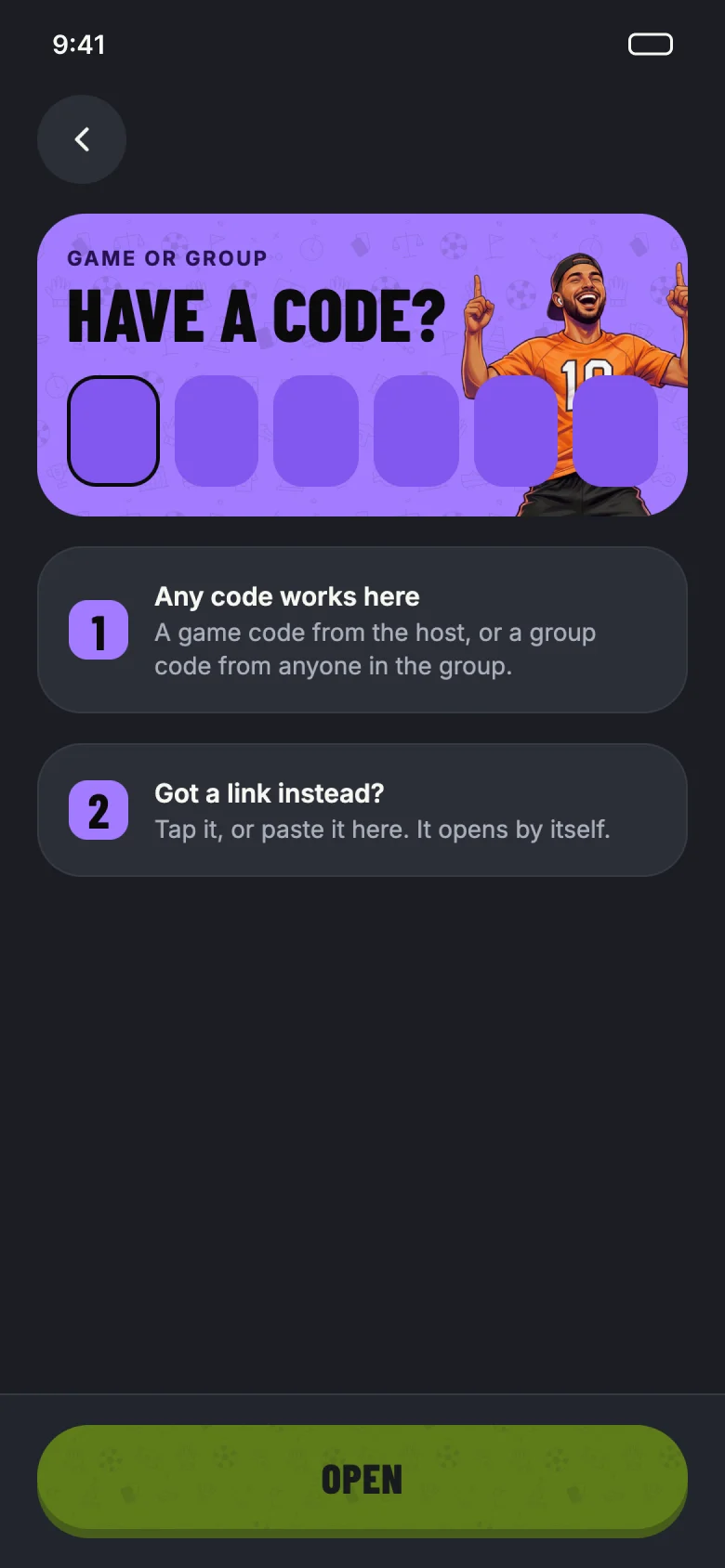
01Have a code?
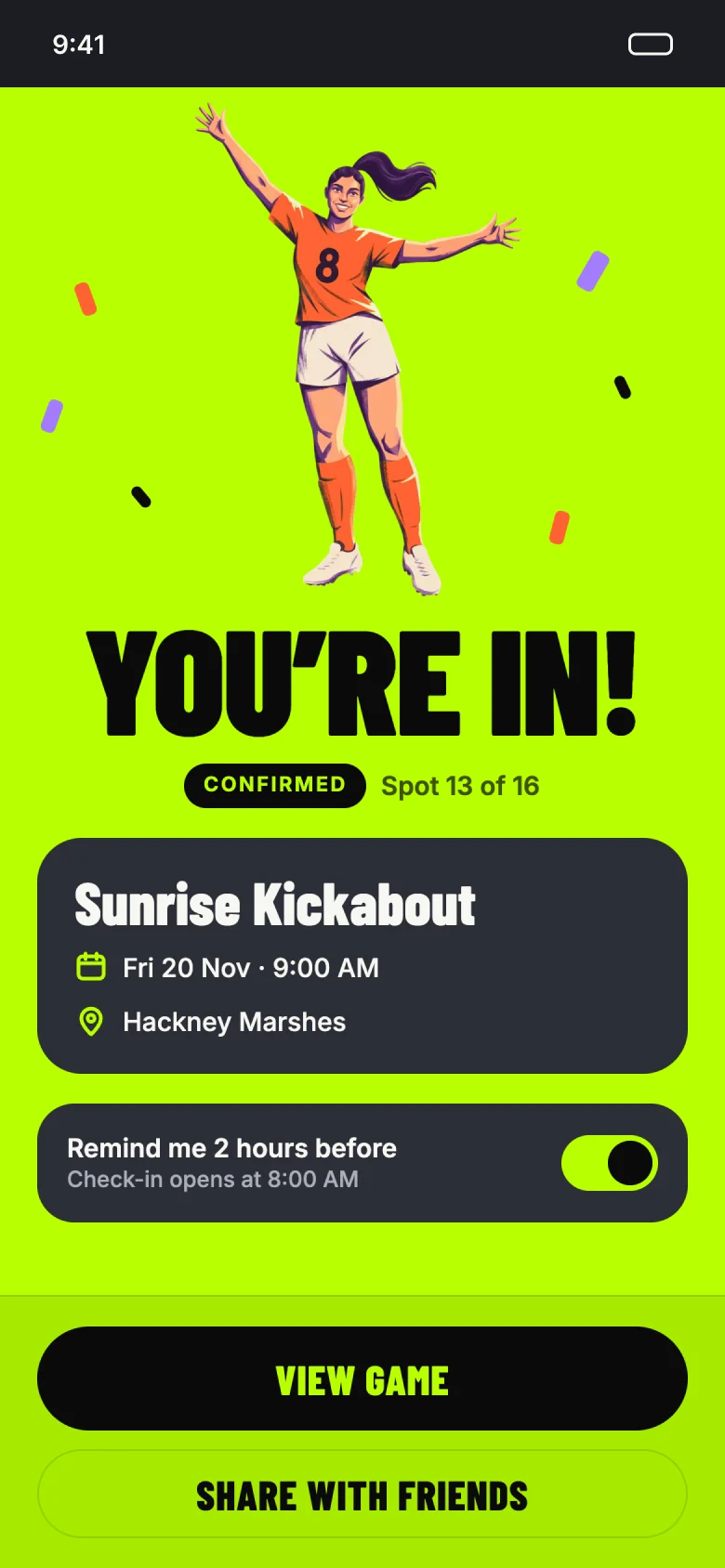
02You’re in
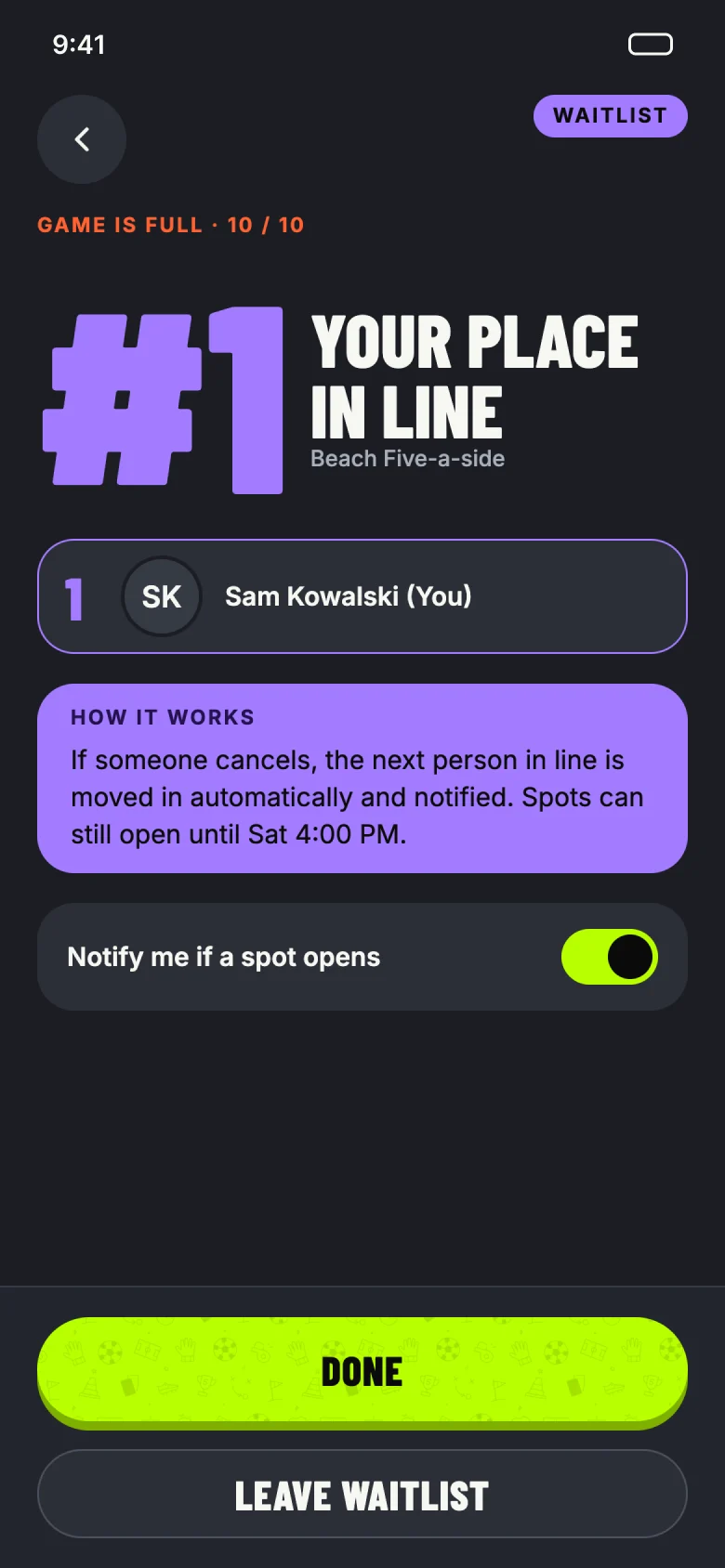
03Waiting list
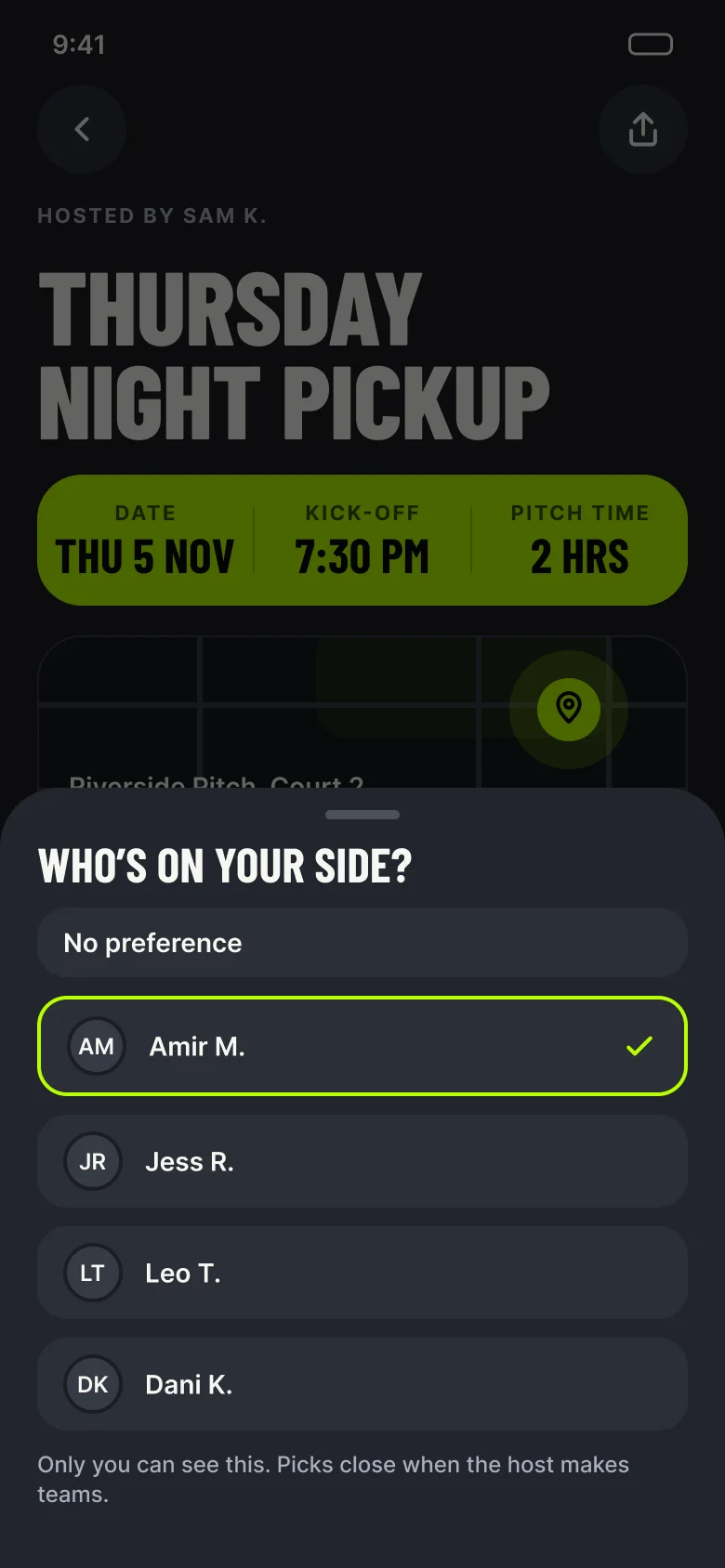
04Who’s on your side
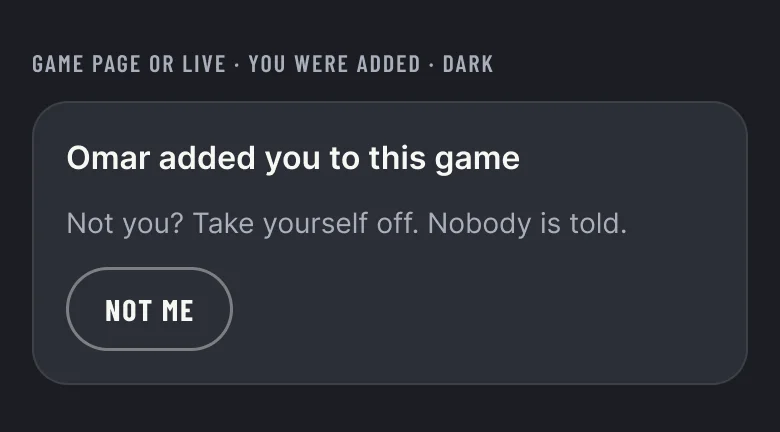
05Added by a friend
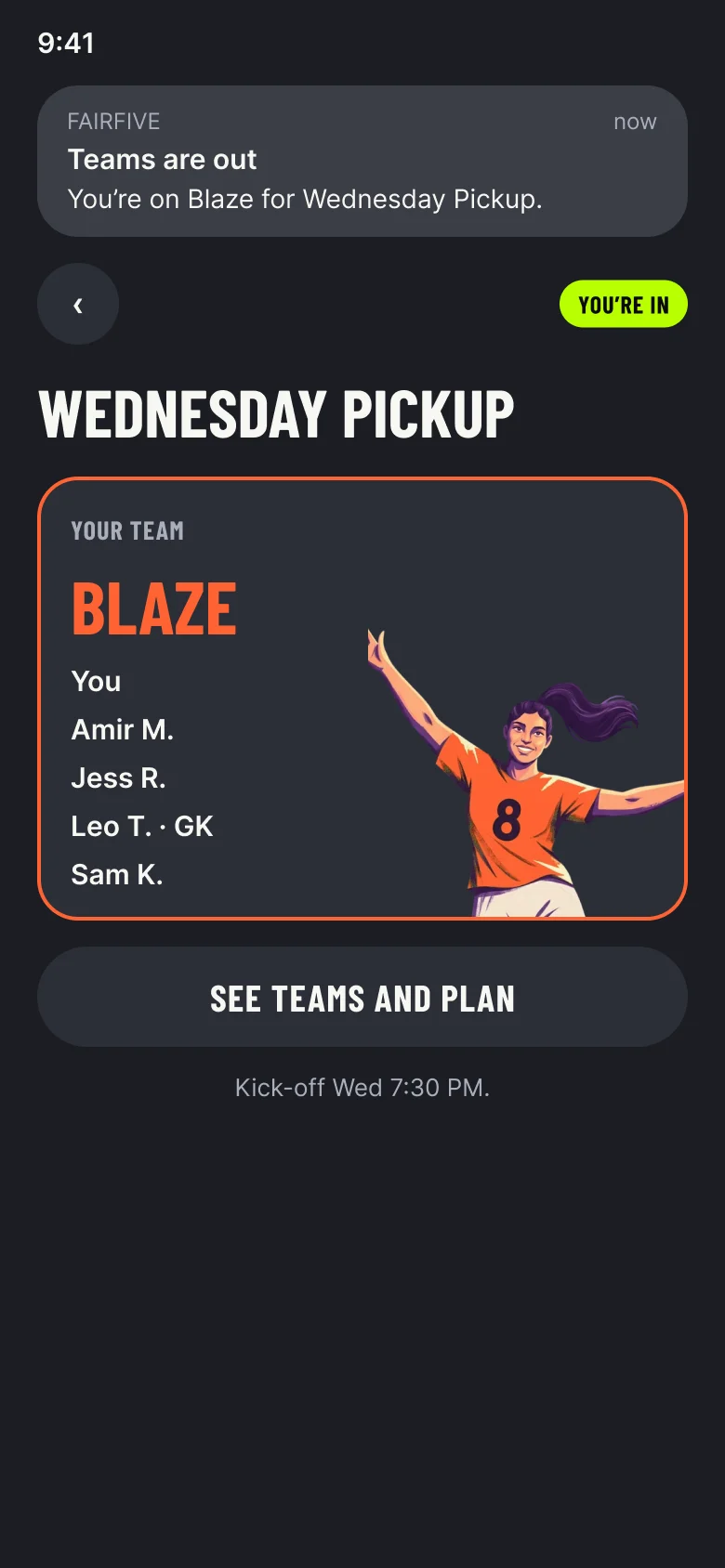
06Teams are out
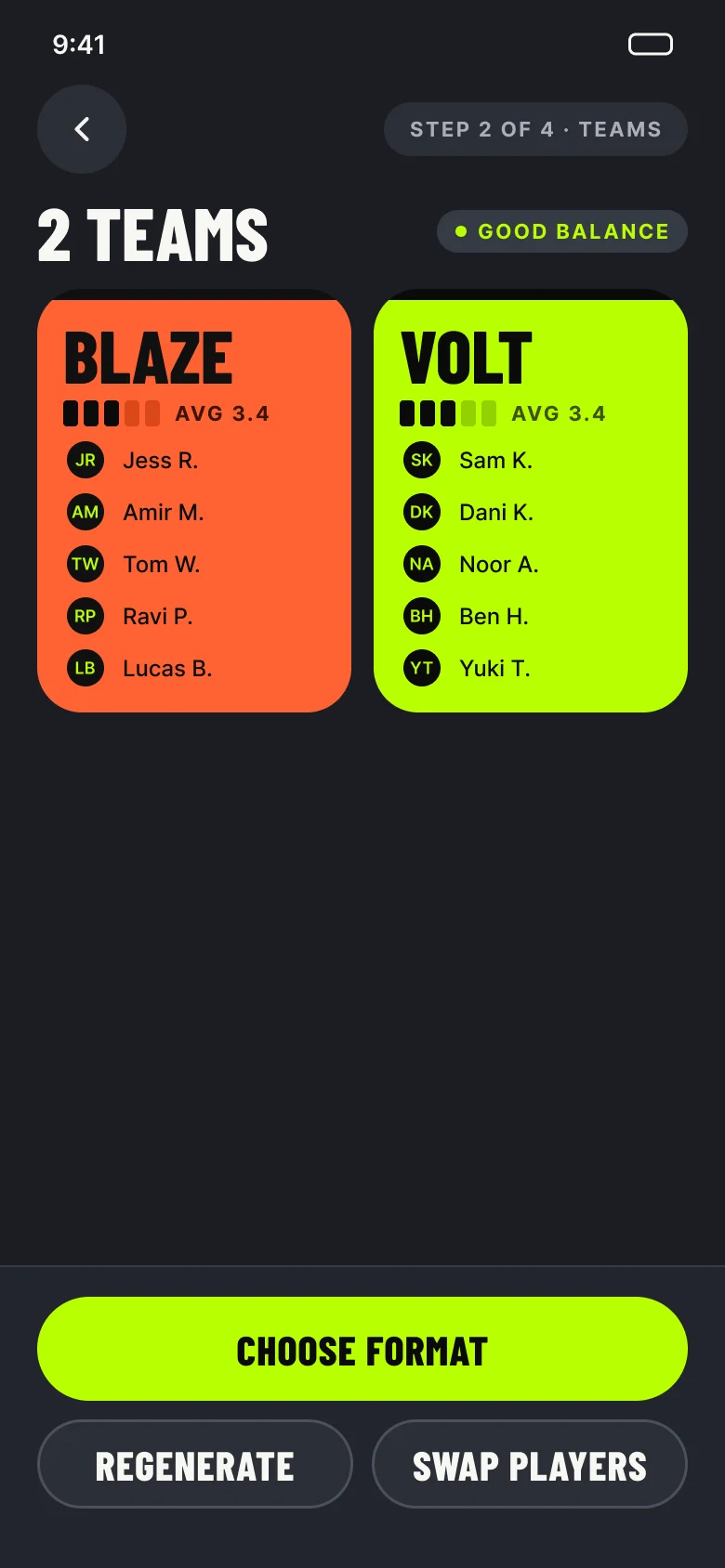
Balanced from the host’s private skill tiers, never shown to players. Make them early or on game day, swap and rename, one person at a time.
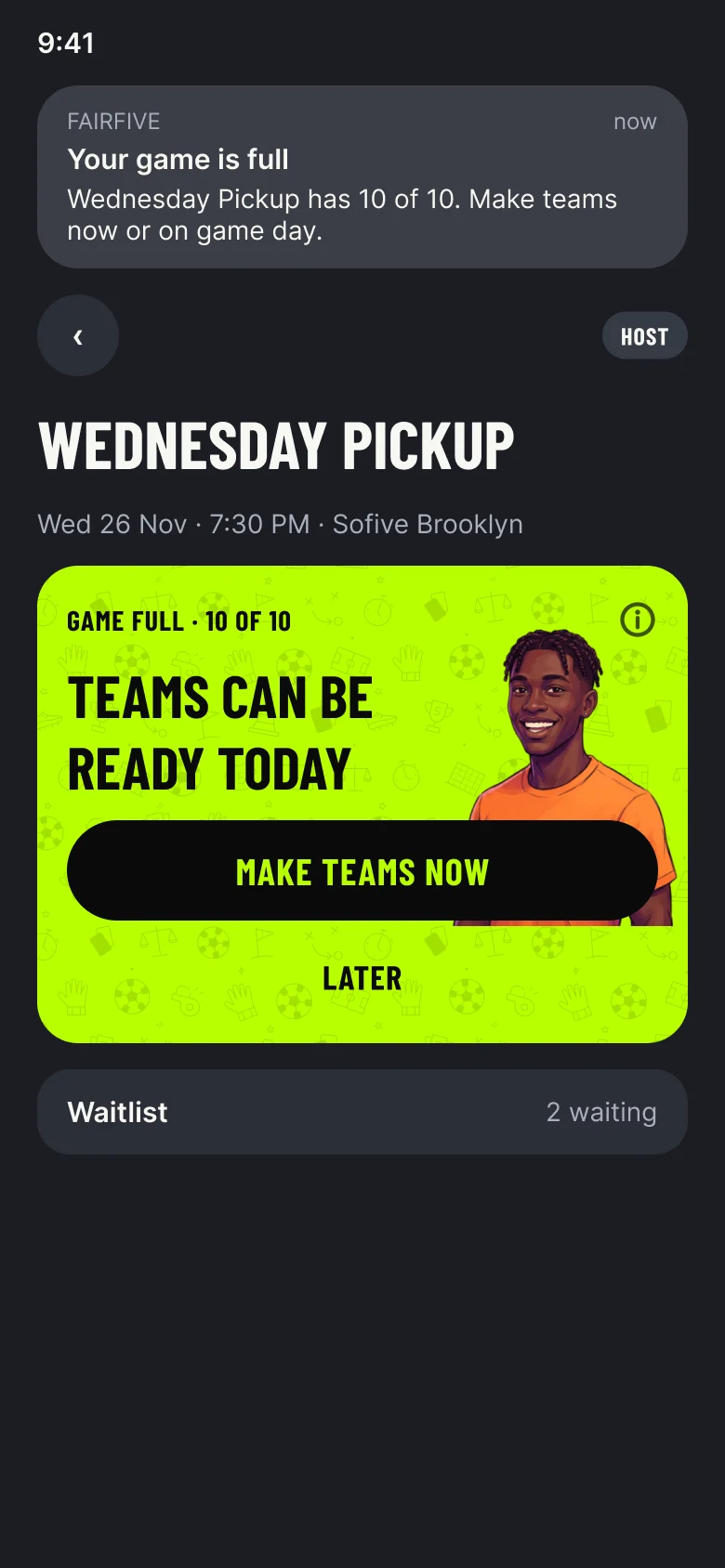
01Game full · make teams now?
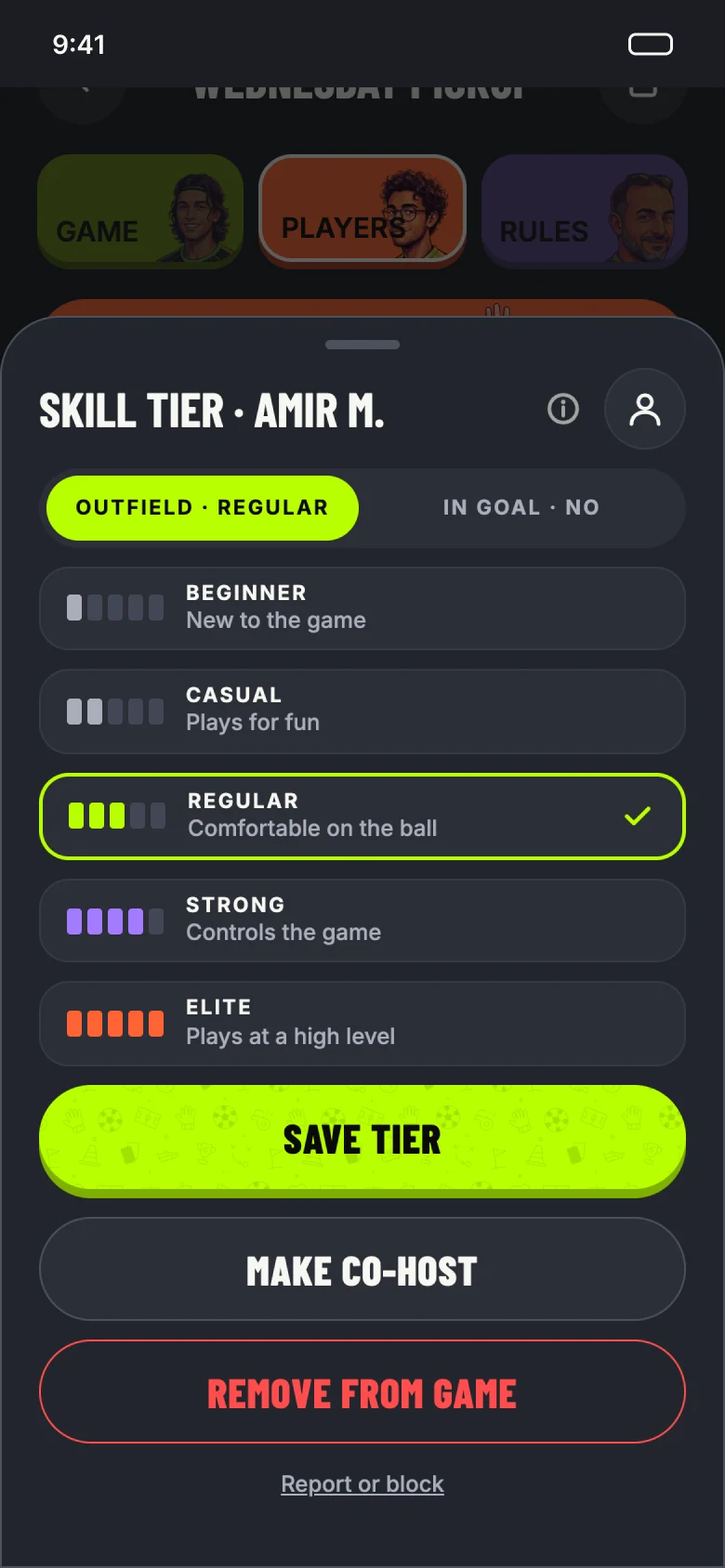
02Set skill tier
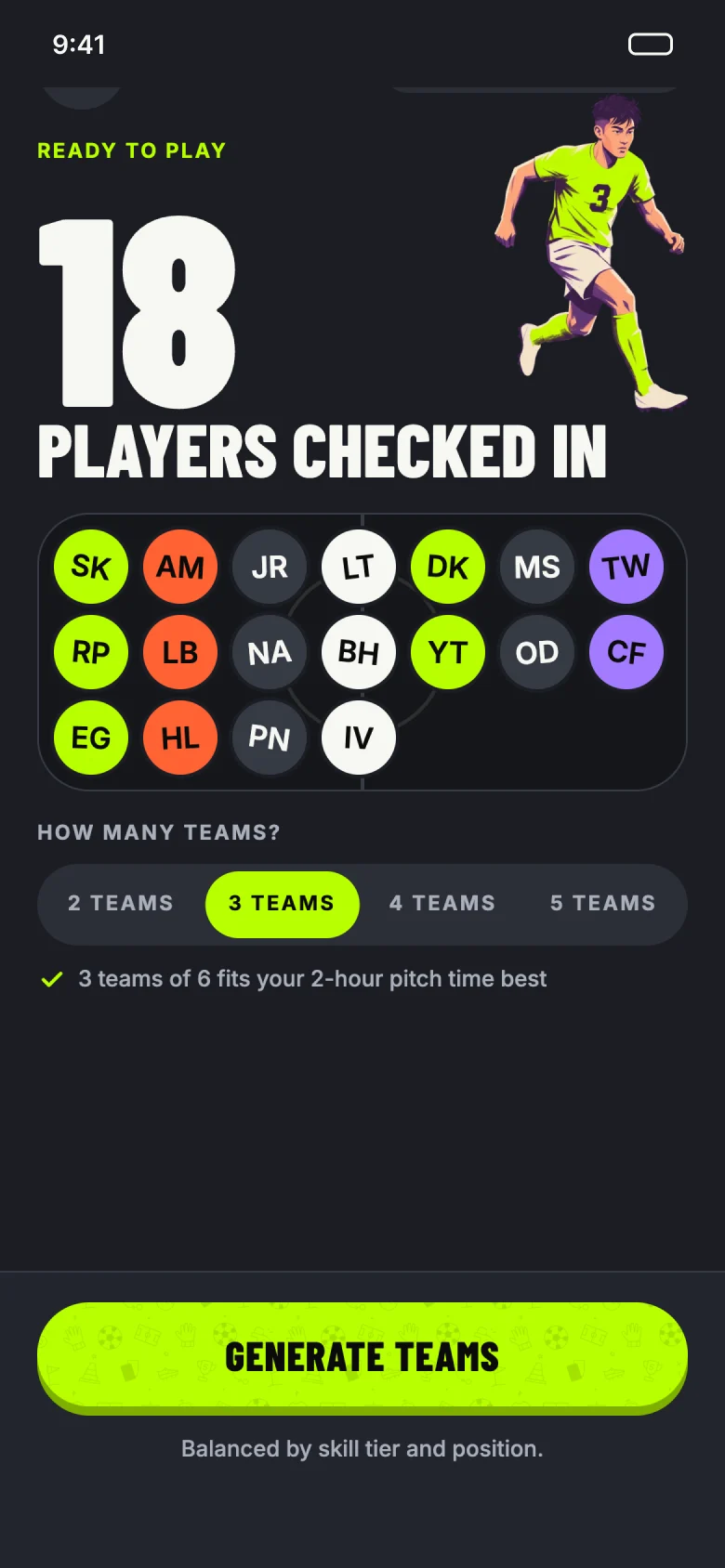
03Team setup
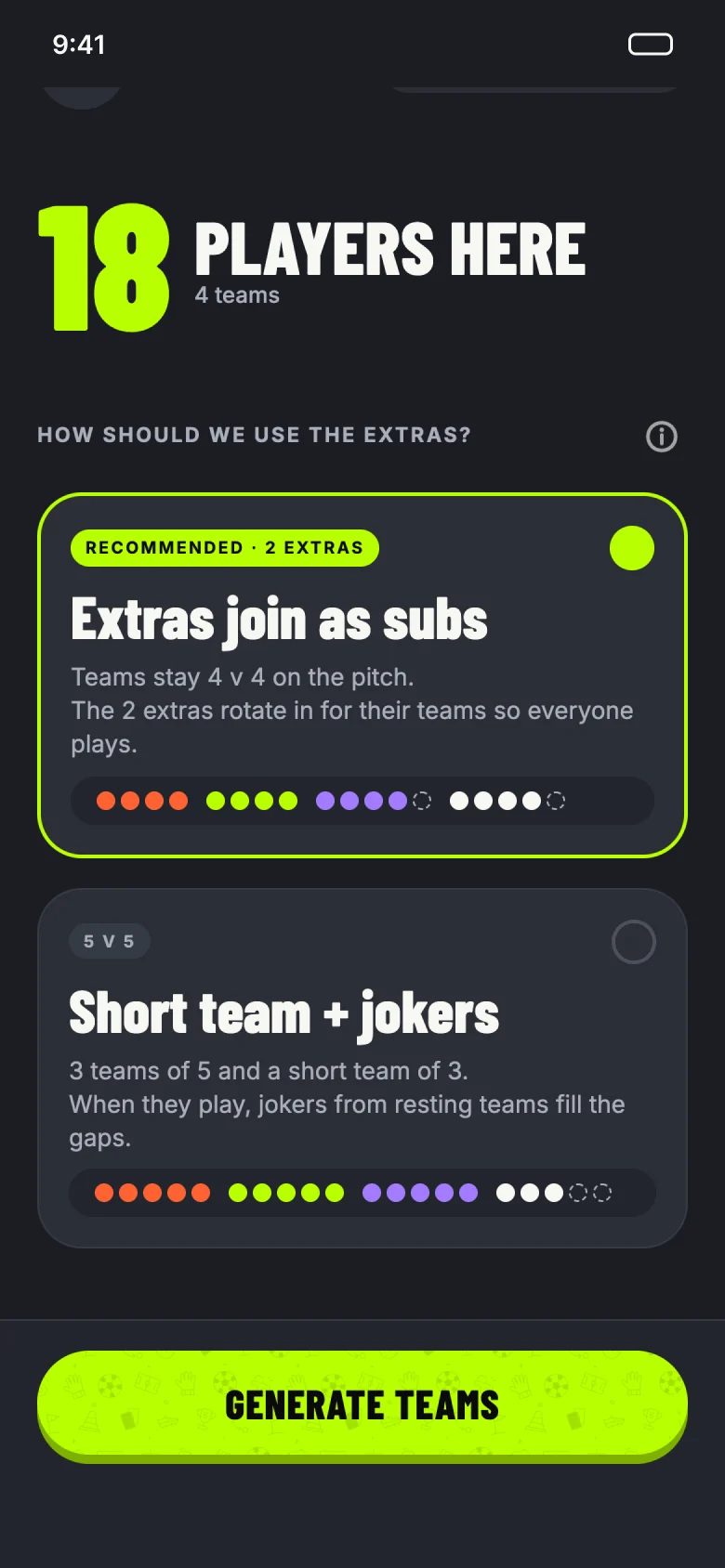
04Uneven count
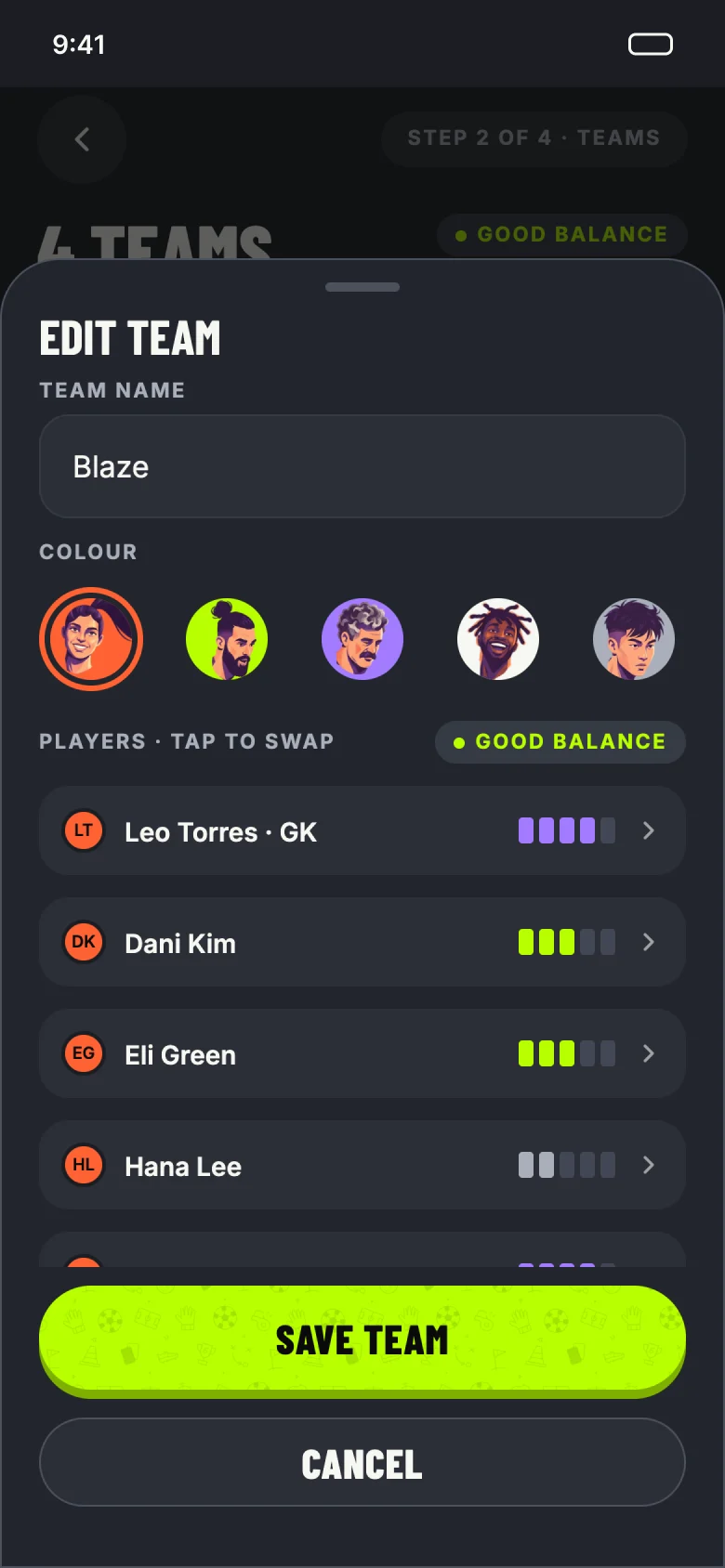
05Edit team
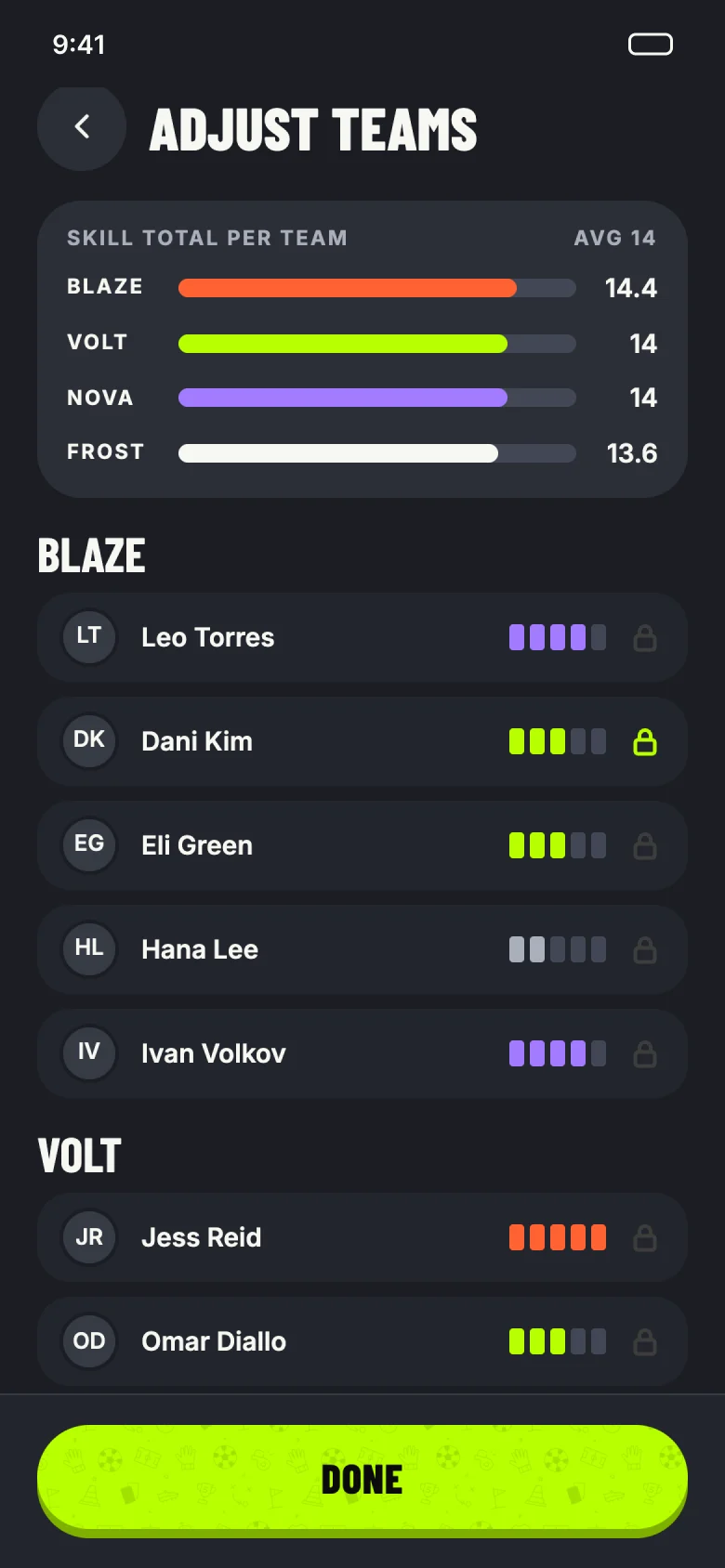
06Swap players
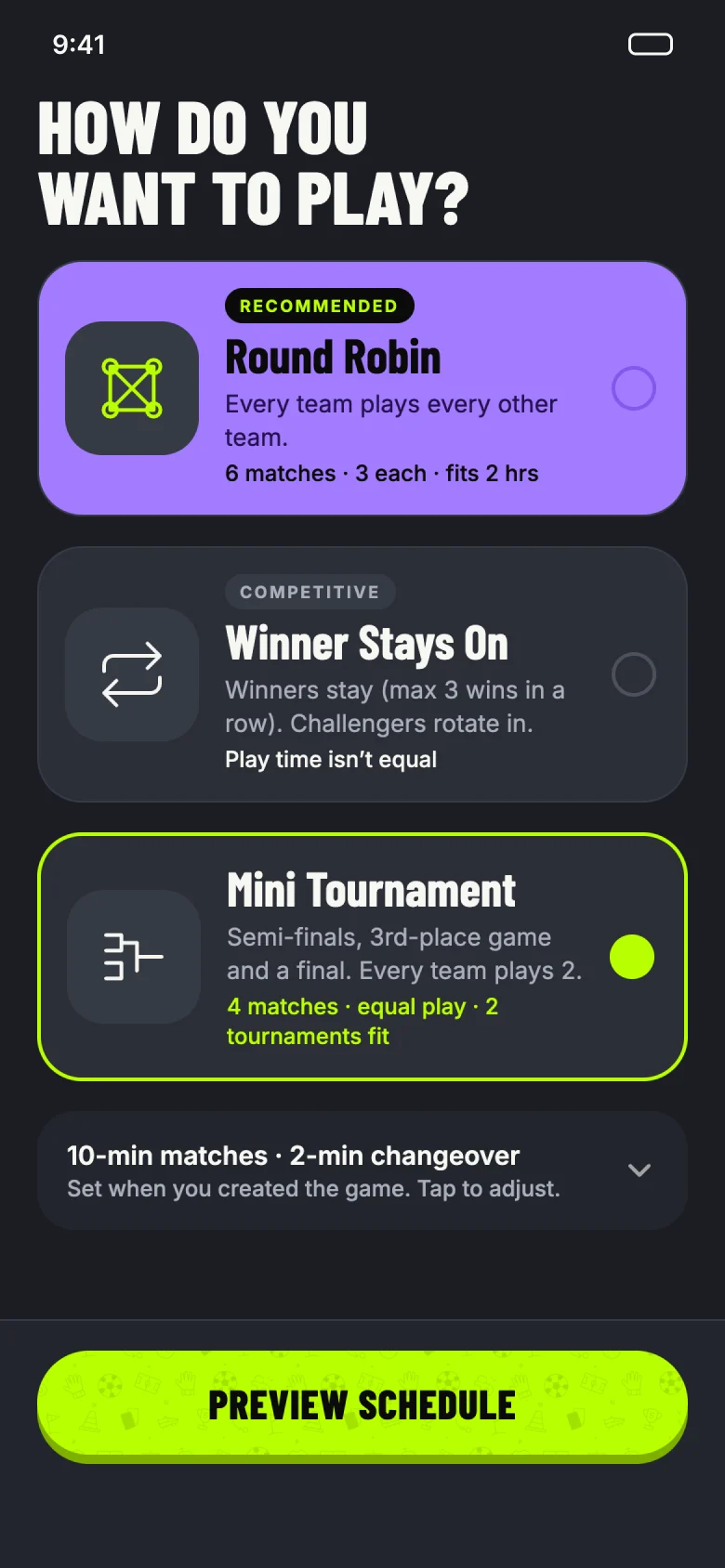
07Choose the format
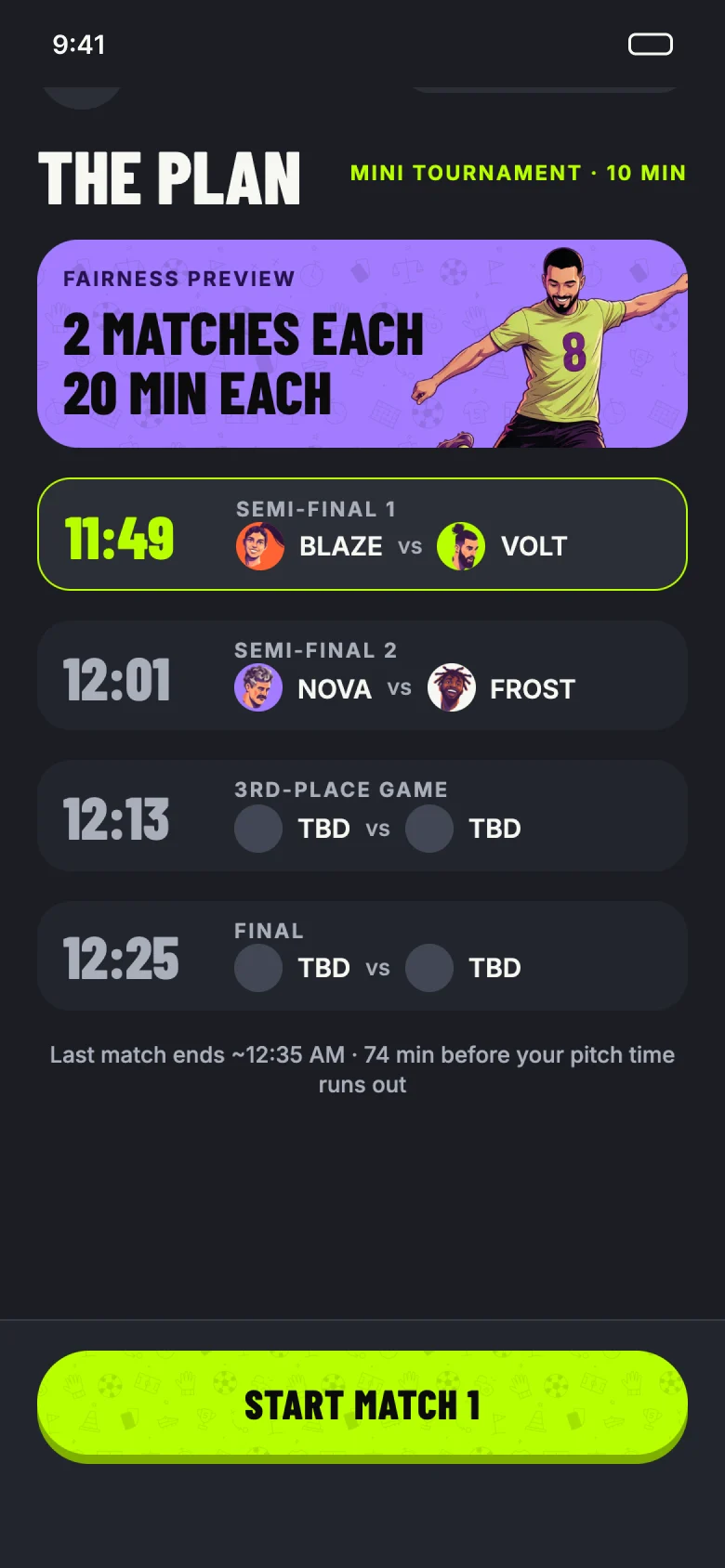
08The plan · fairness
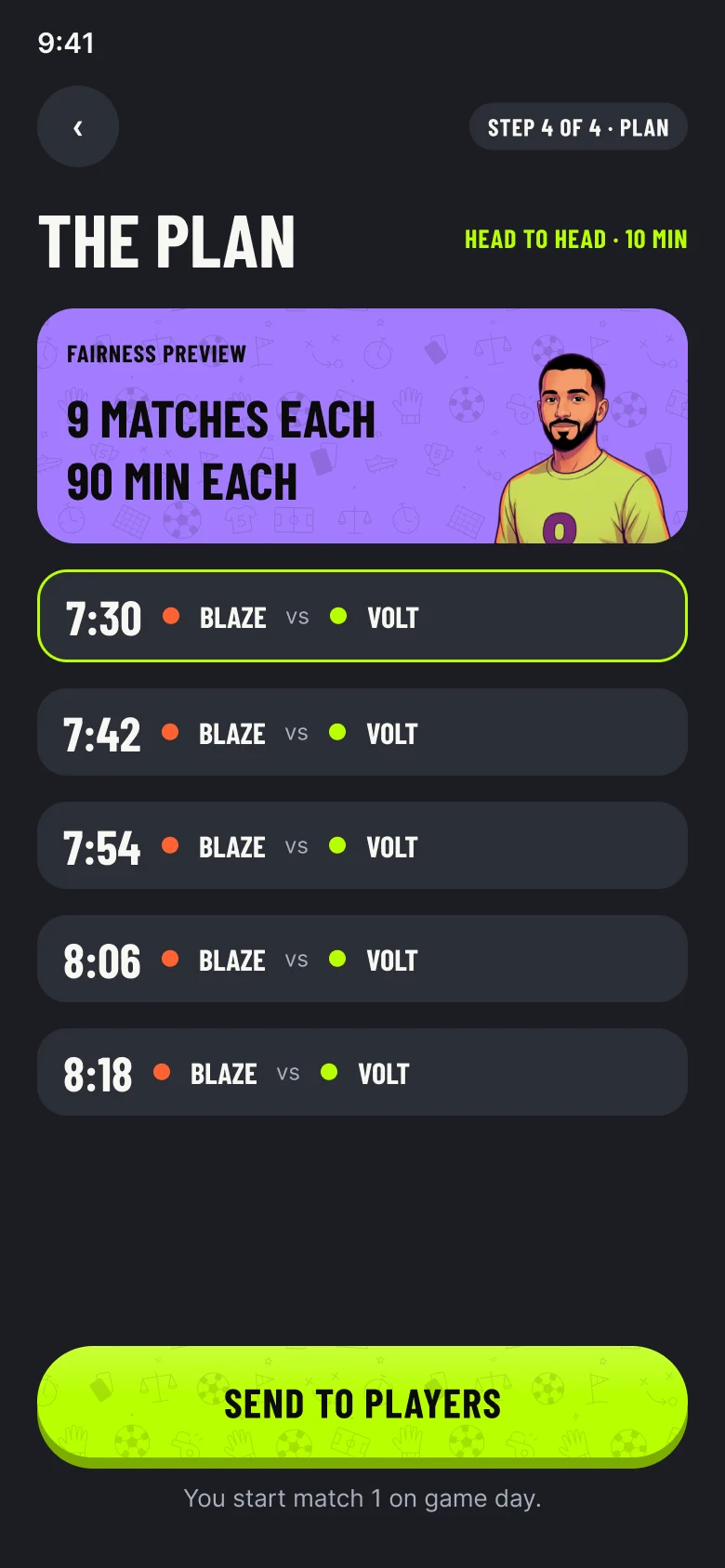
09Send to players
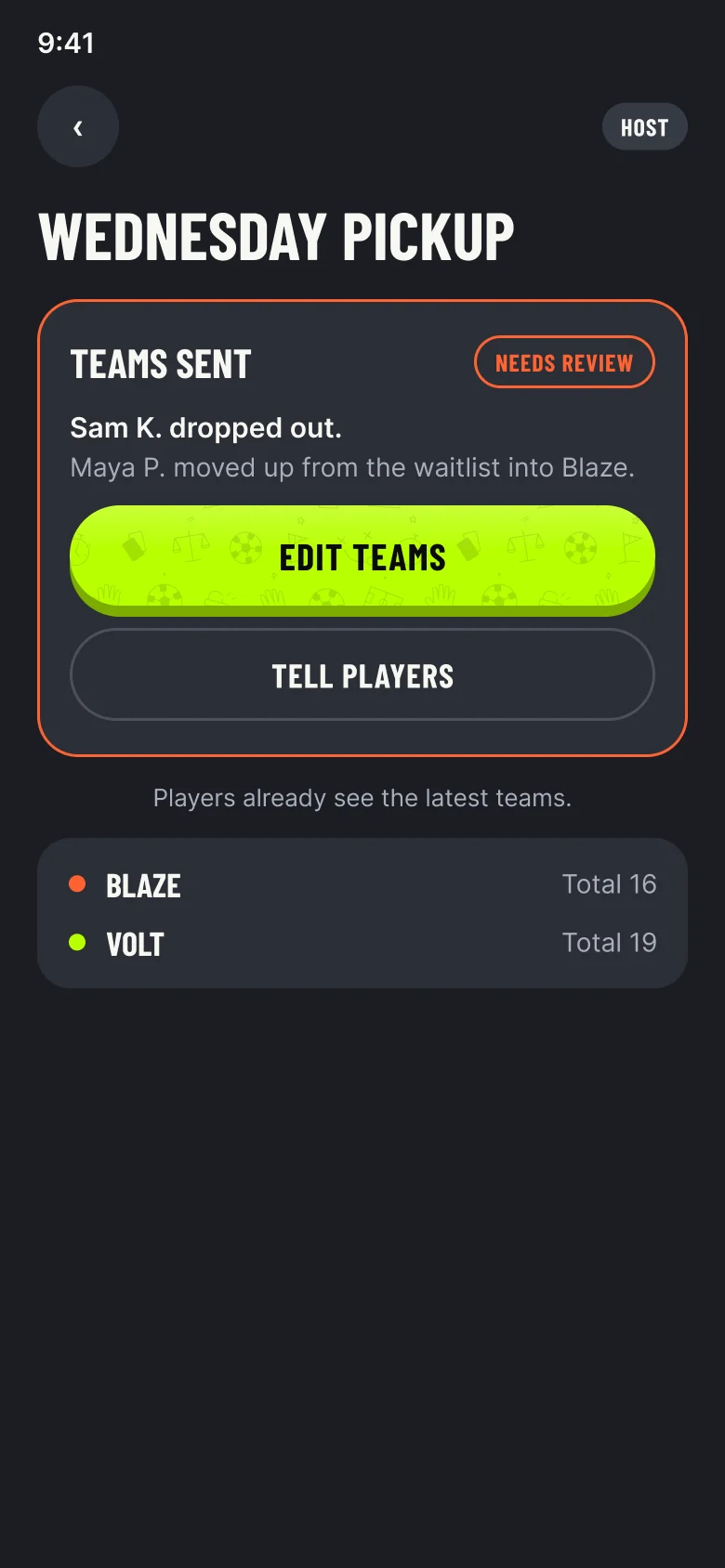
10After a drop-out
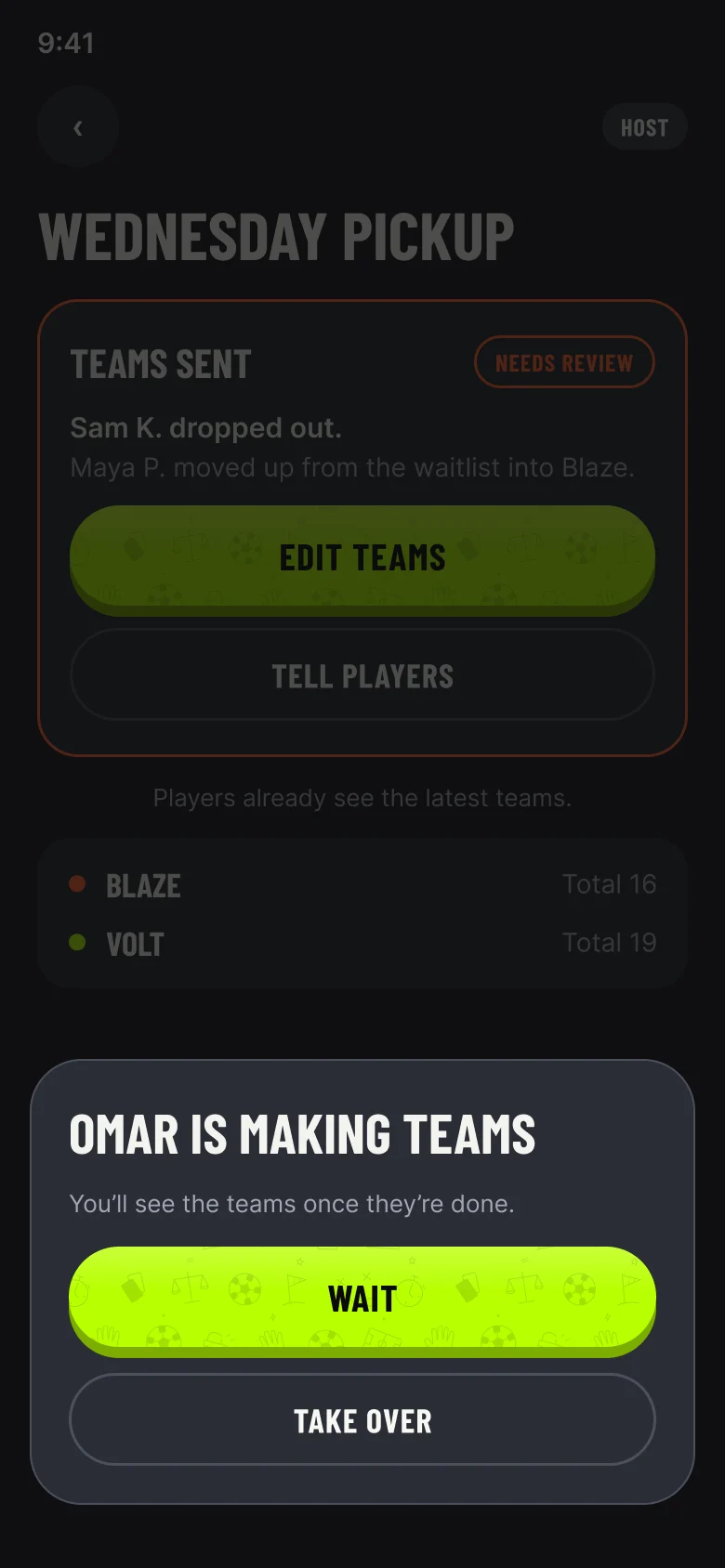
11Someone’s making teams
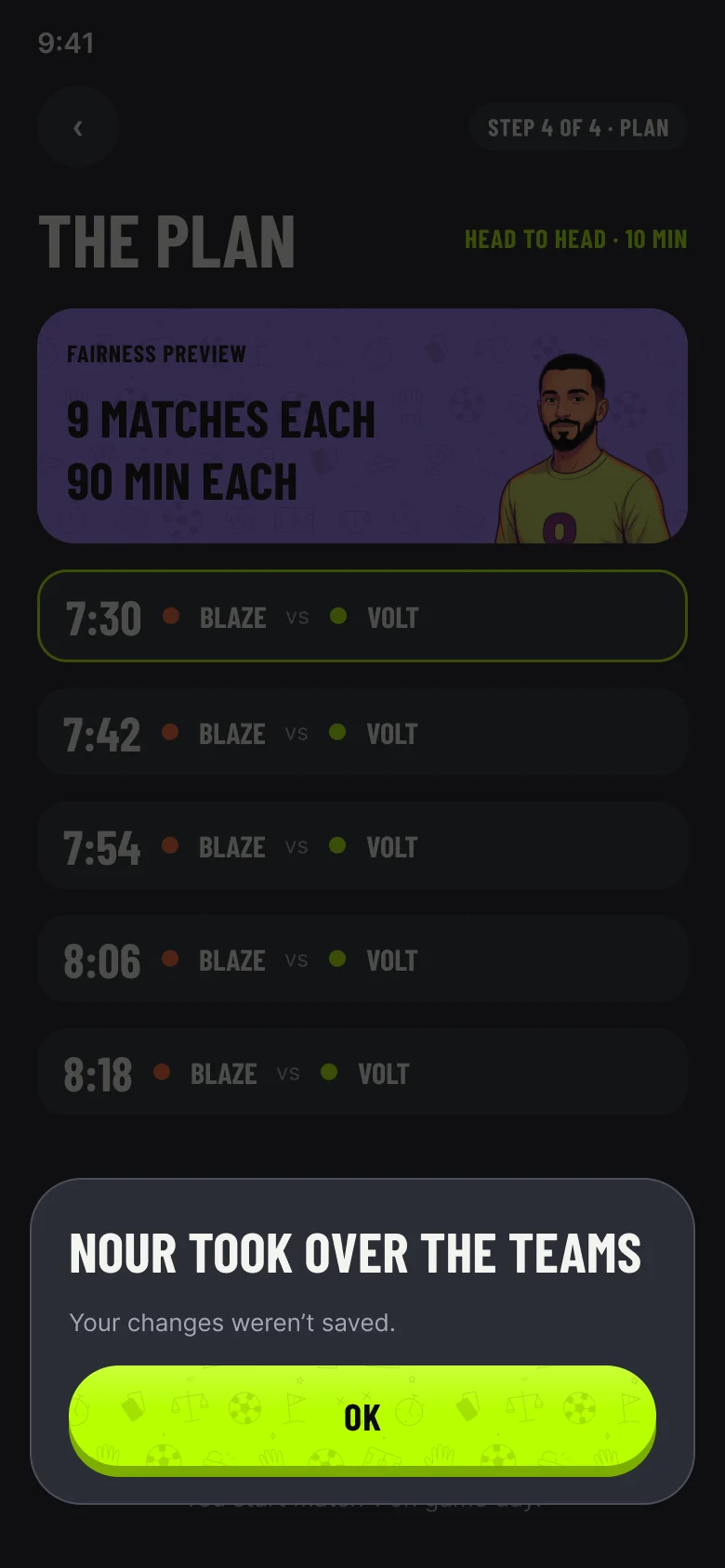
12Taken over
Check-in opens an hour before. Everyone counts as here; the host taps only who isn’t, and late arrivals keep their place.
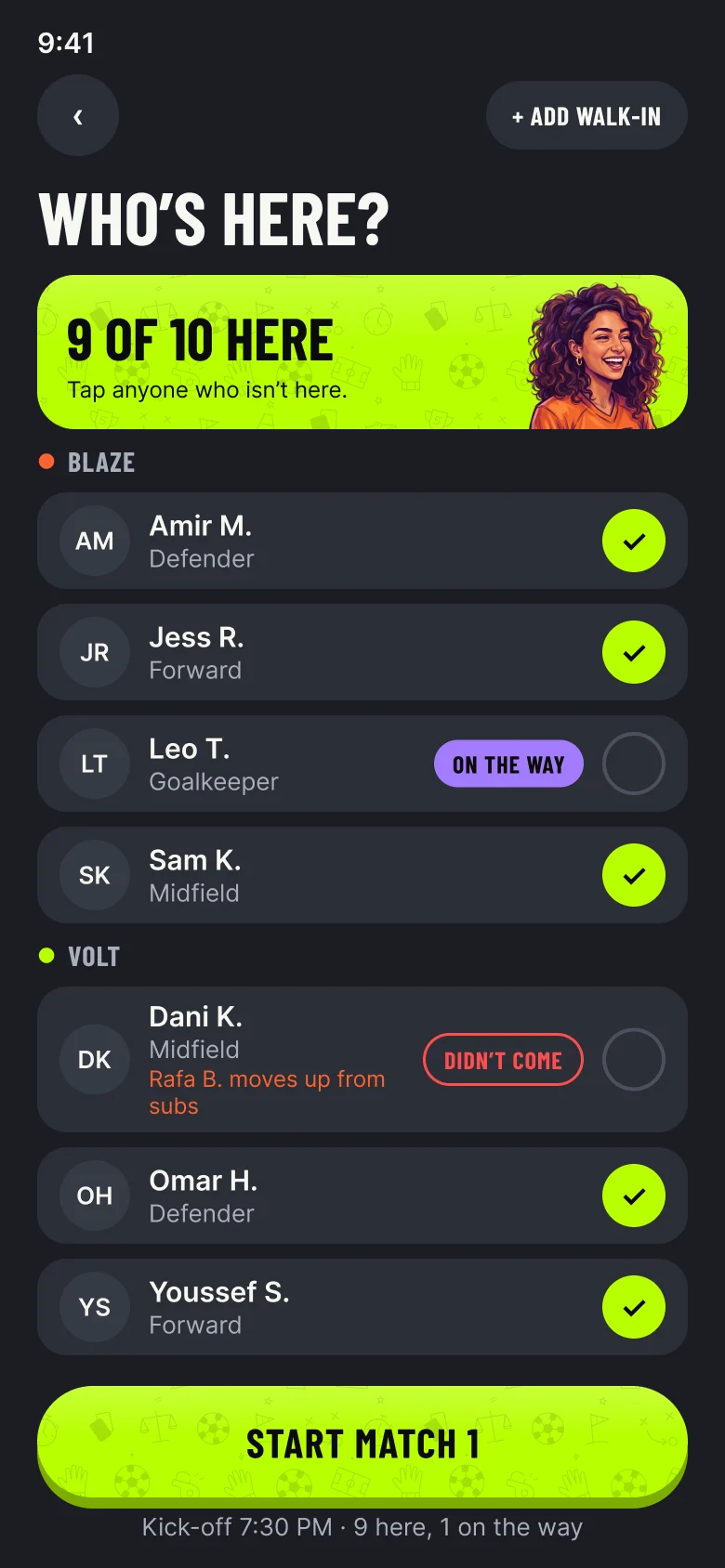
01Who’s here?
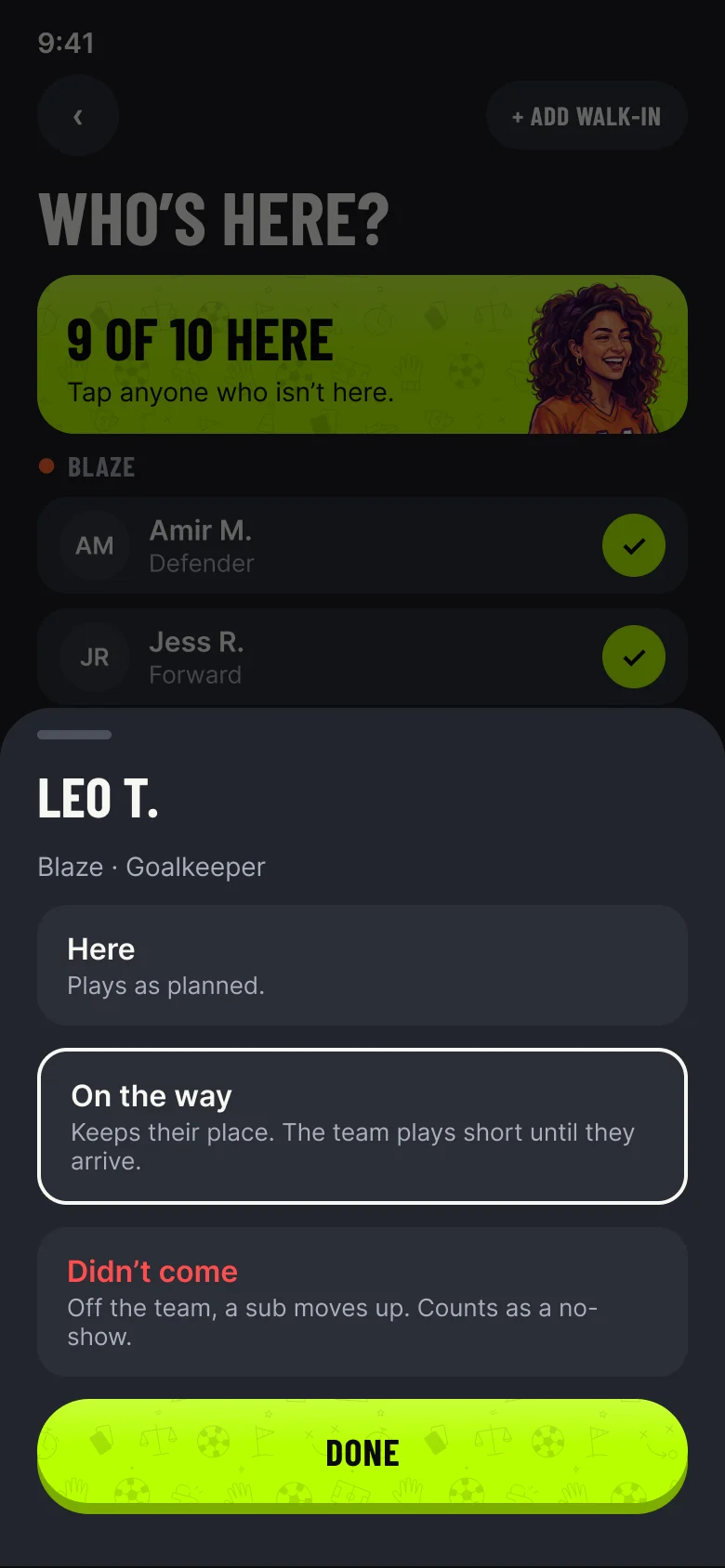
02Tap a player
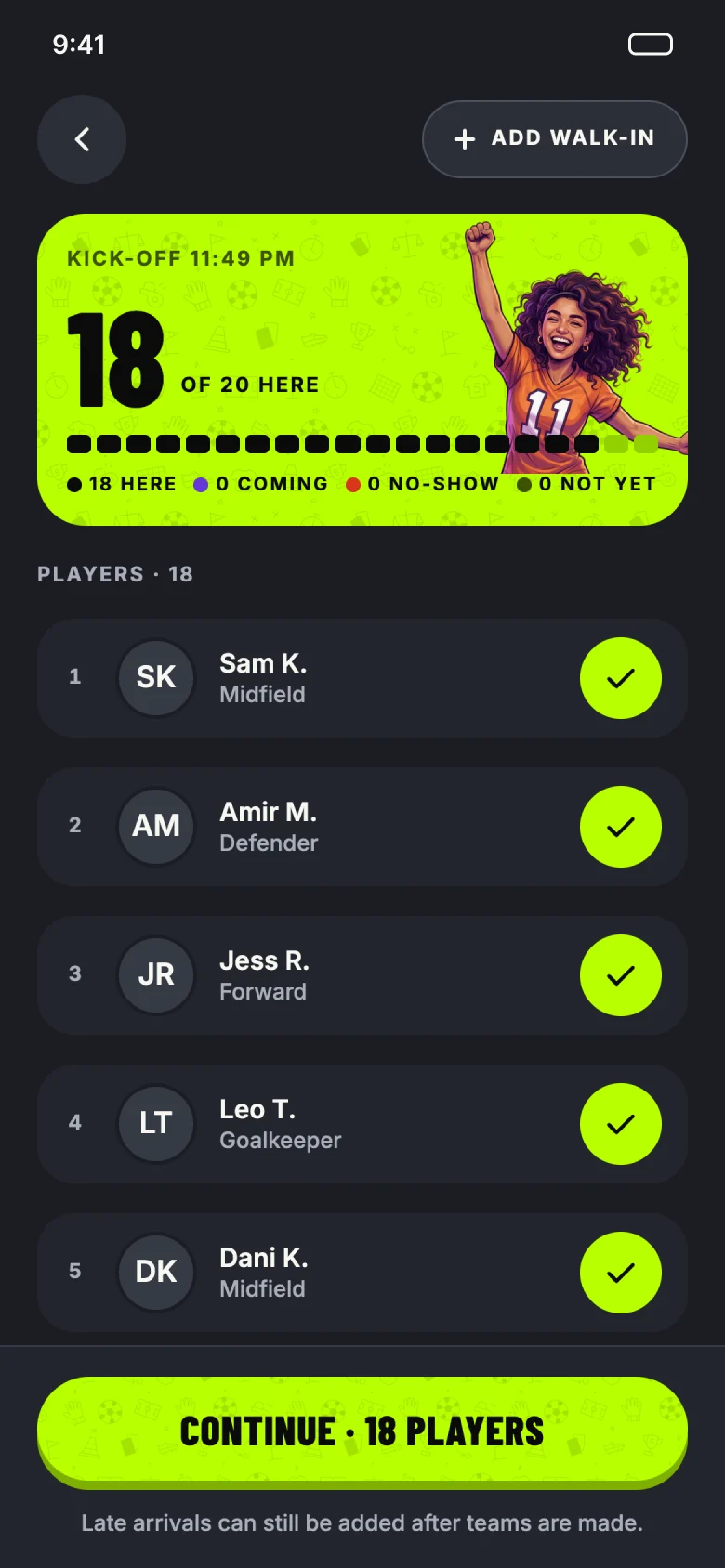
03Check-in
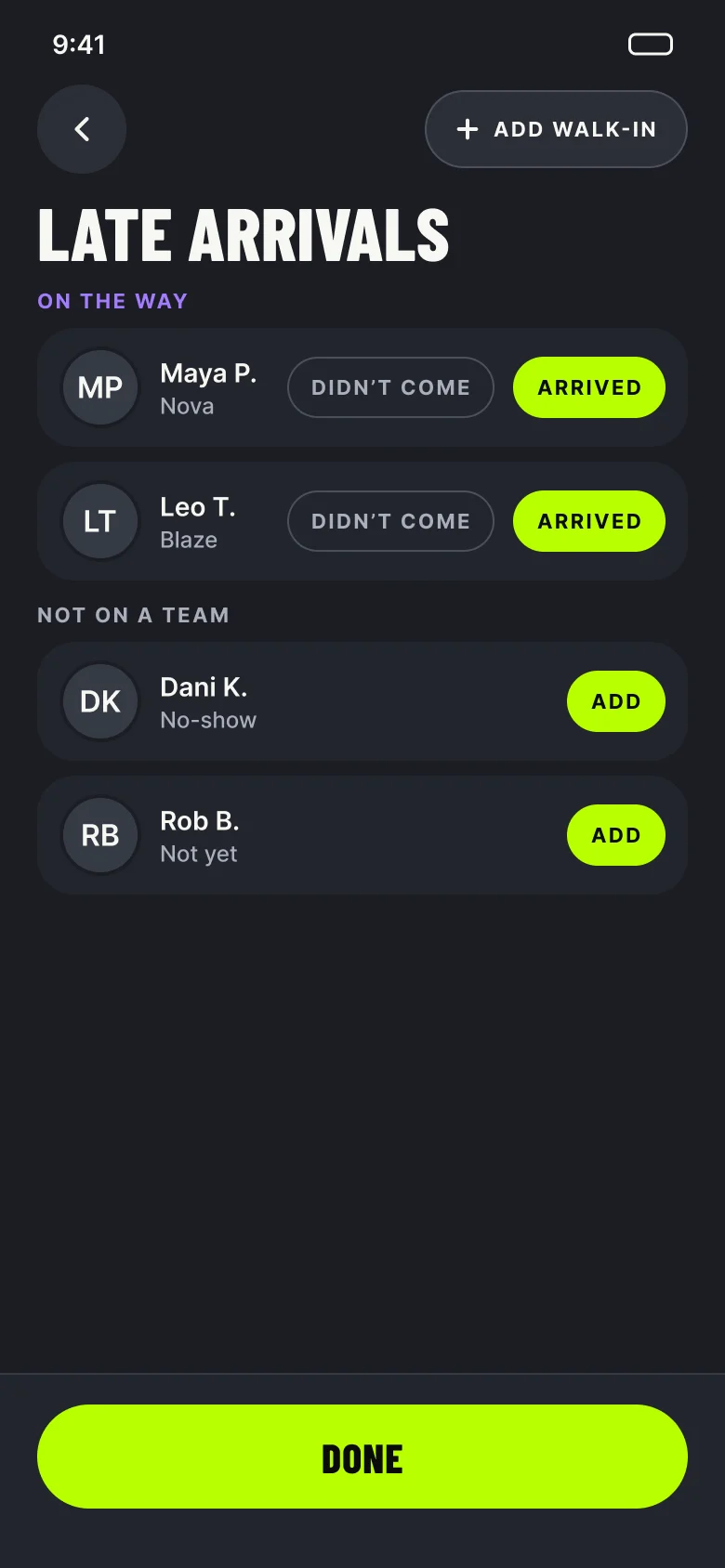
04Late arrivals
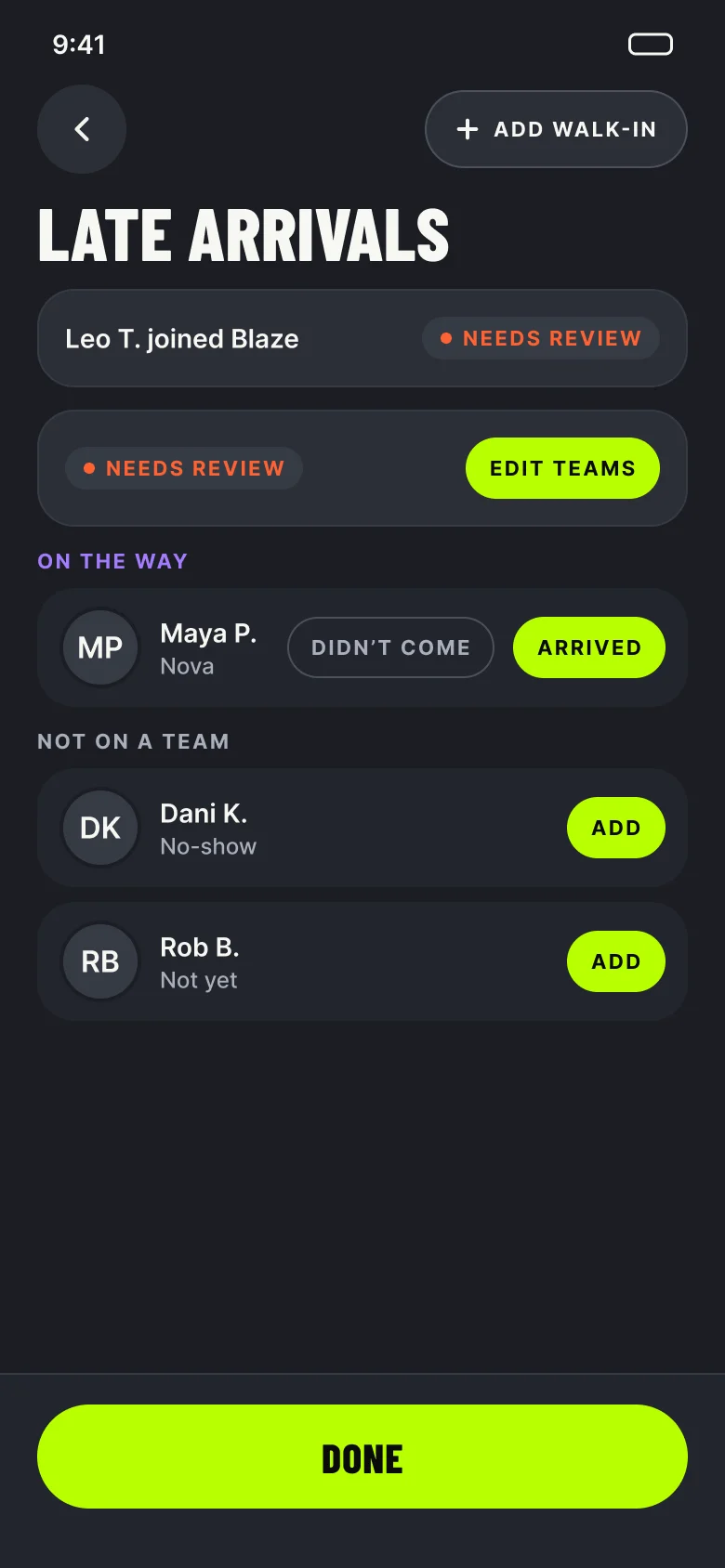
05Late arrivals · needs review
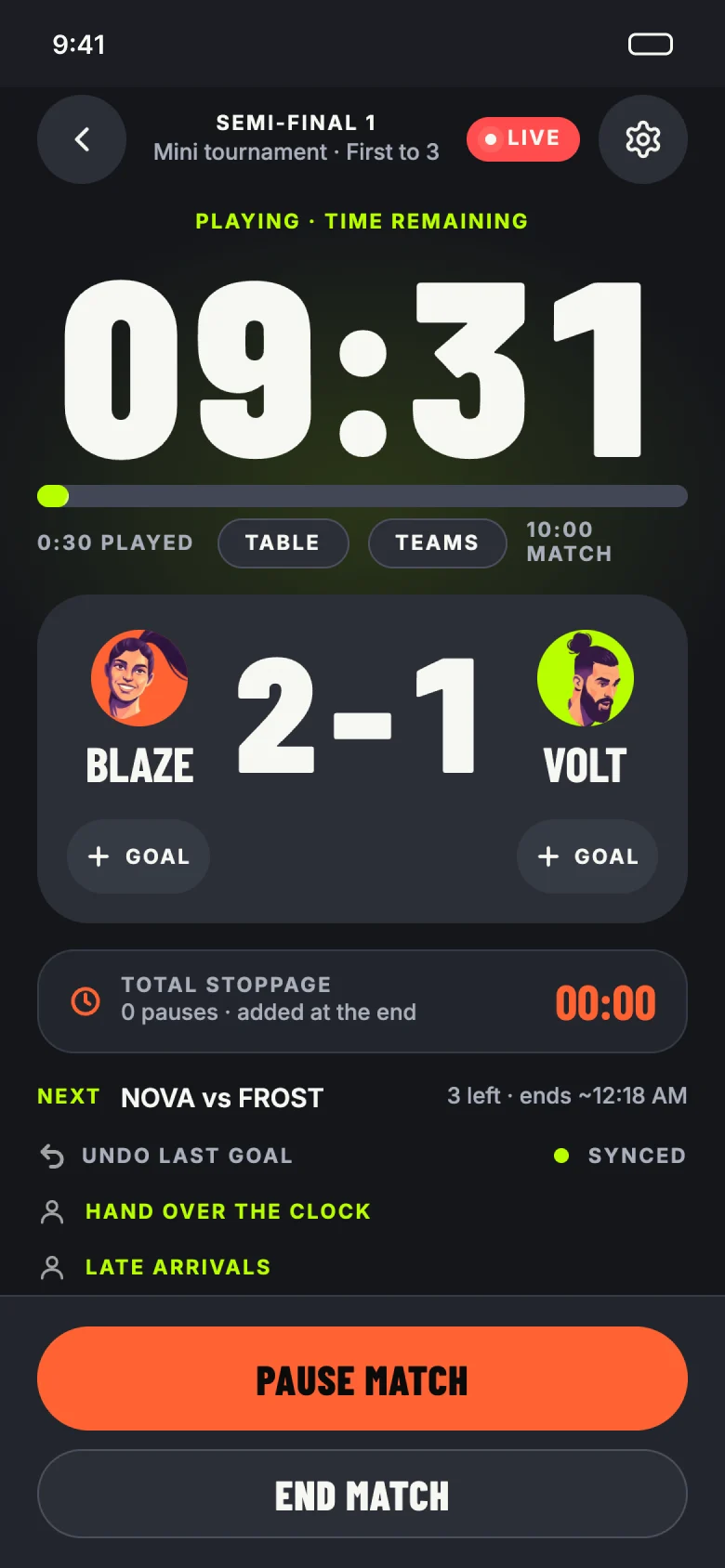
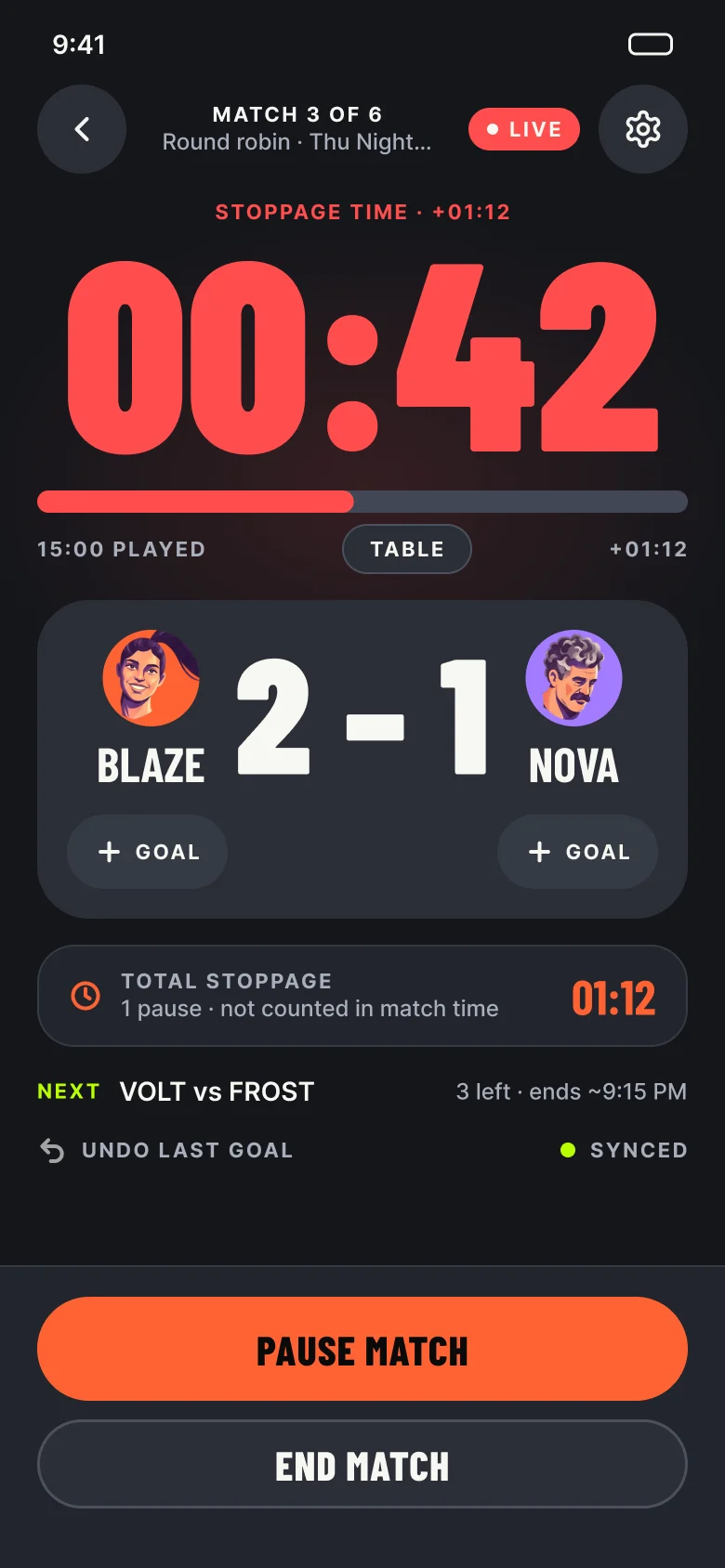
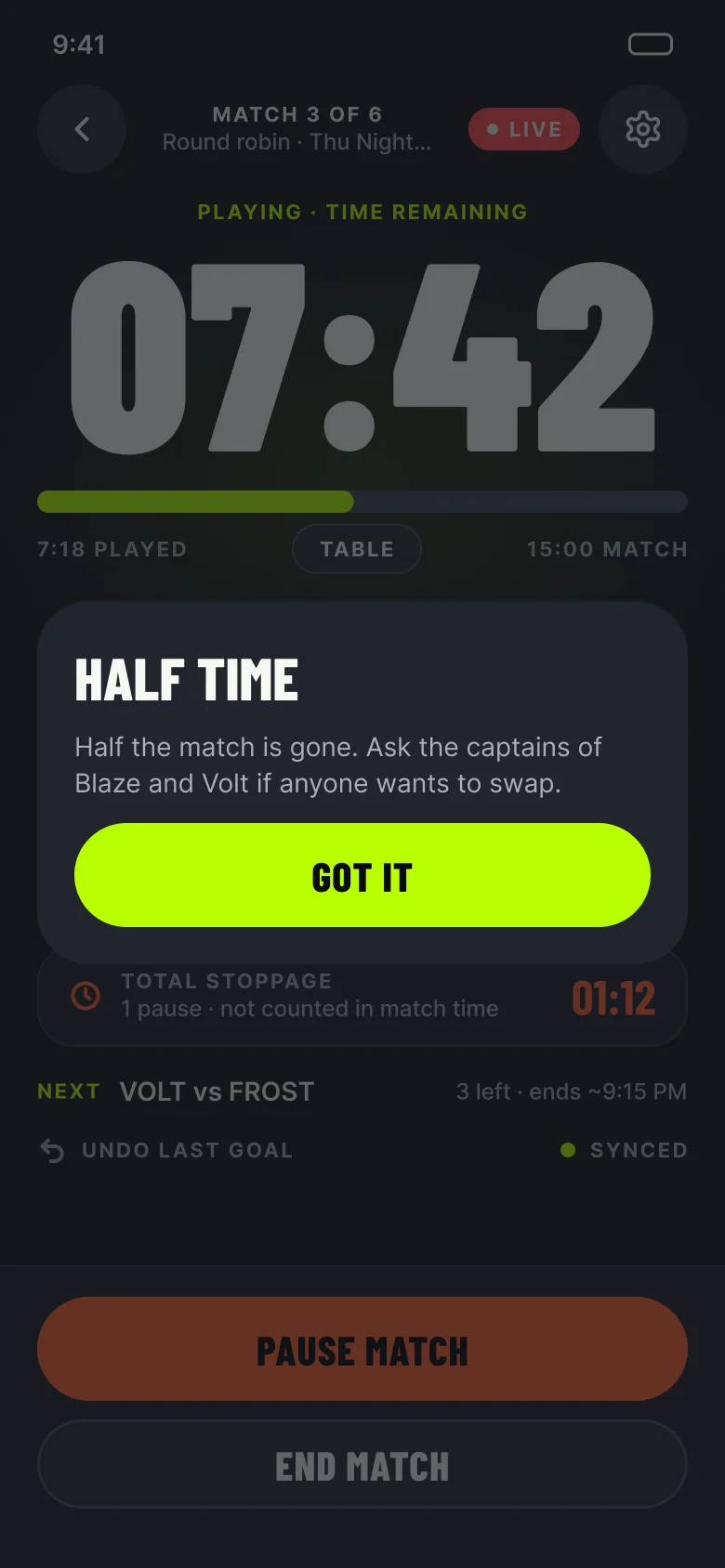
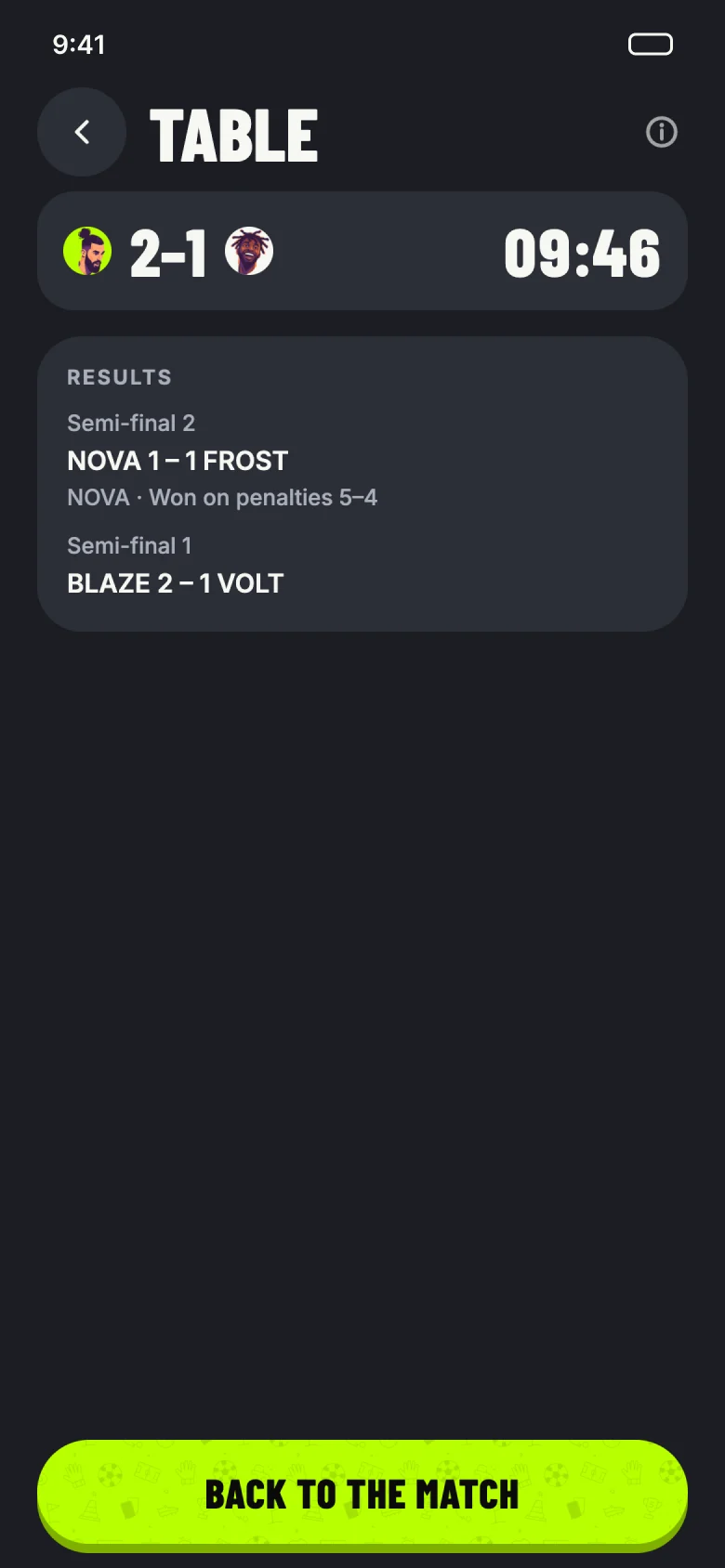
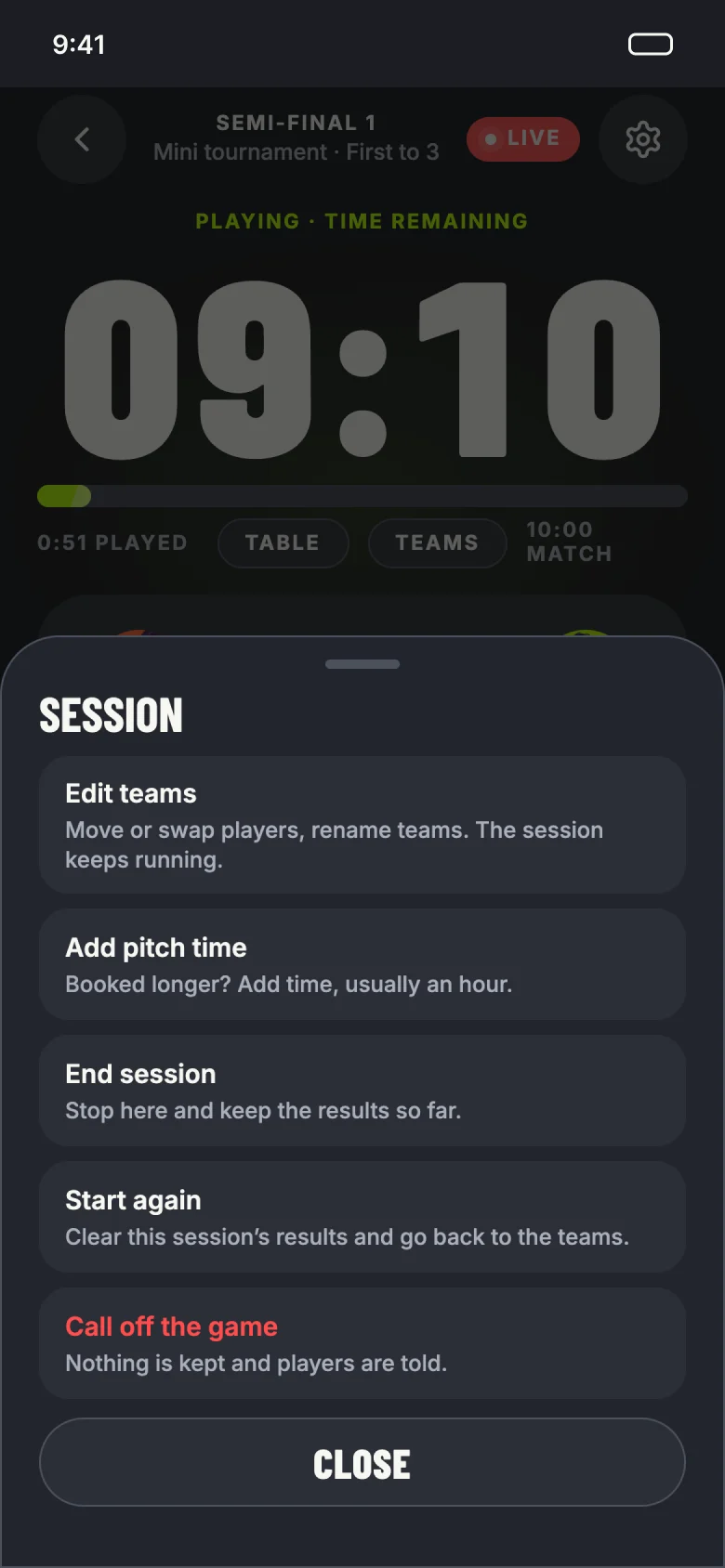
A clock everyone trusts, kept on the server. Pause with a reason, stoppage time in red, the table over the match, and the score on the Lock Screen.
01Live · host
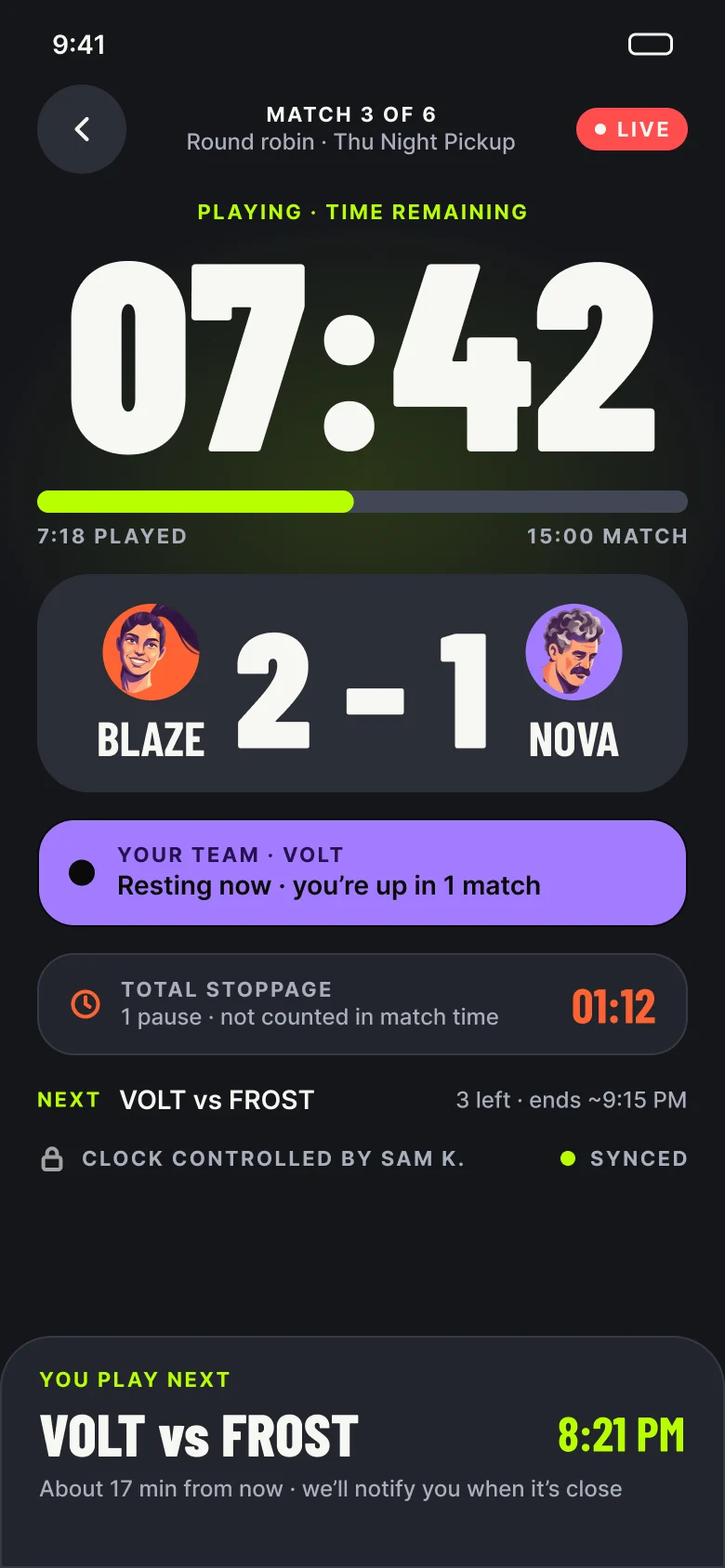
02Live · player
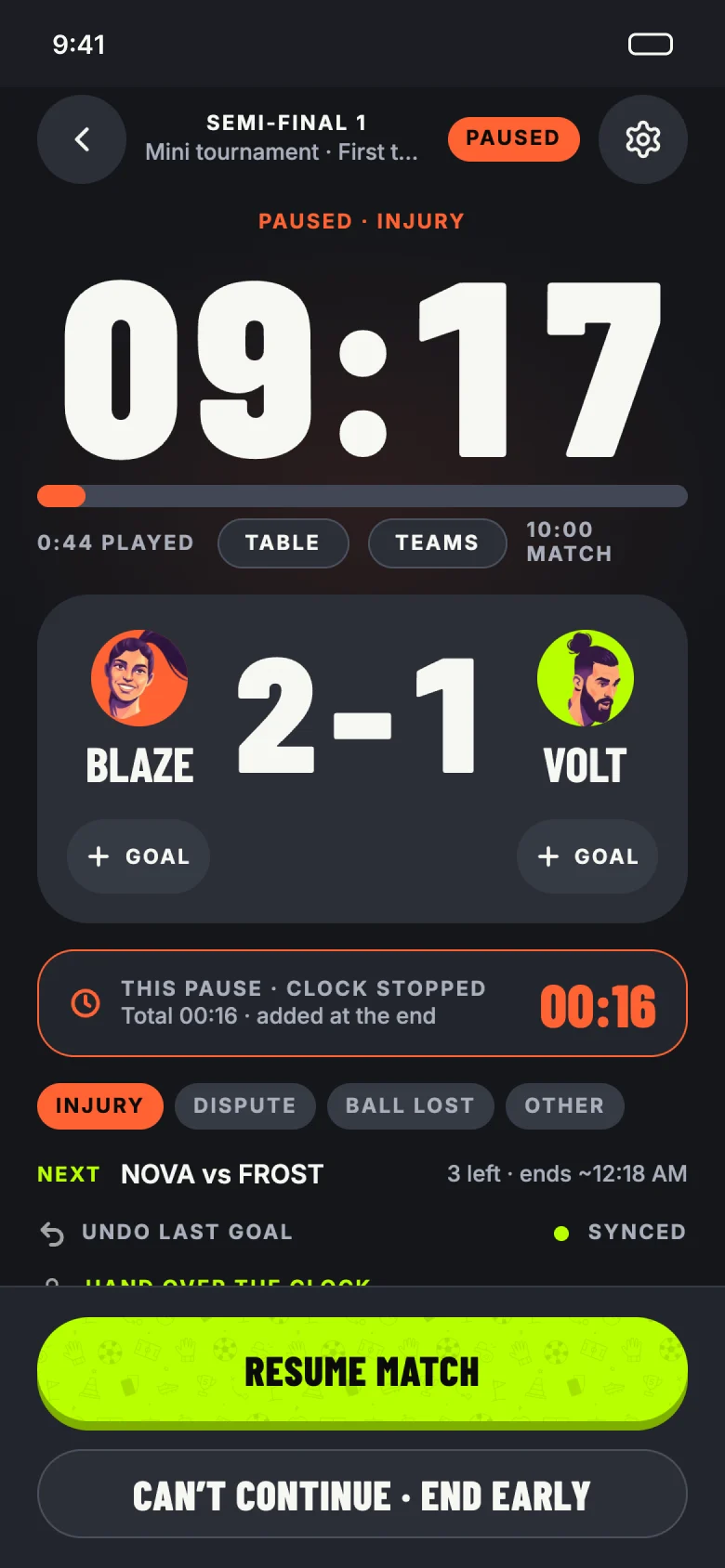
03Paused
04Stoppage time
05Half time
06Table during a match
07Session menu
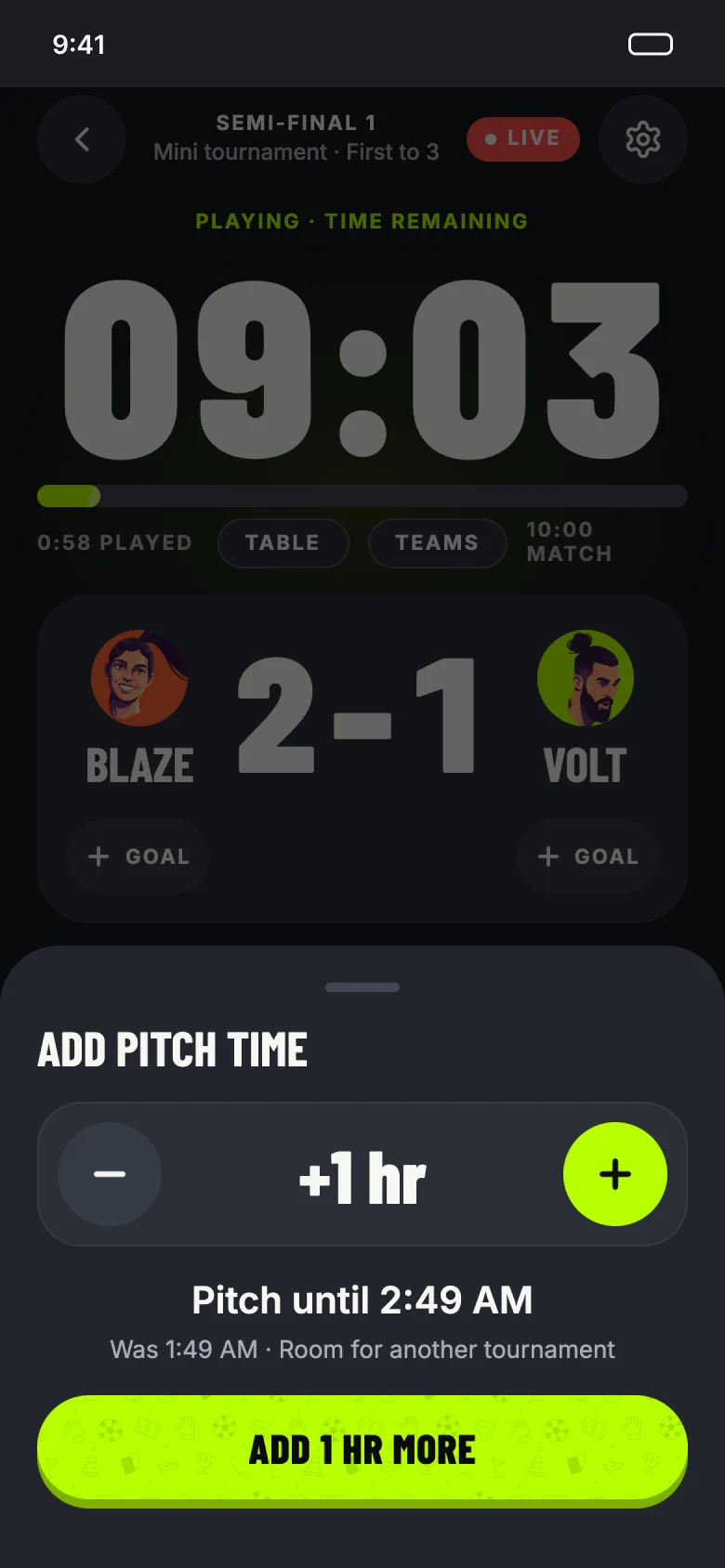
08Add pitch time
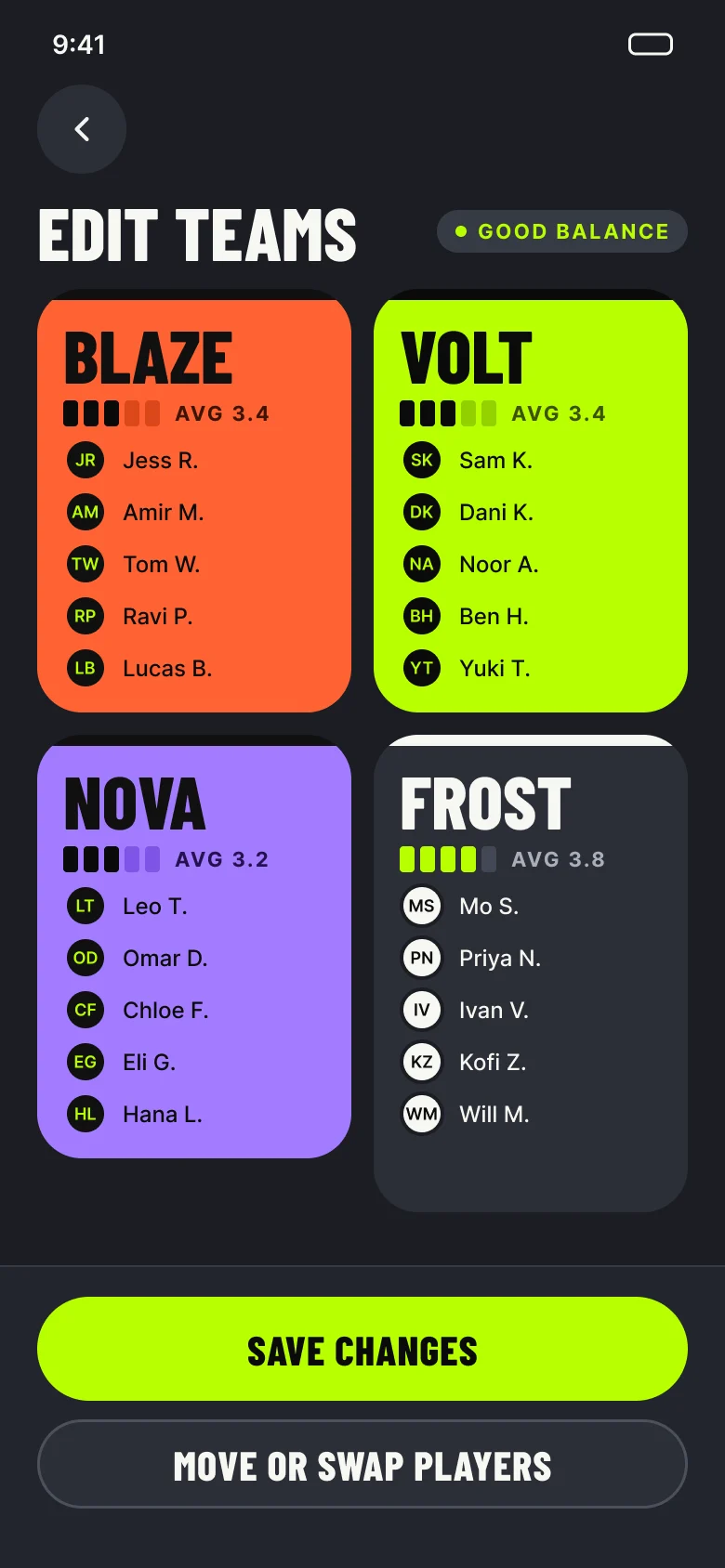
09Edit teams
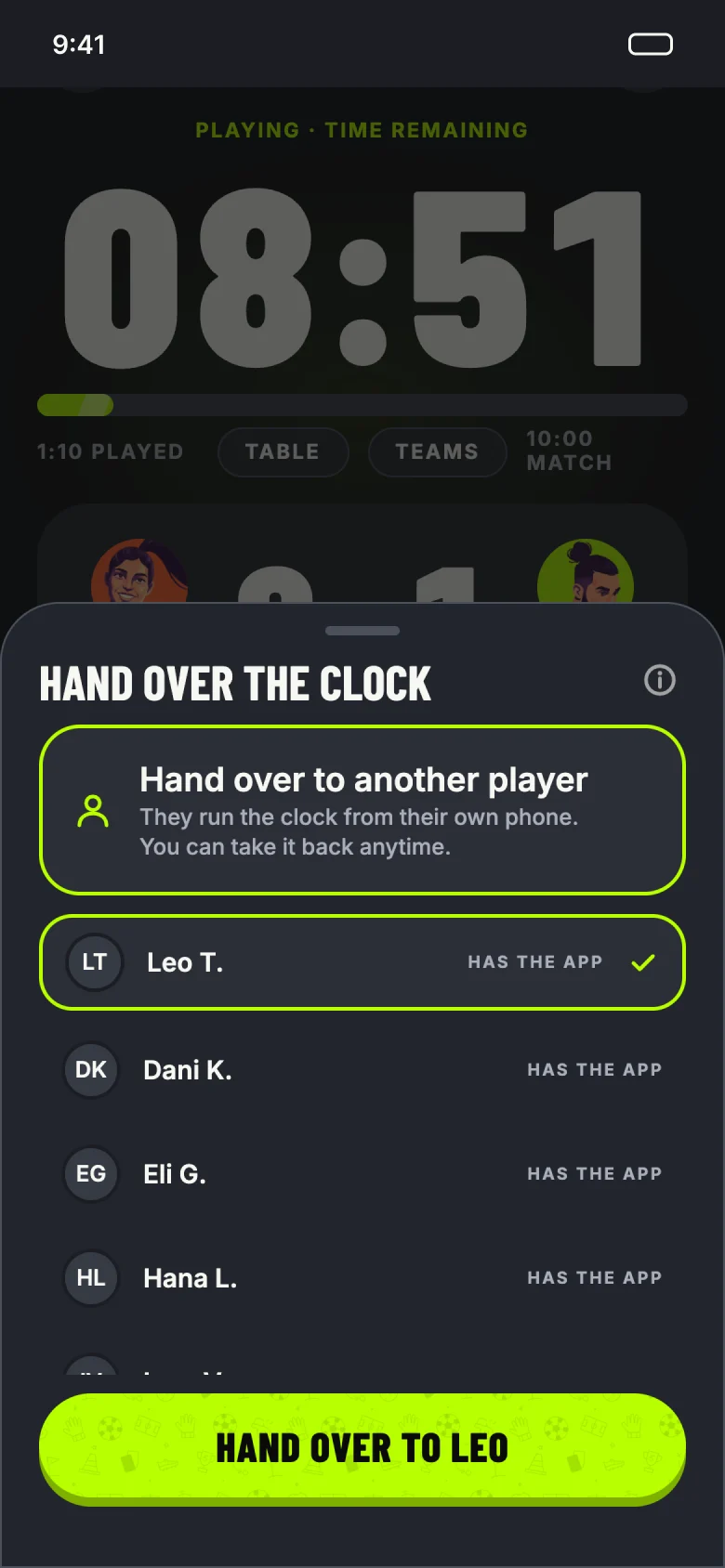
10Hand over the clock
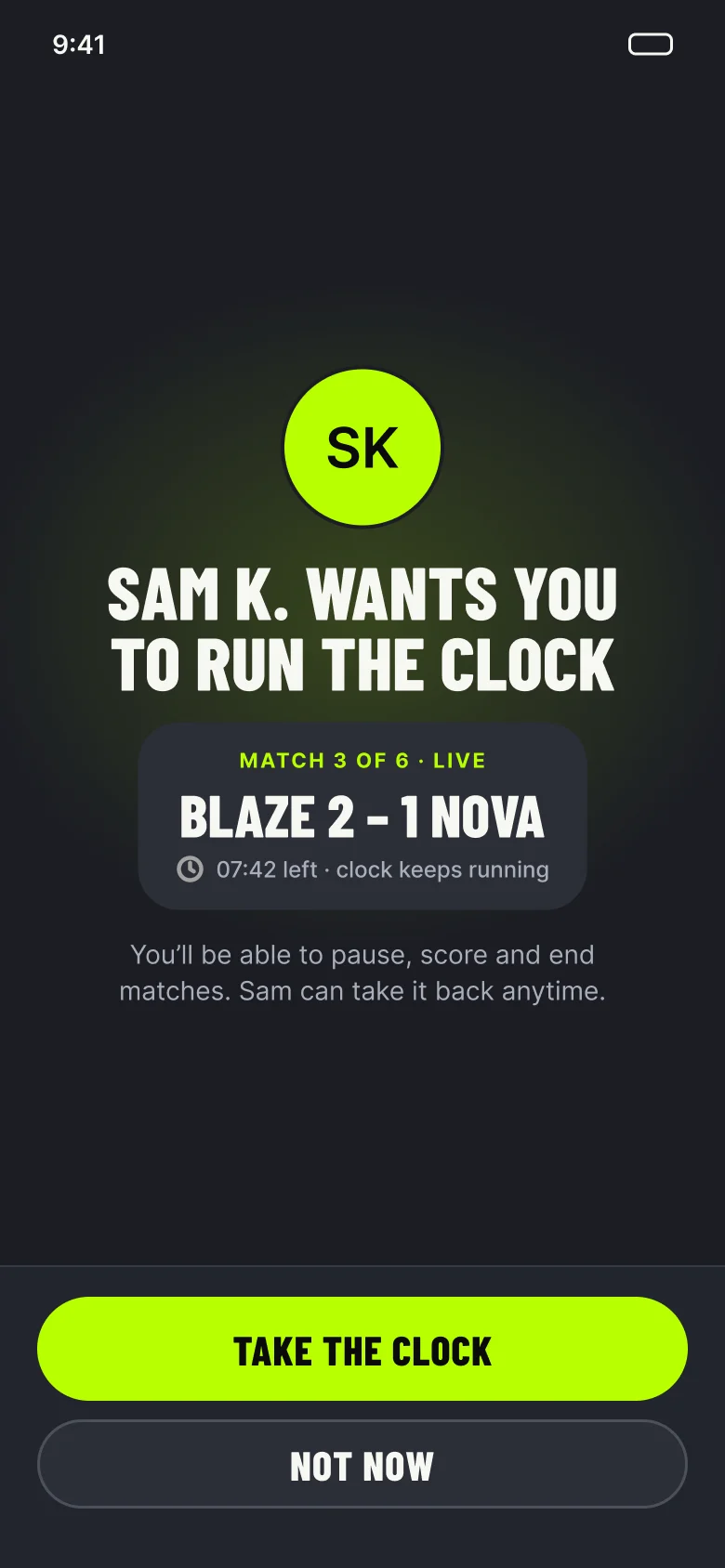
11Timekeeper request
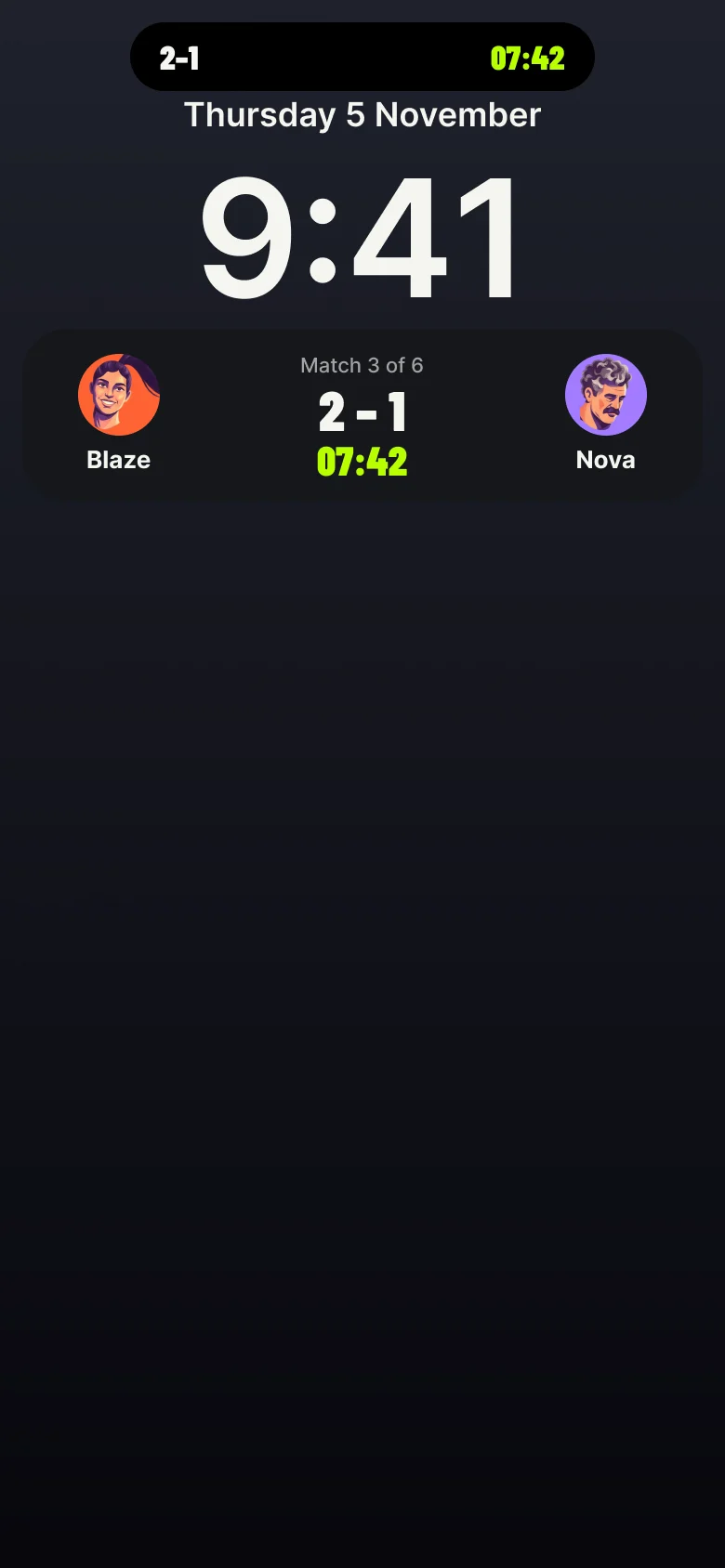
12Lock Screen
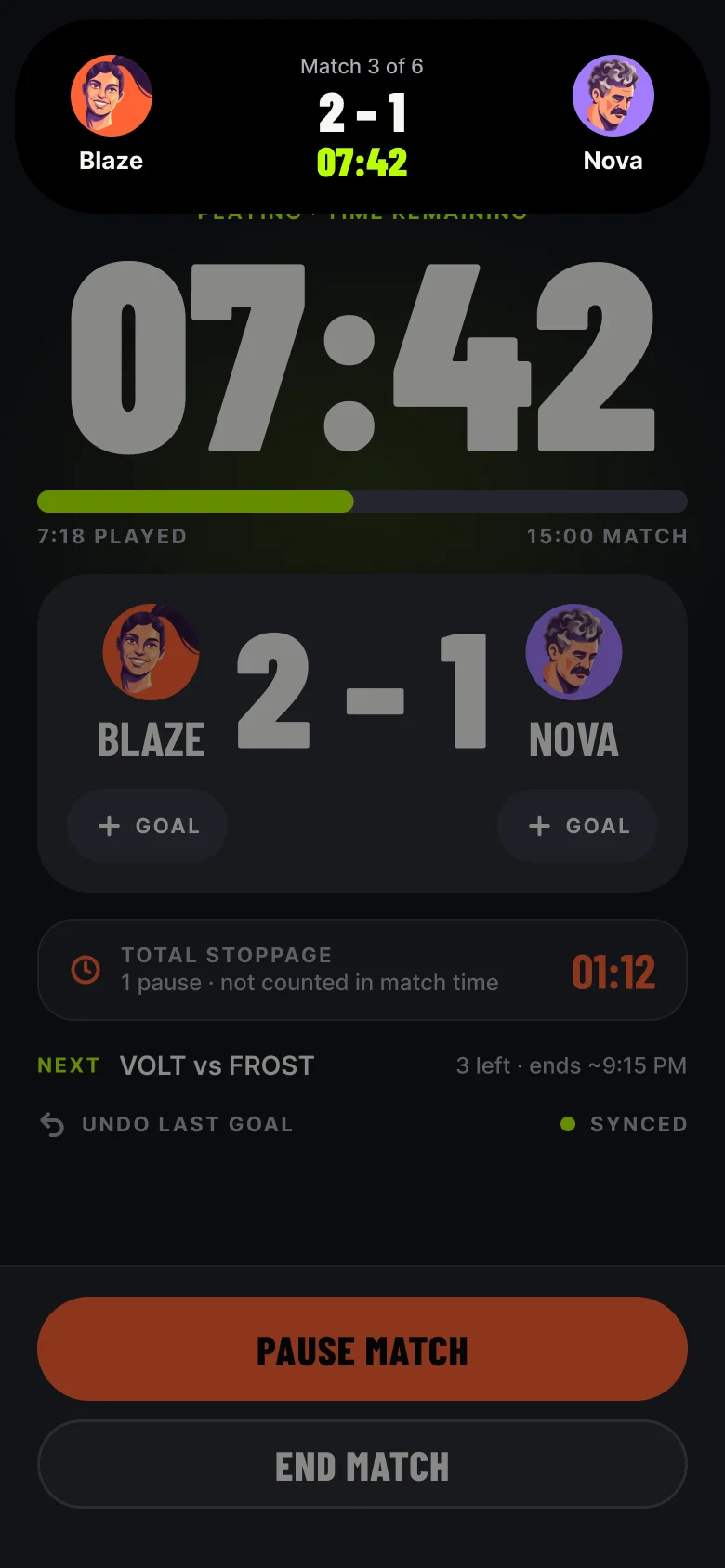
13Dynamic Island
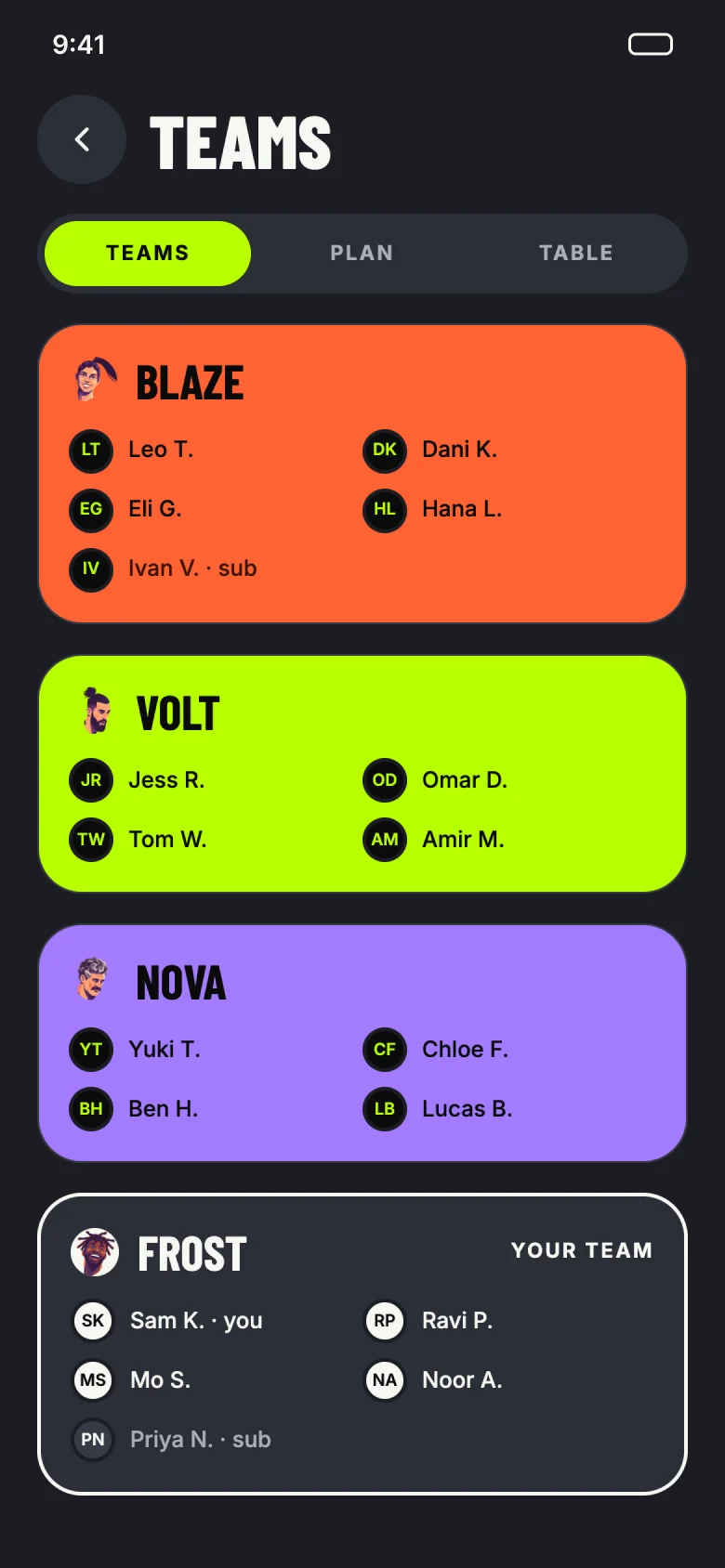
14Teams for players
Round robin, mini tournament, winner stays on or head to head. Fair draw rules for each, then a summary everyone can share.
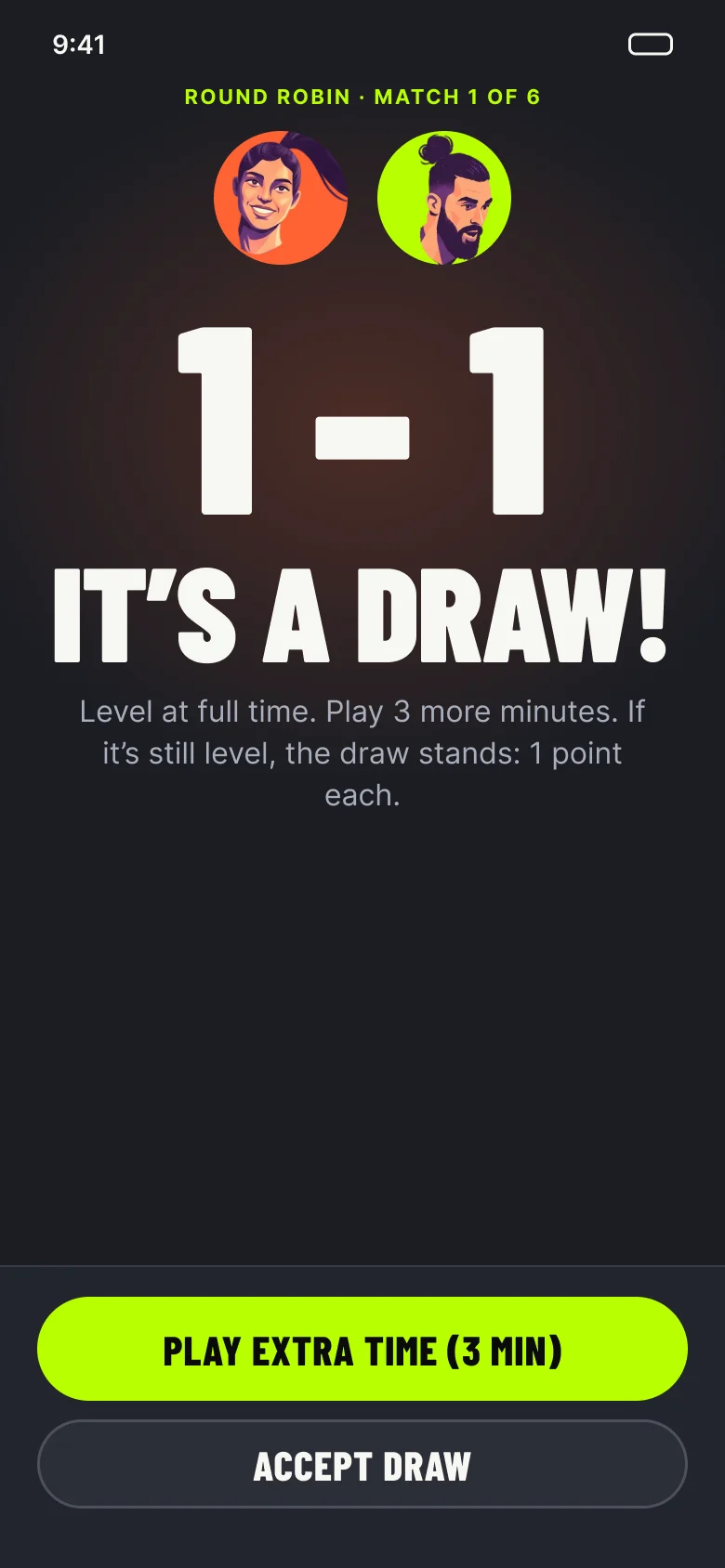
01Draw · round robin
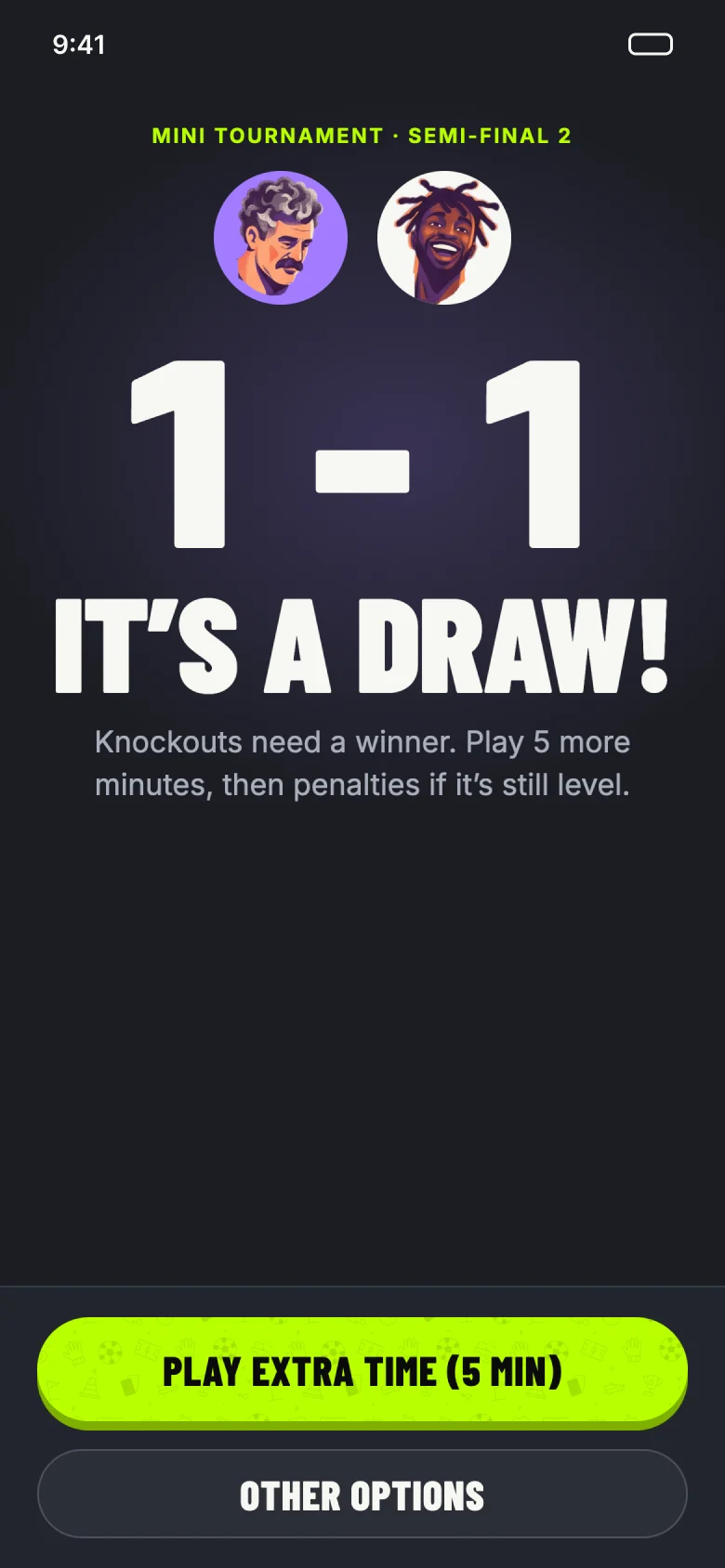
02Draw · knockout
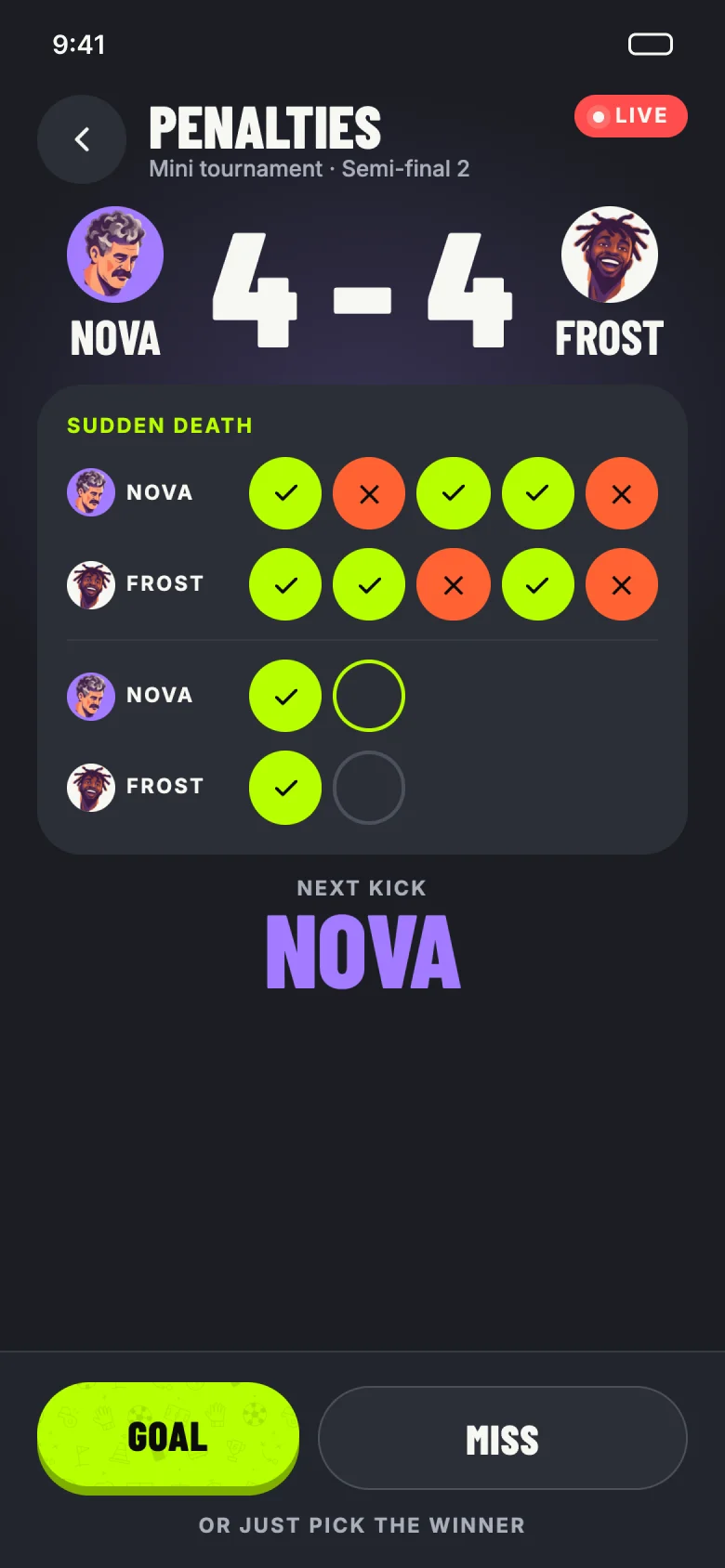
03Penalties
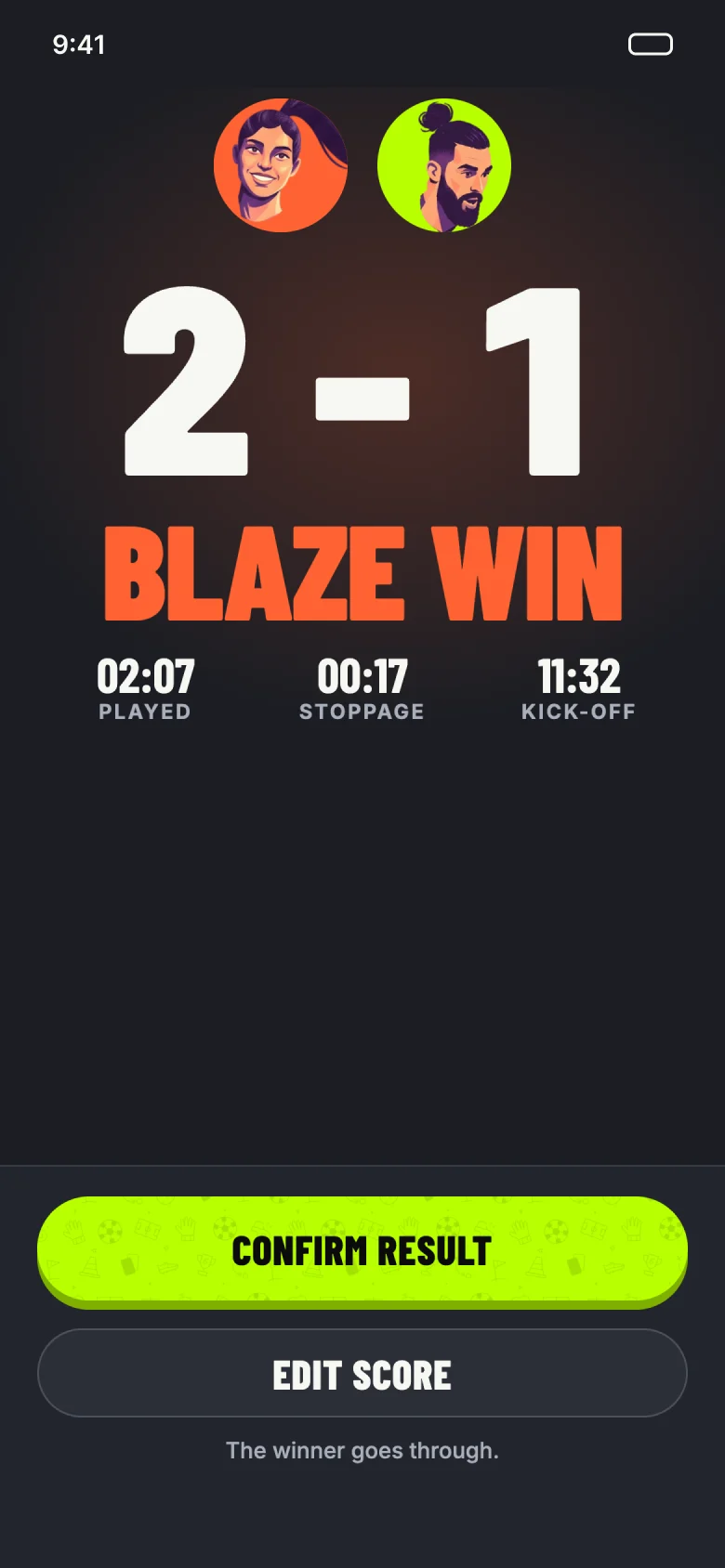
04Match result
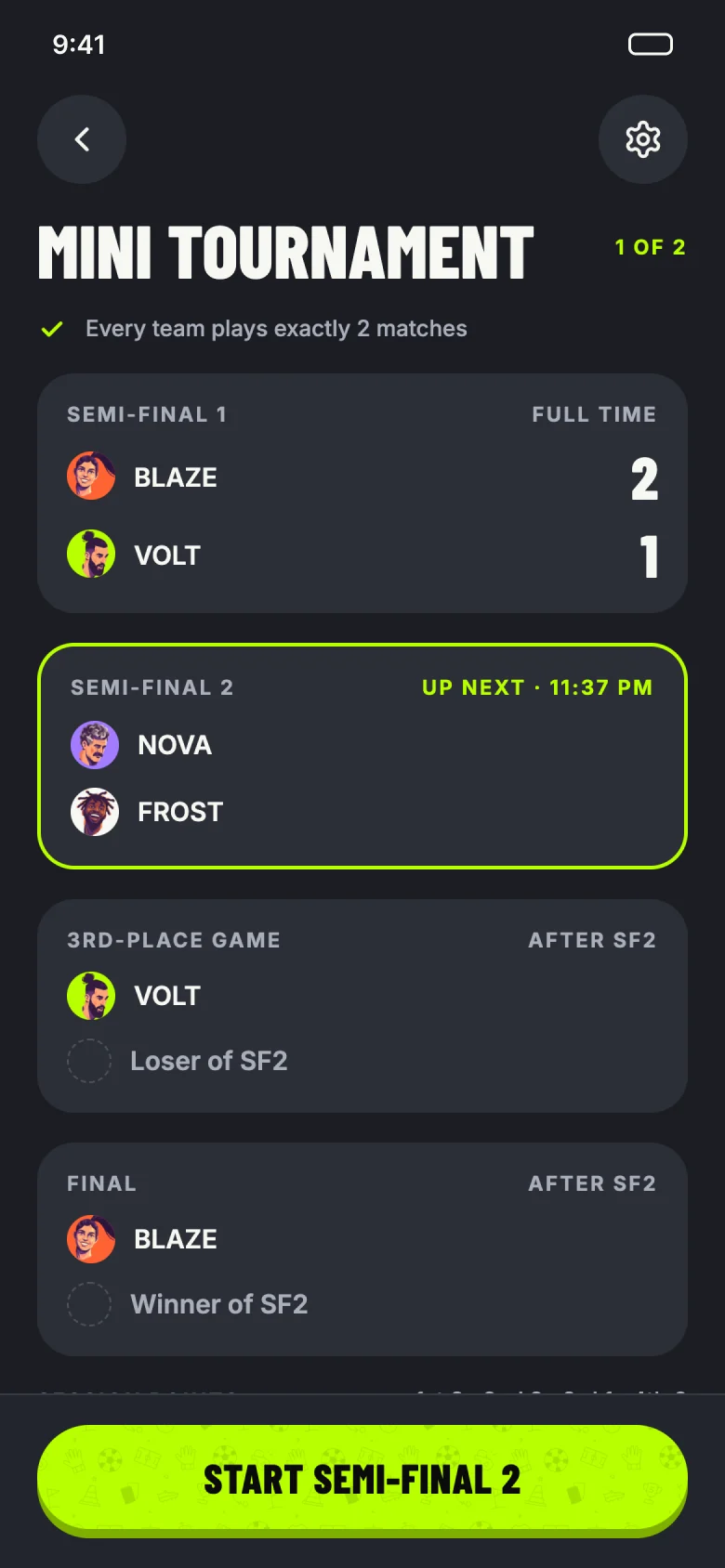
05Next match
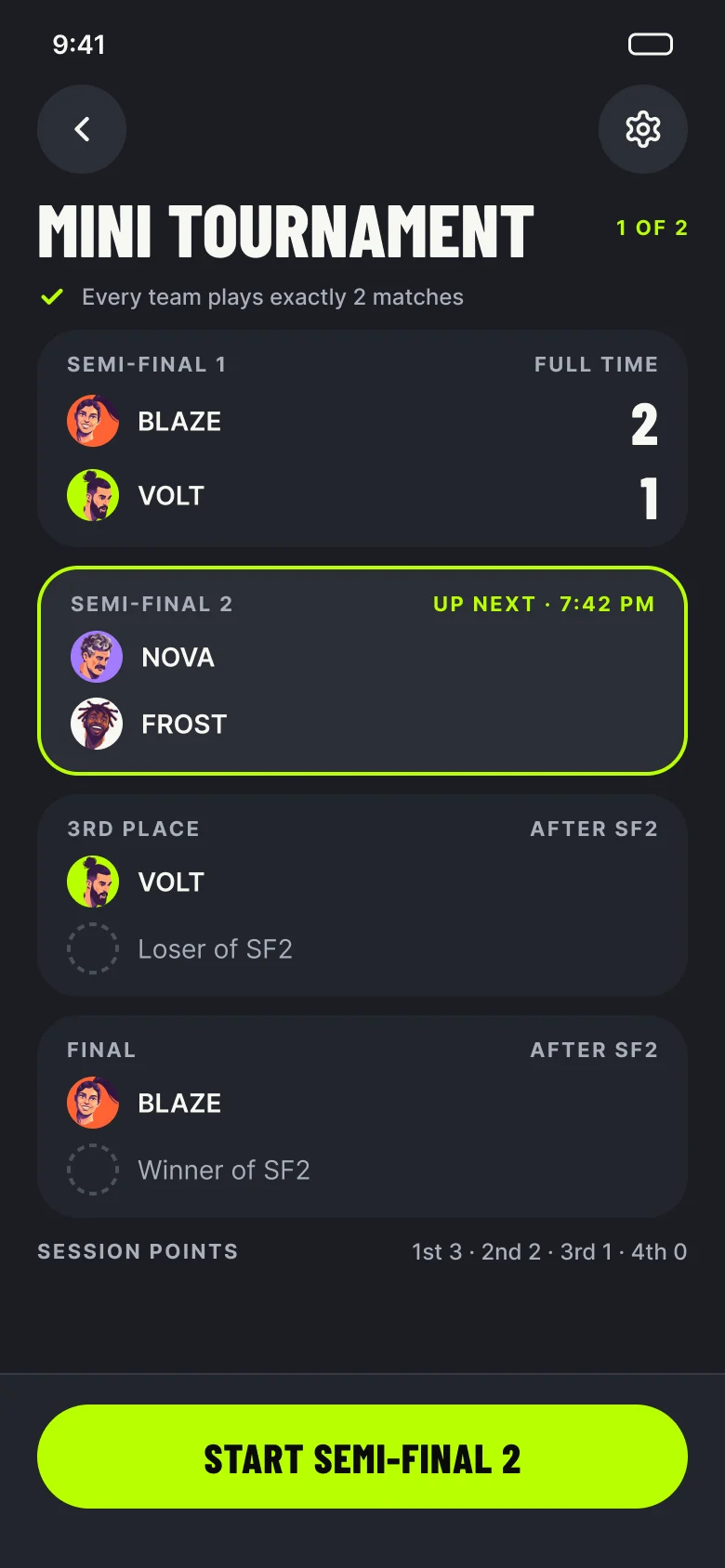
06Mini tournament bracket
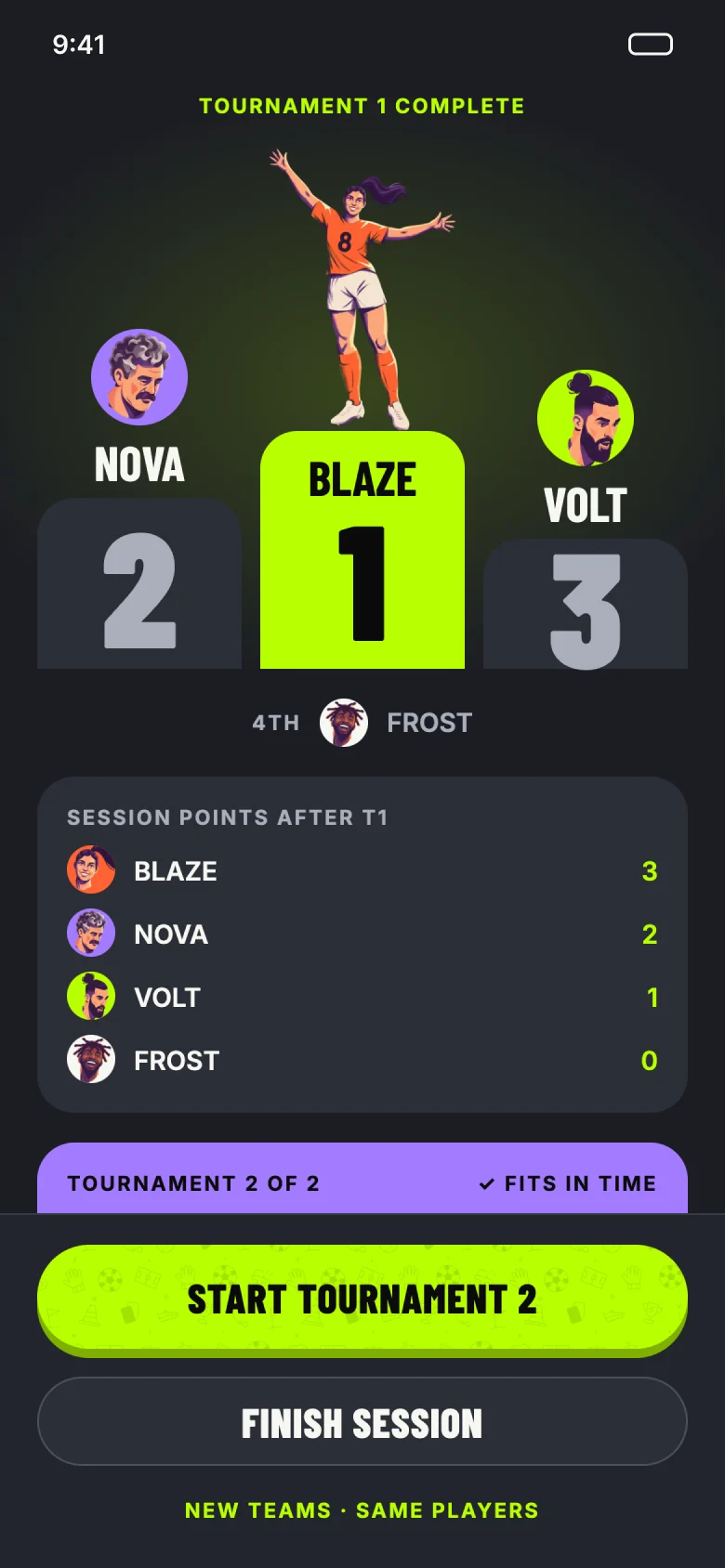
07Tournament complete
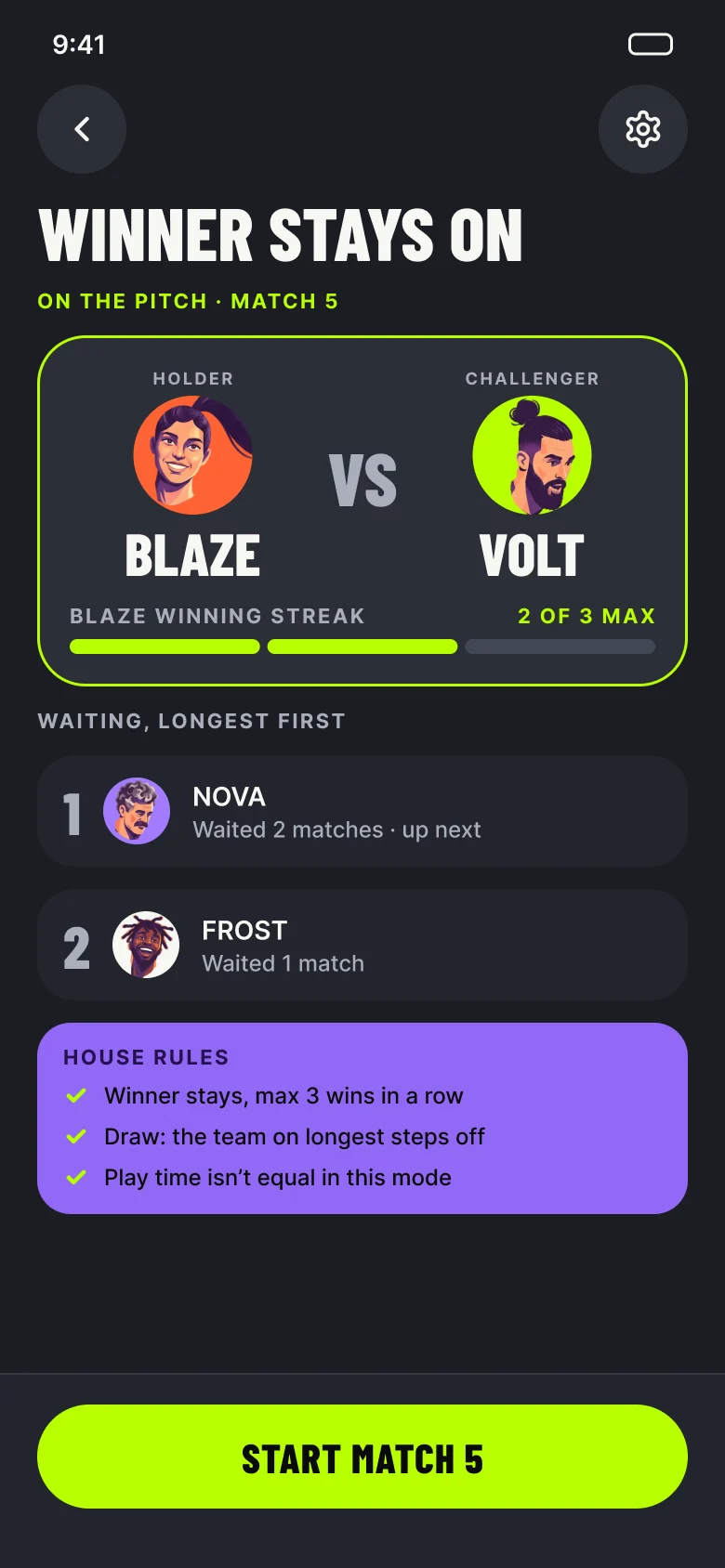
08Winner stays on · queue
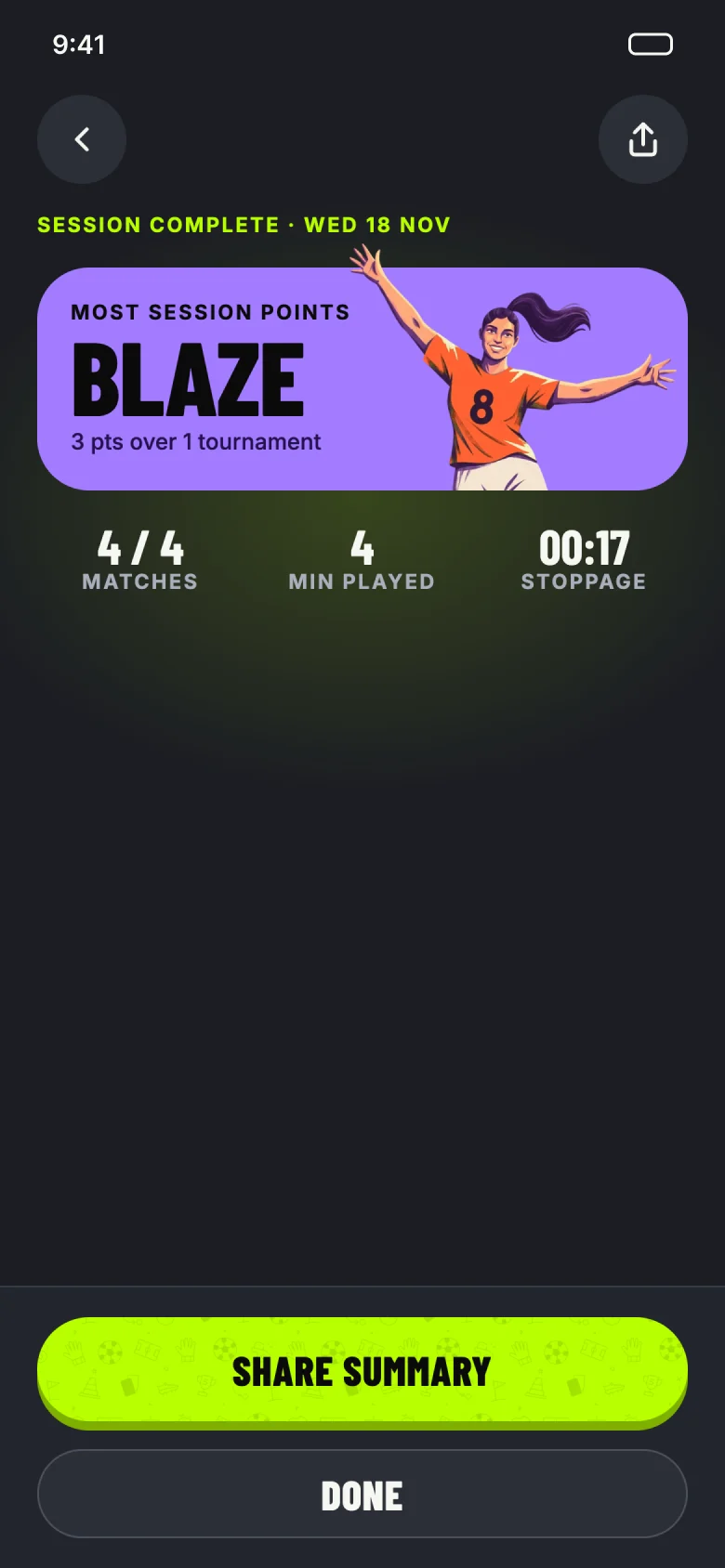
09Session summary
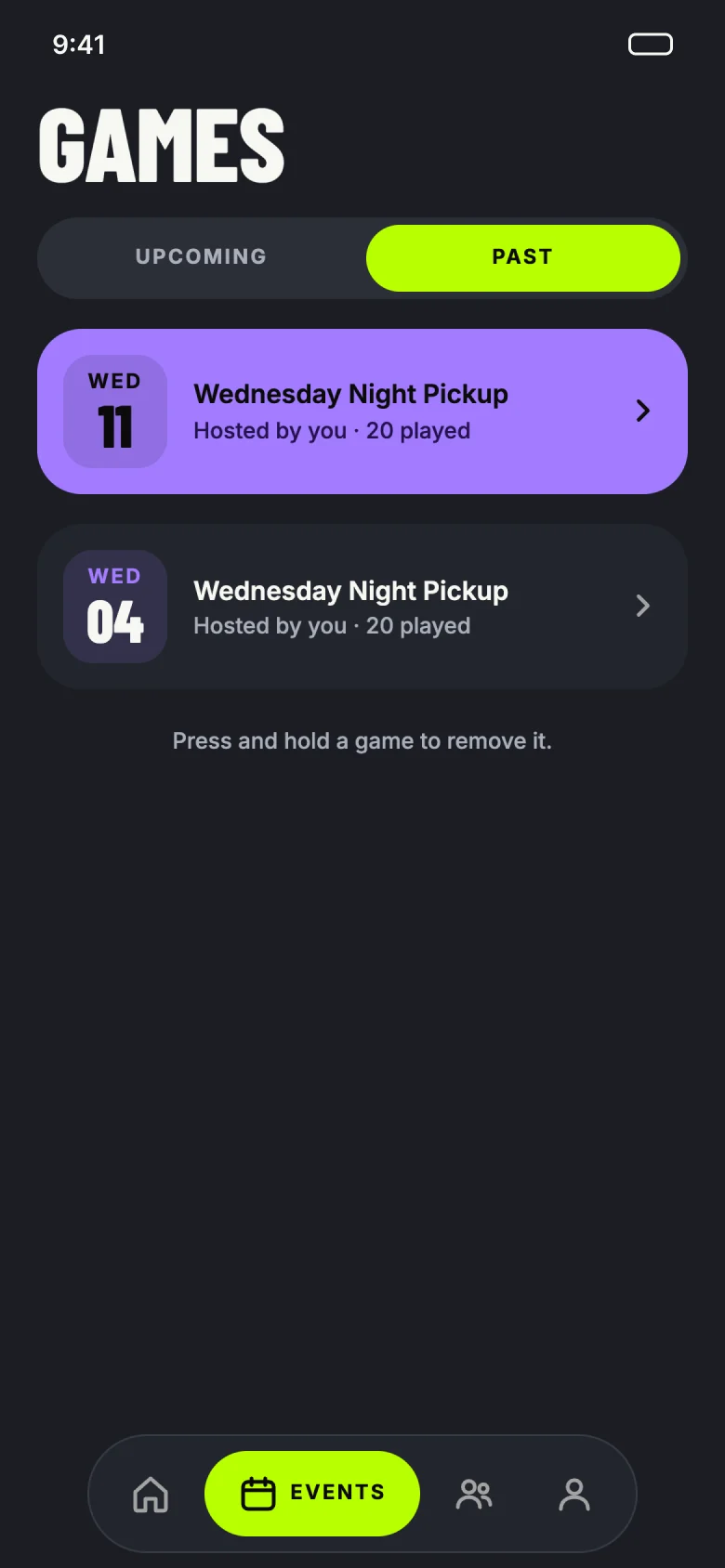
10Game history
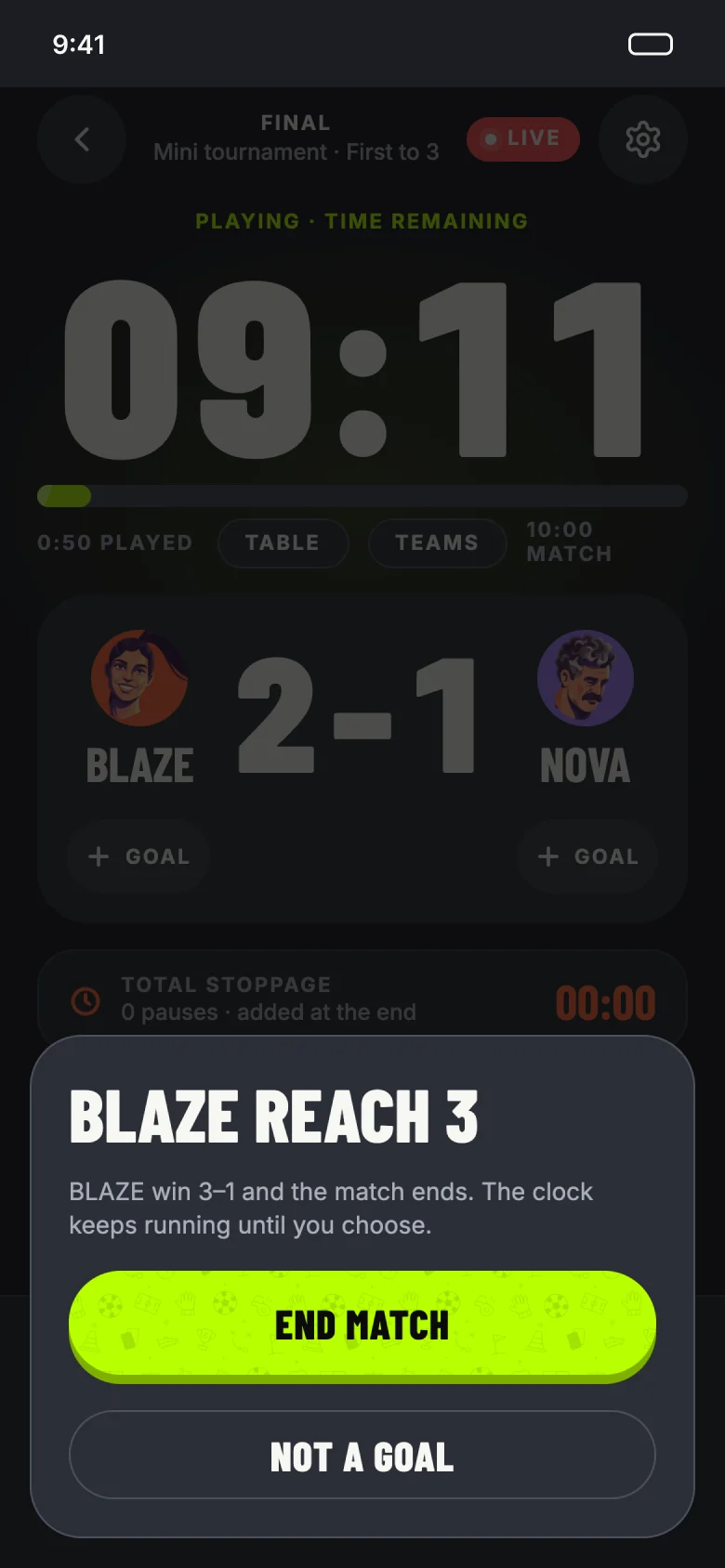
11Goal limit reached
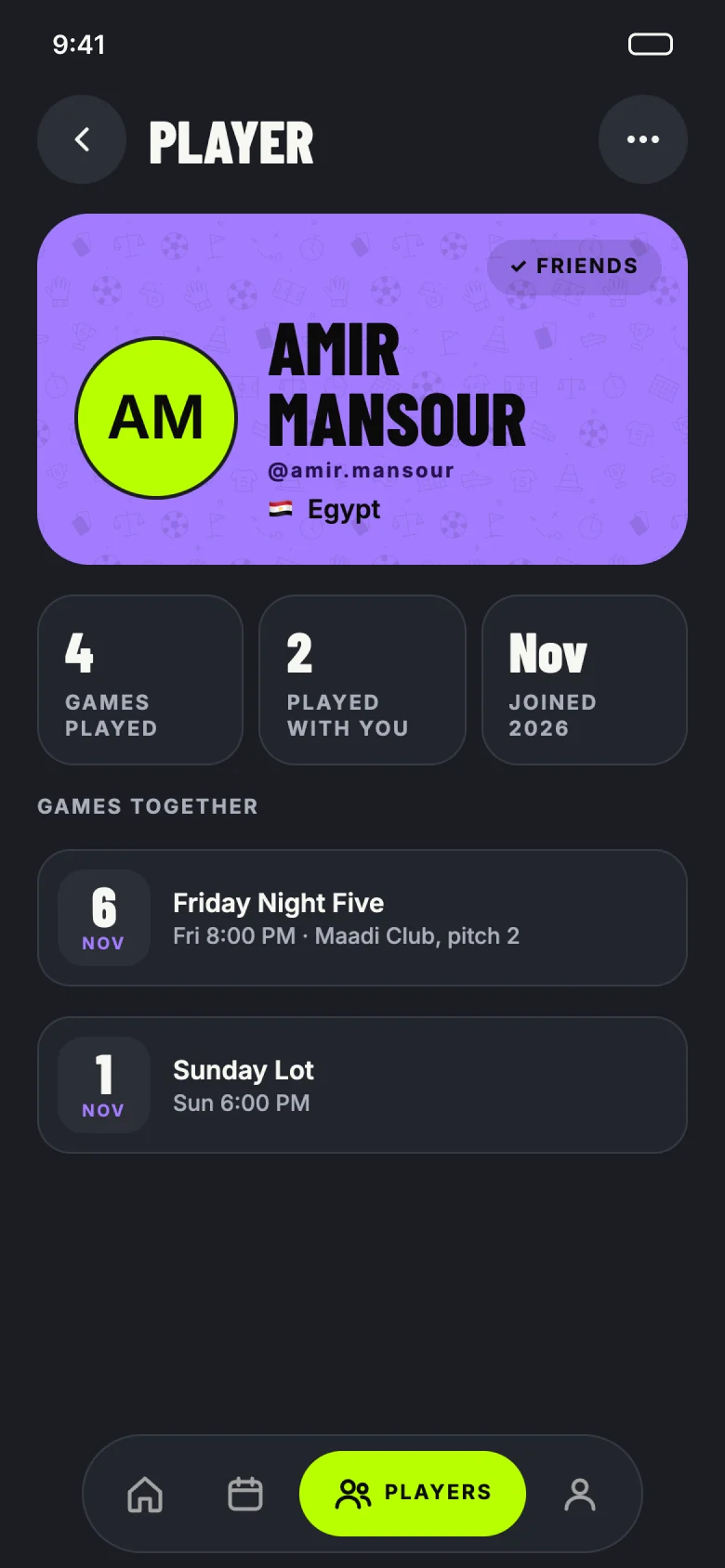
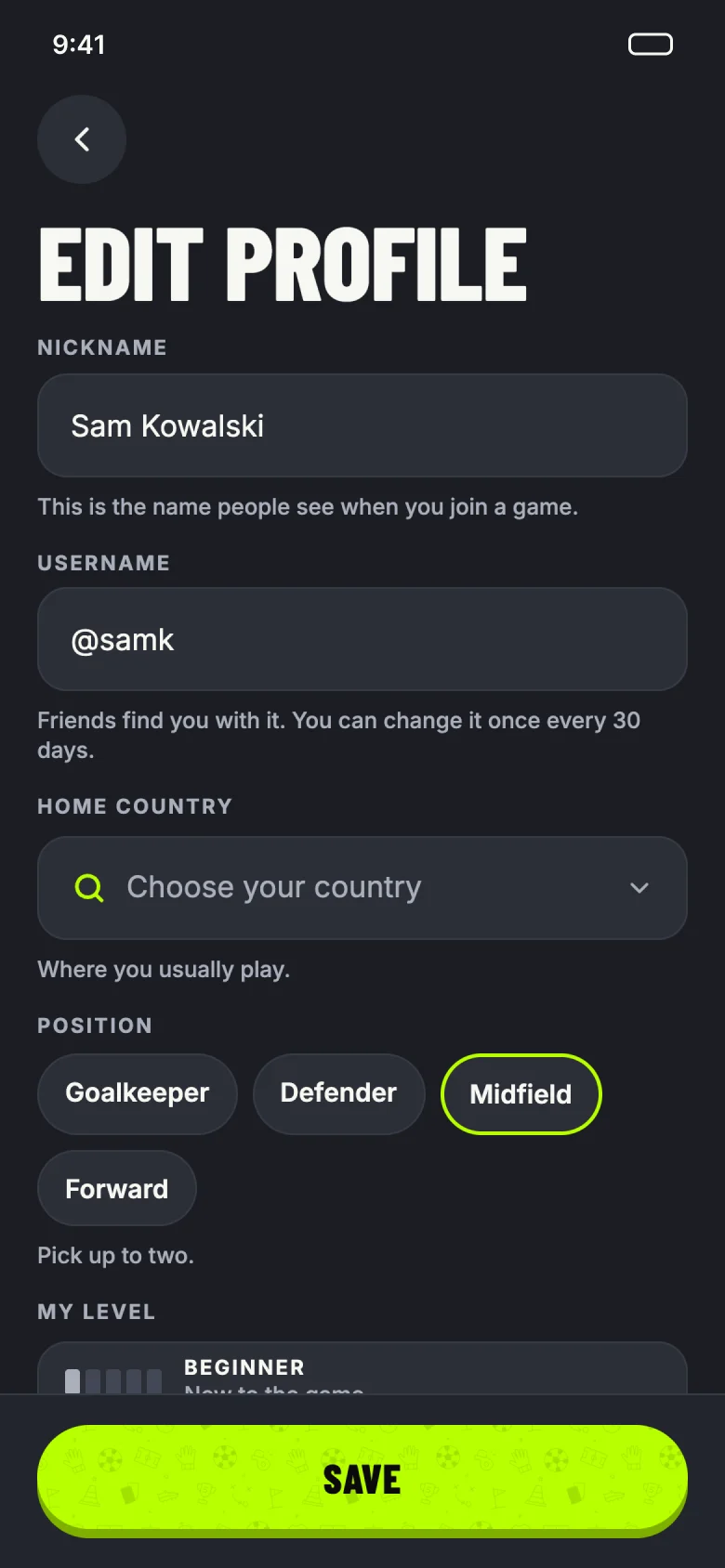
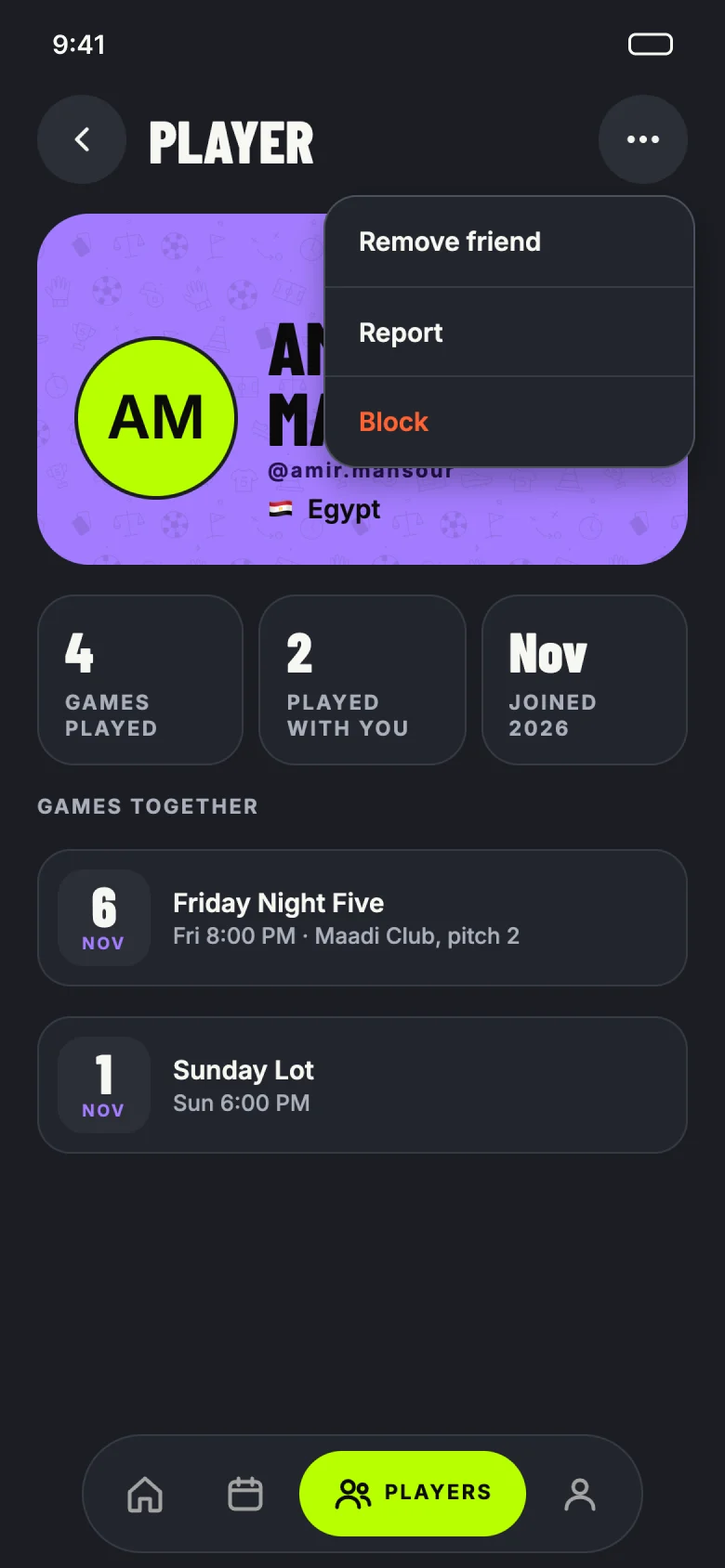
Friends are the only social feature: no chat, no feeds. A nickname and @username, up to two positions, and a level only you and your hosts see.
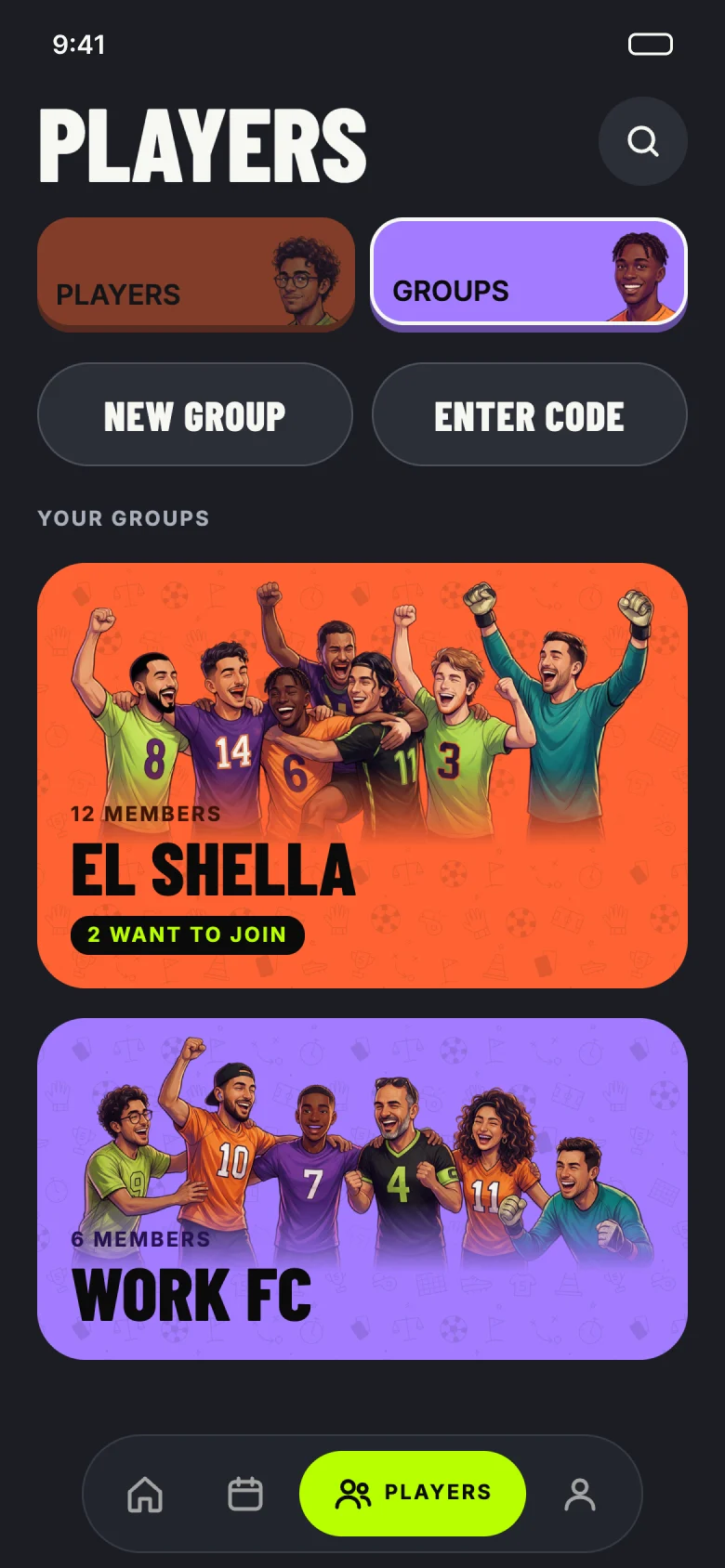
01Friends
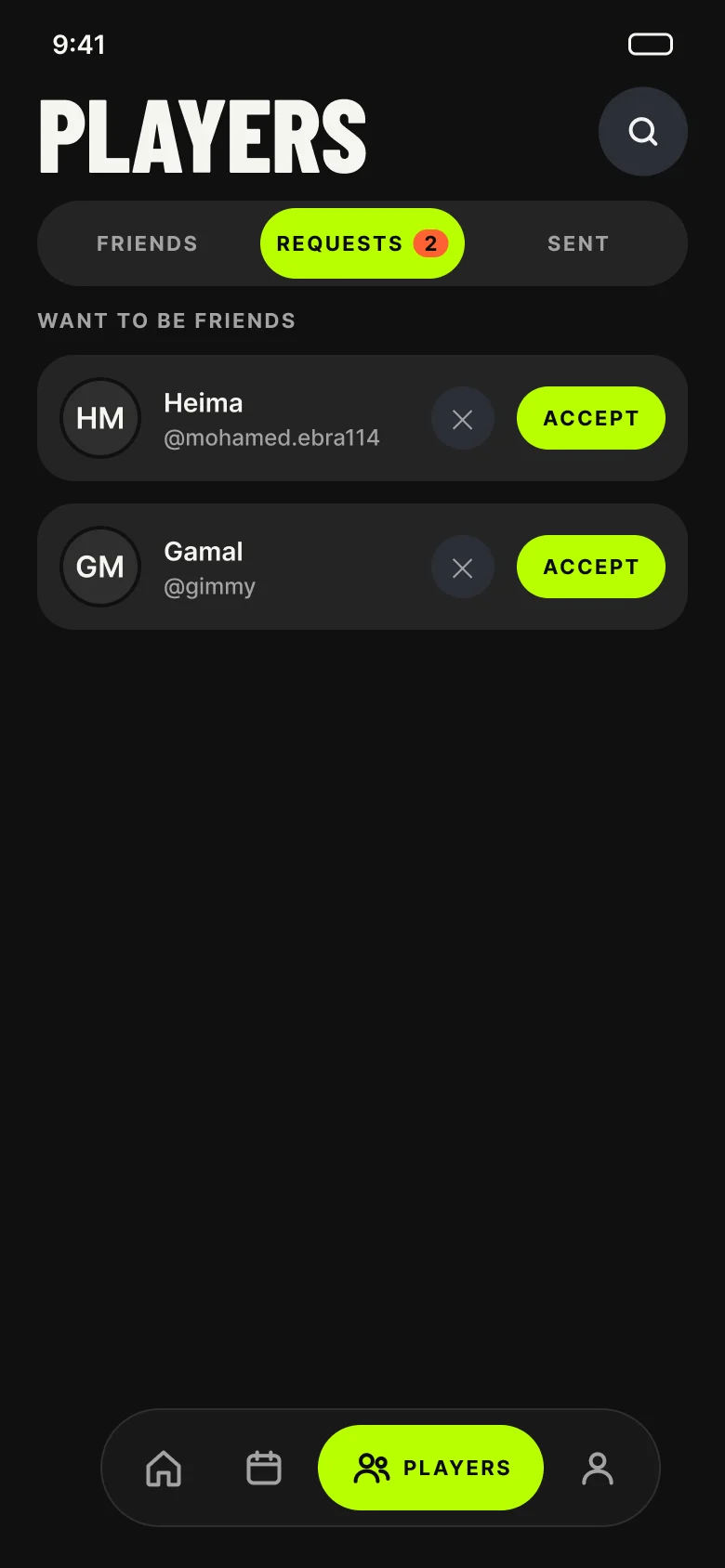
02Requests
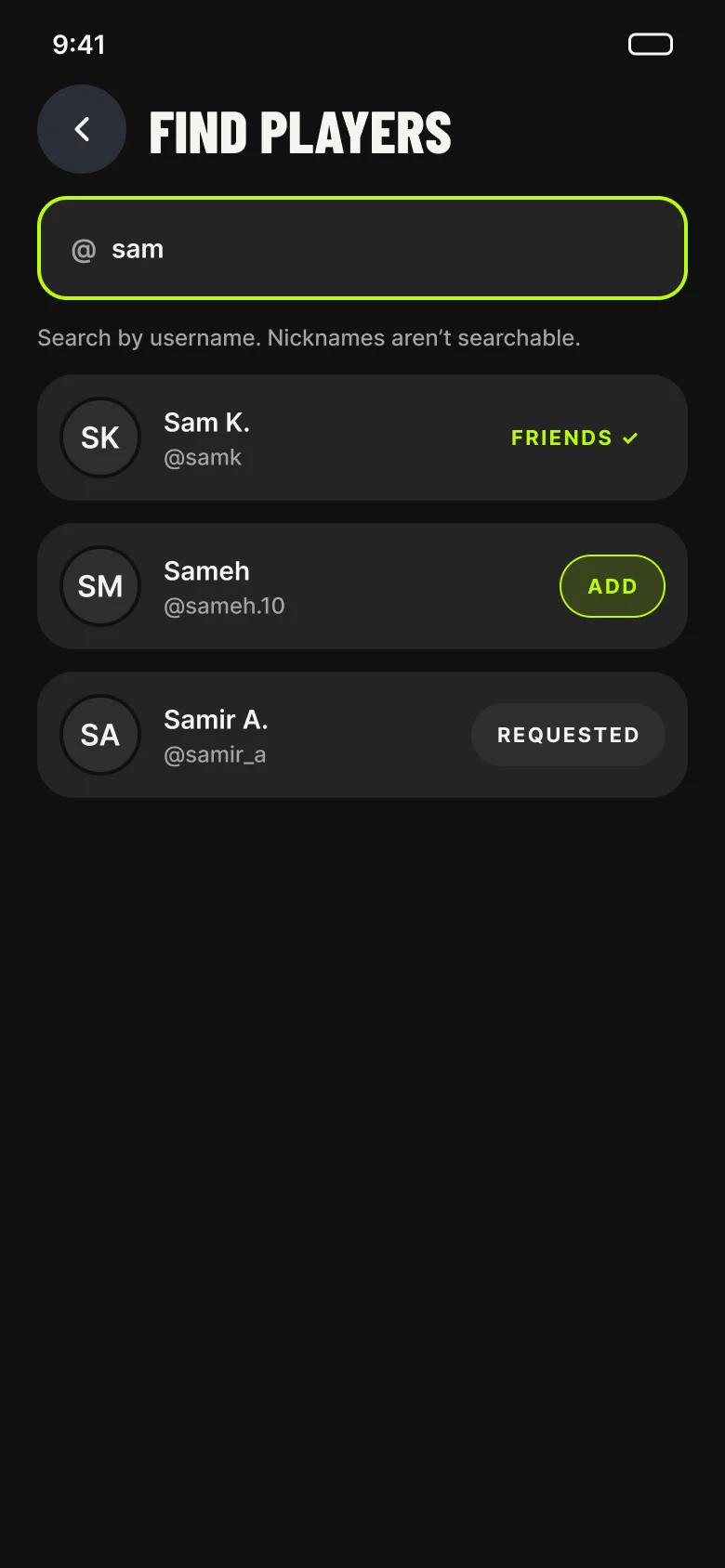
03Find players
04Player profile
05Edit profile
06Player actions
07Report
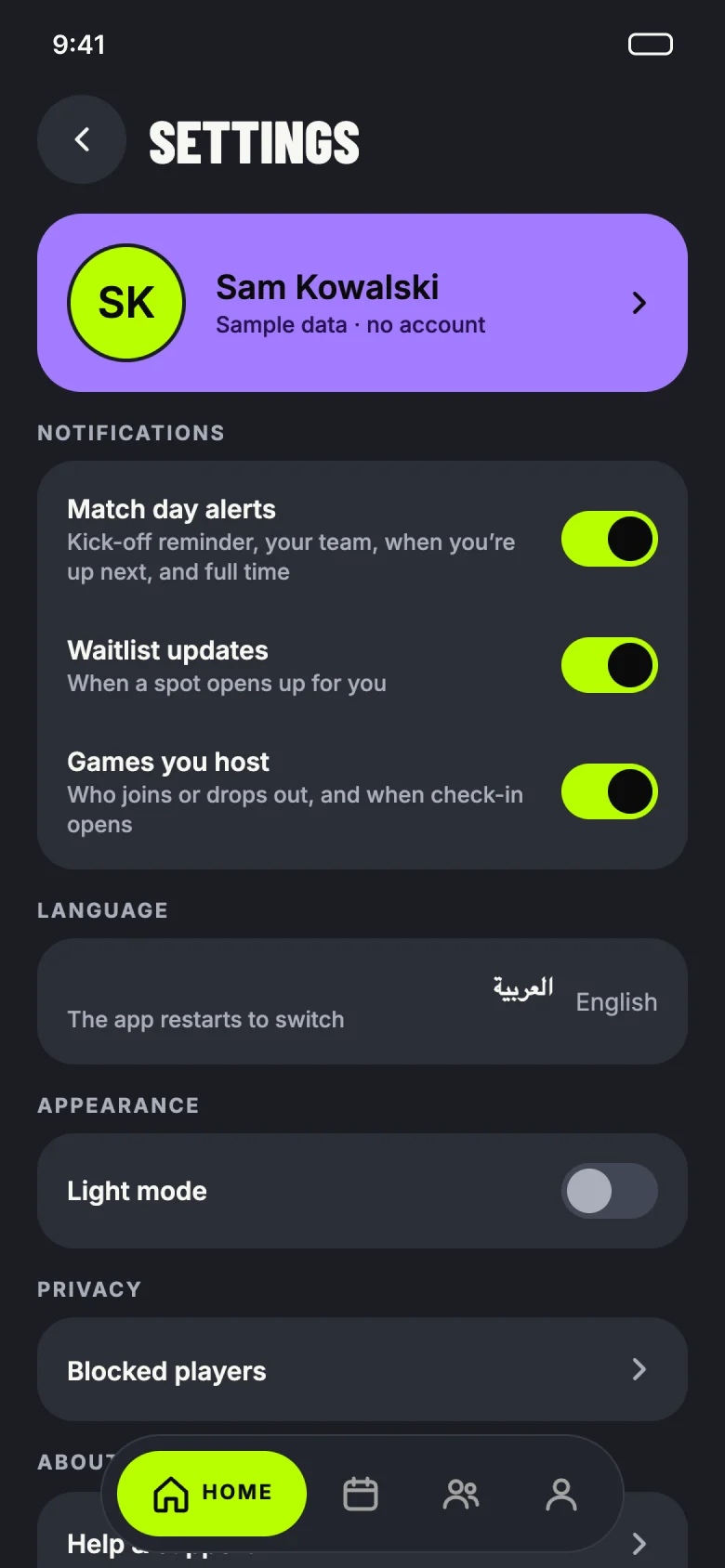
08Settings
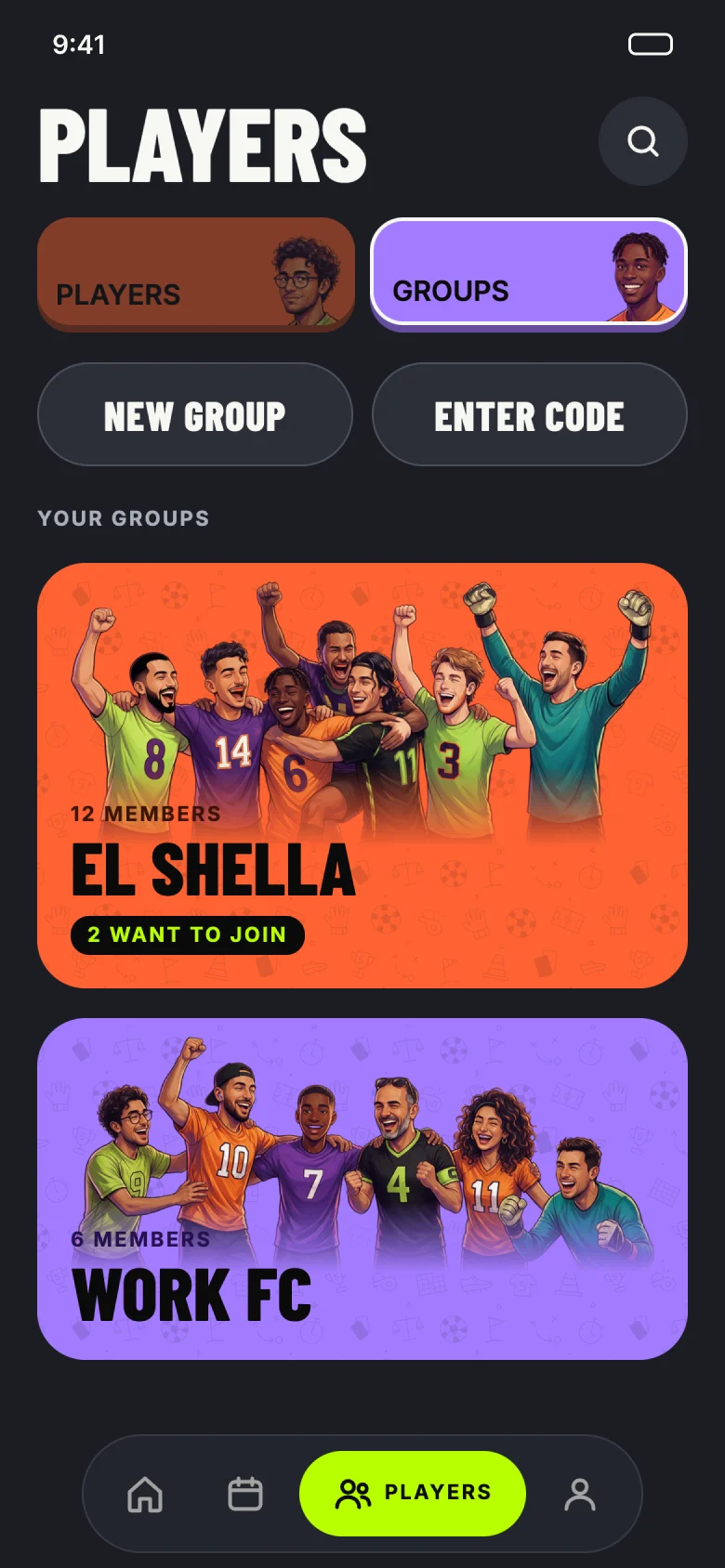
09Groups
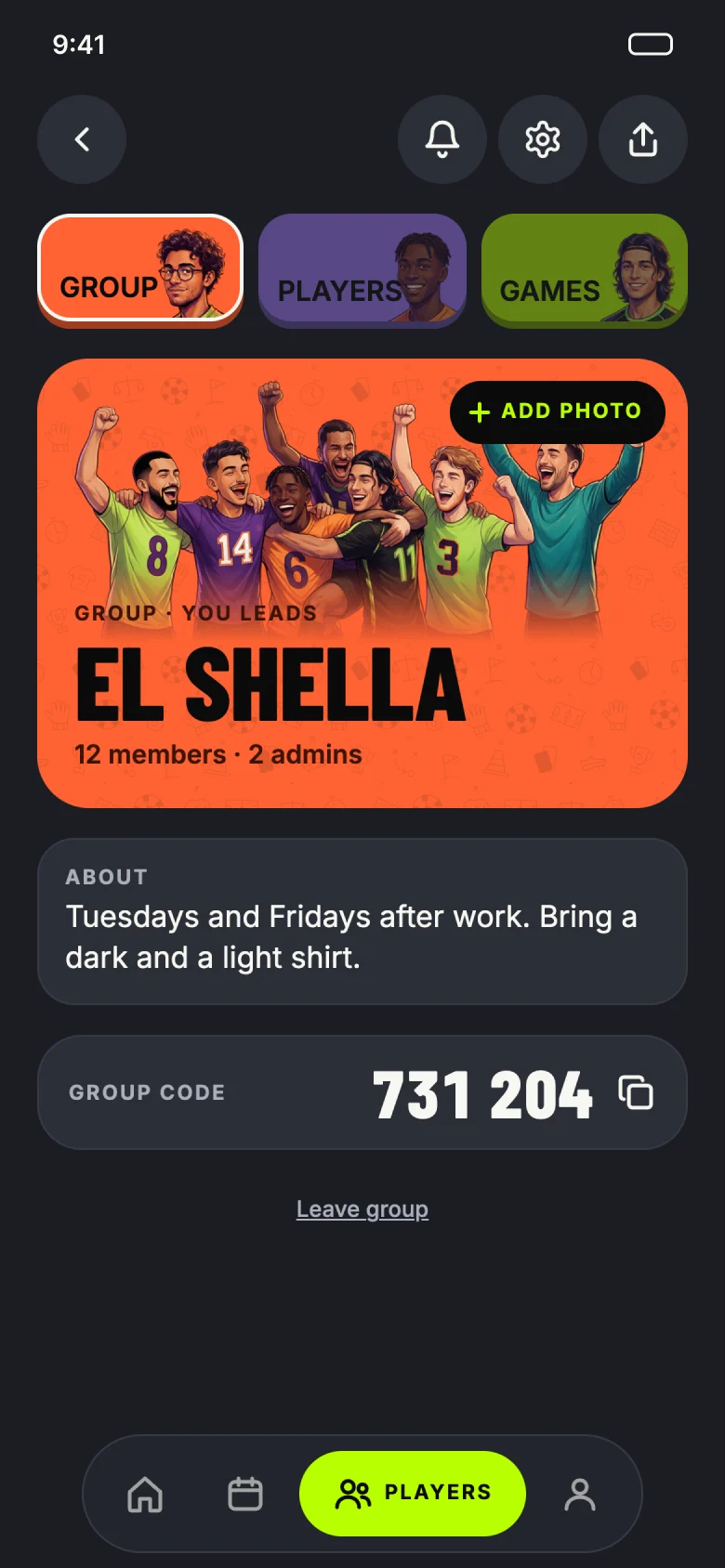
10Group page
Light is designed, not inverted. Egyptian Arabic runs right to left, with timers and scores kept in English digits.
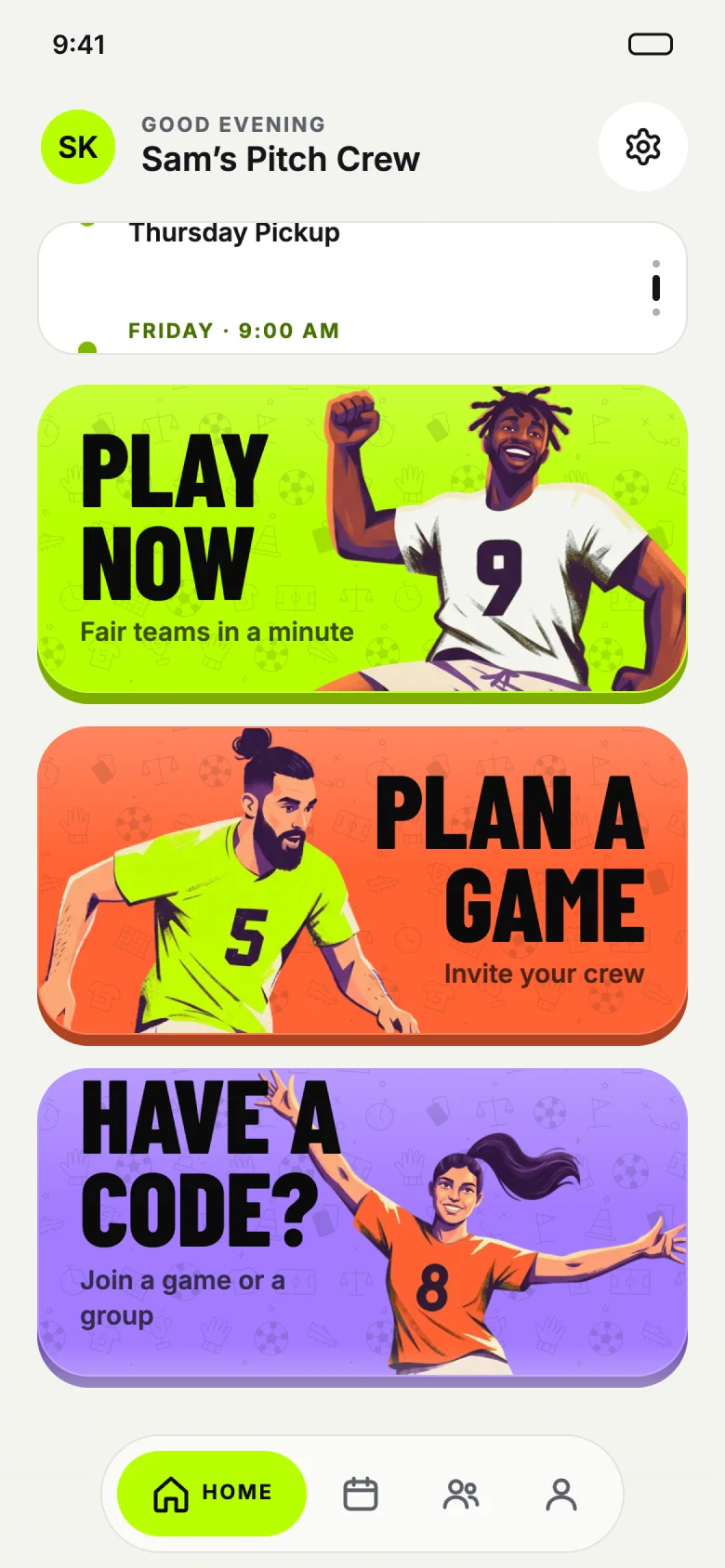
01Home · light
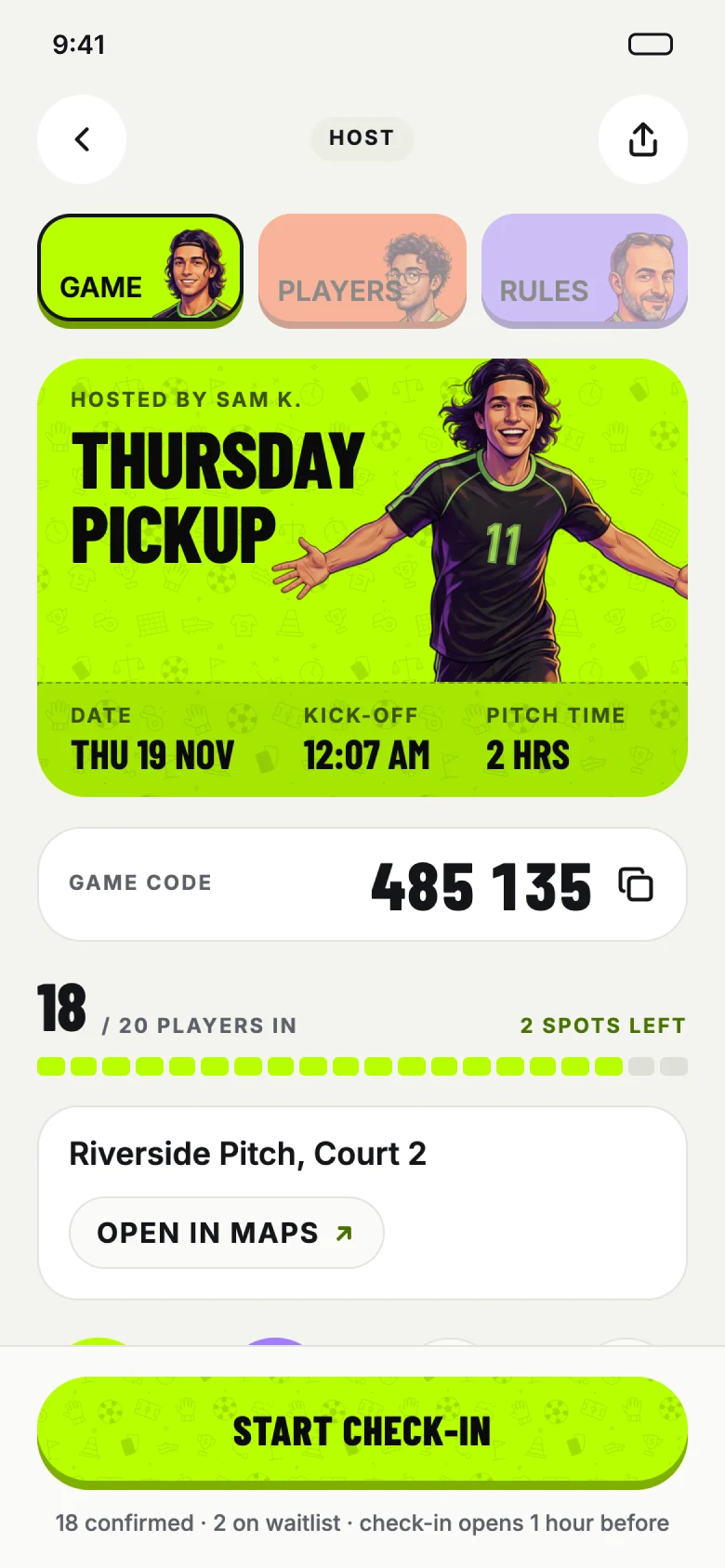
02Game page · light
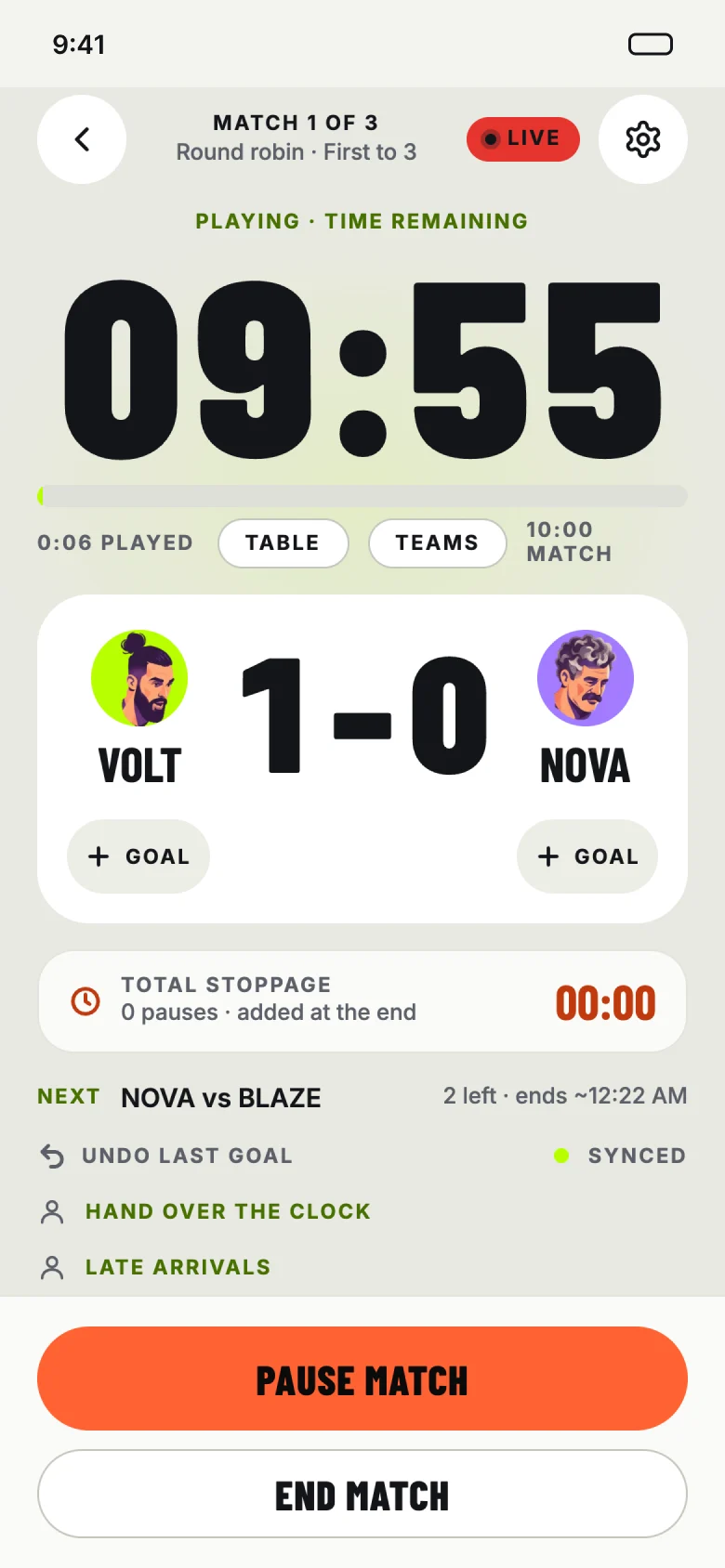
03Live · light
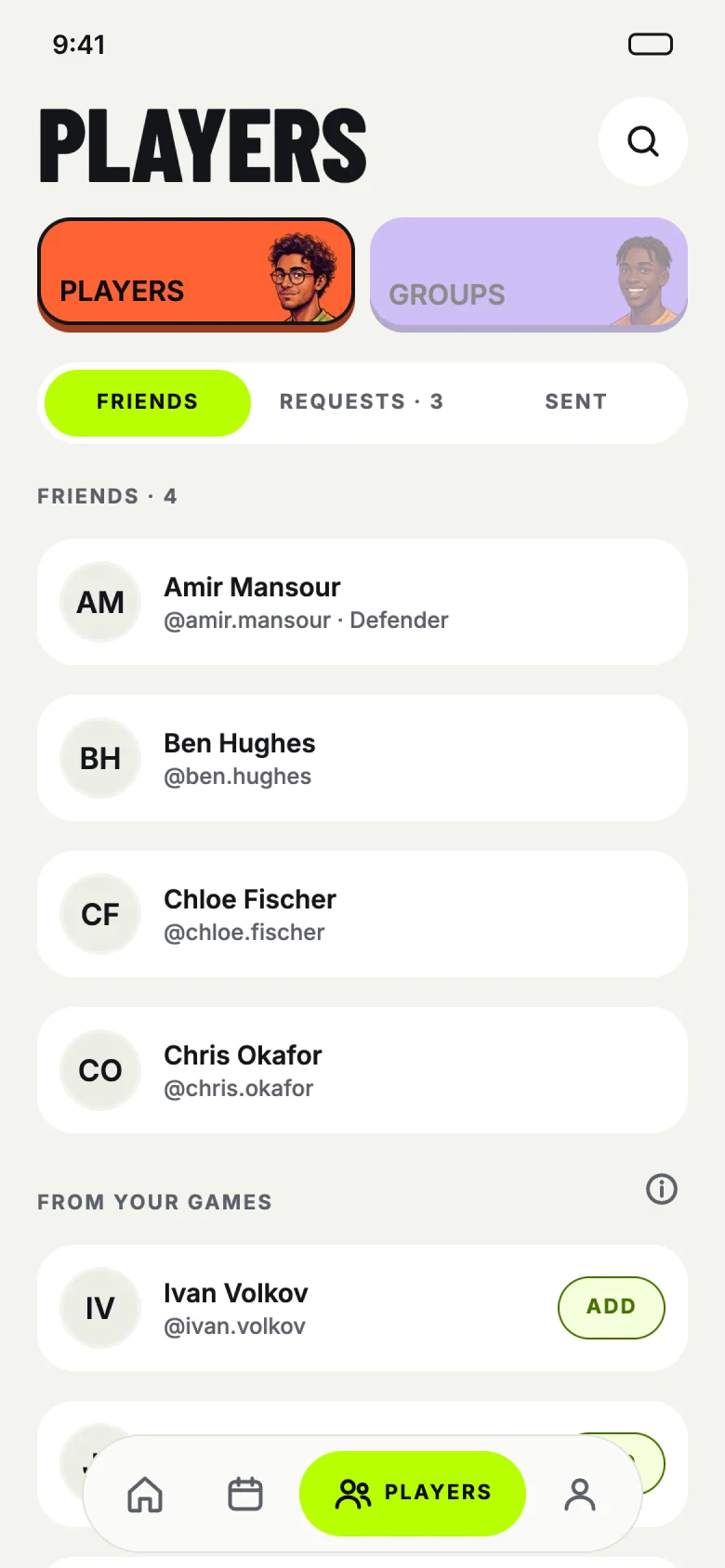
04Friends · light
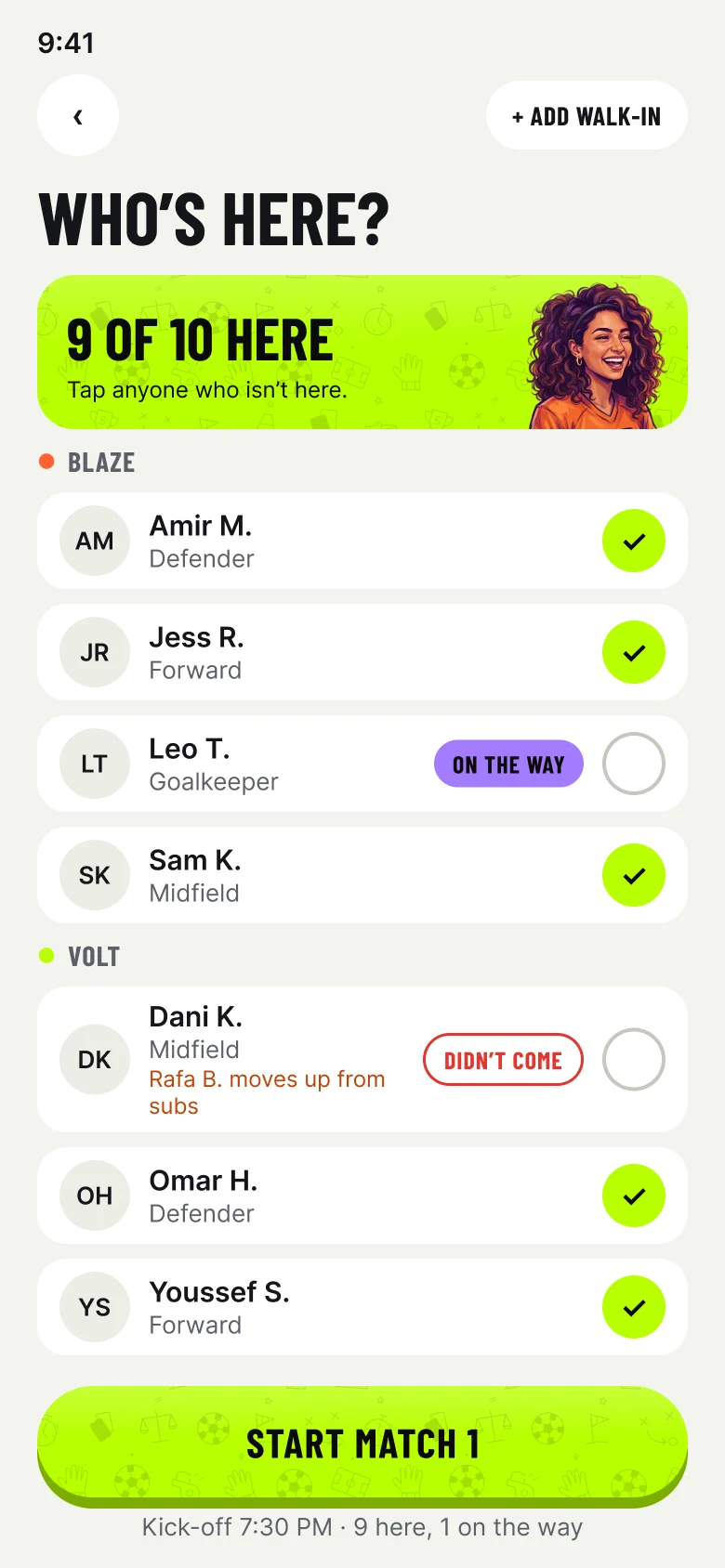
05Who’s here? · light
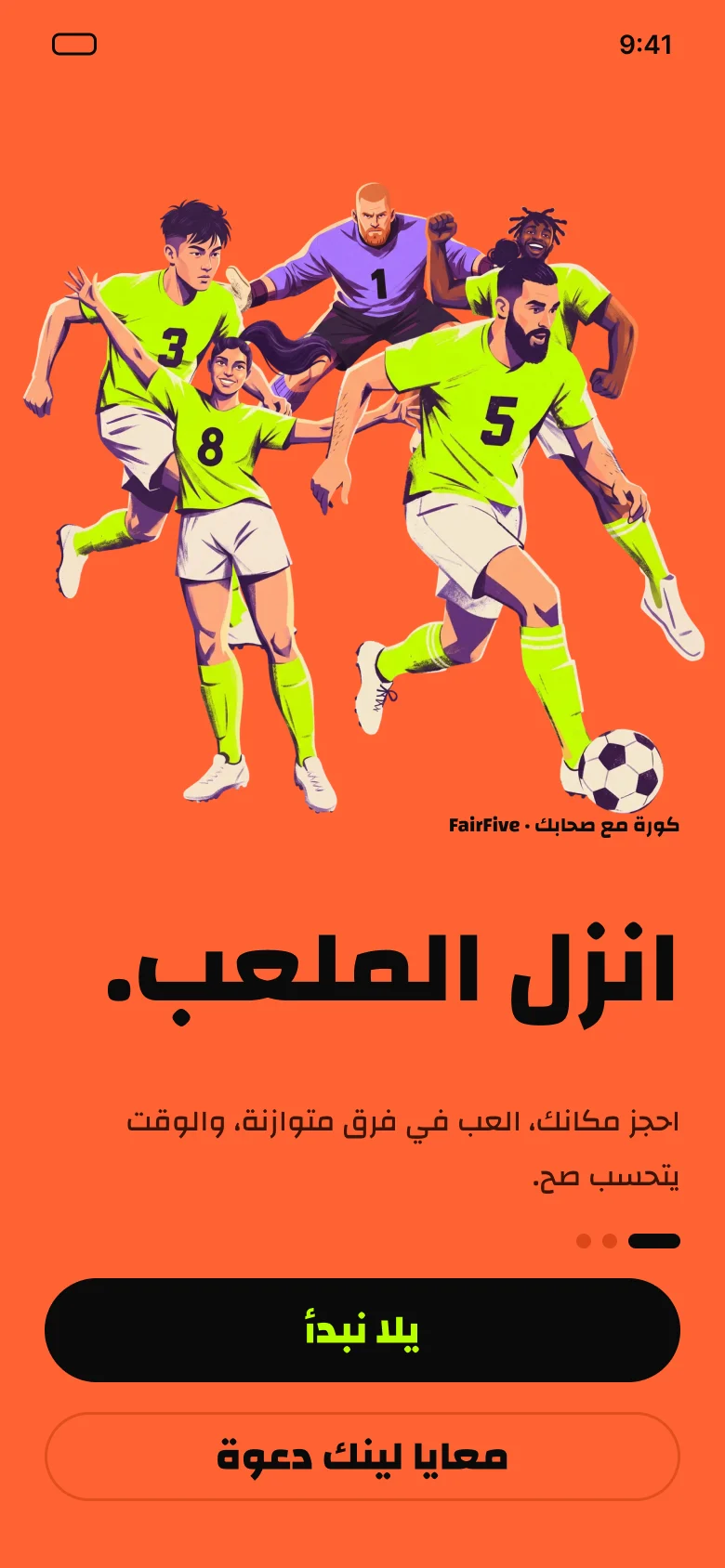
06Welcome · Arabic
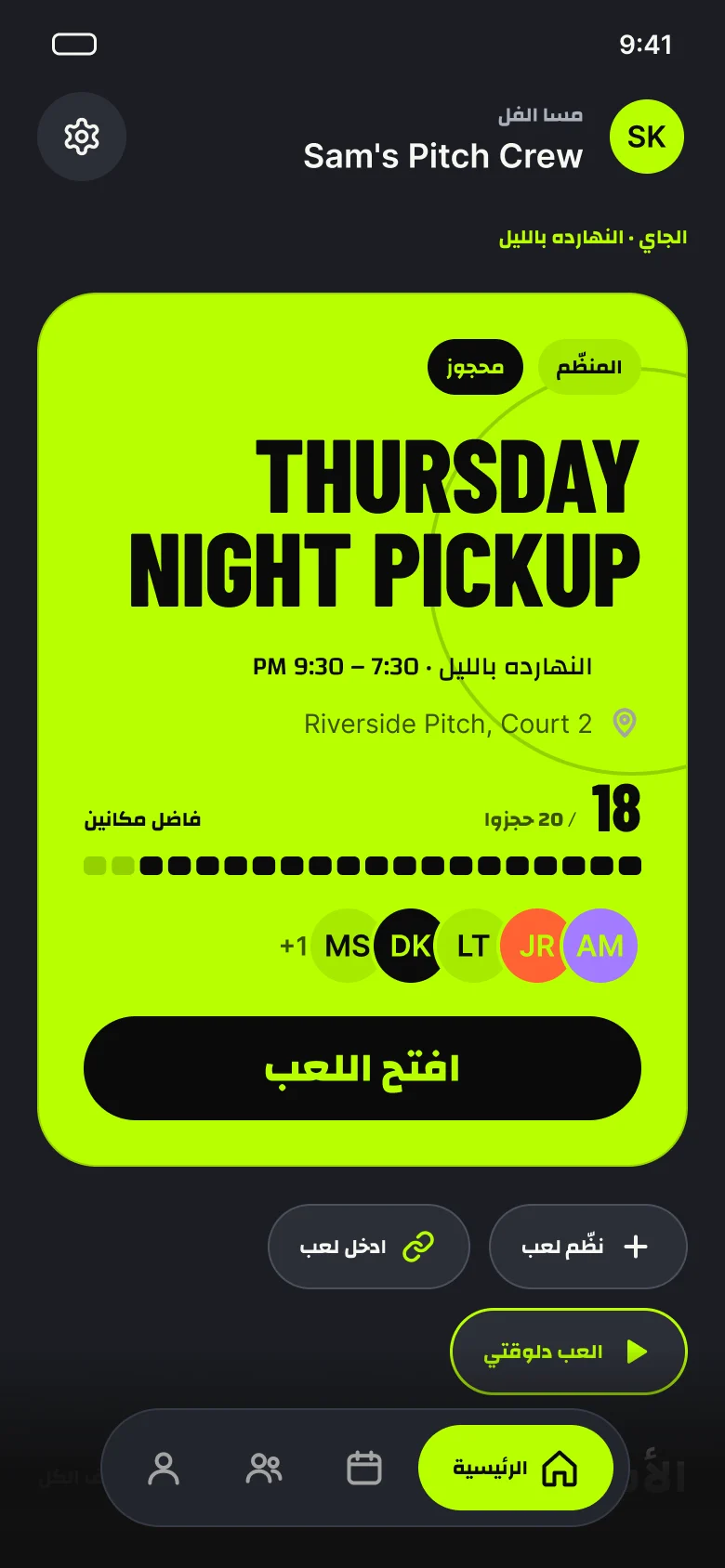
07Home · Arabic
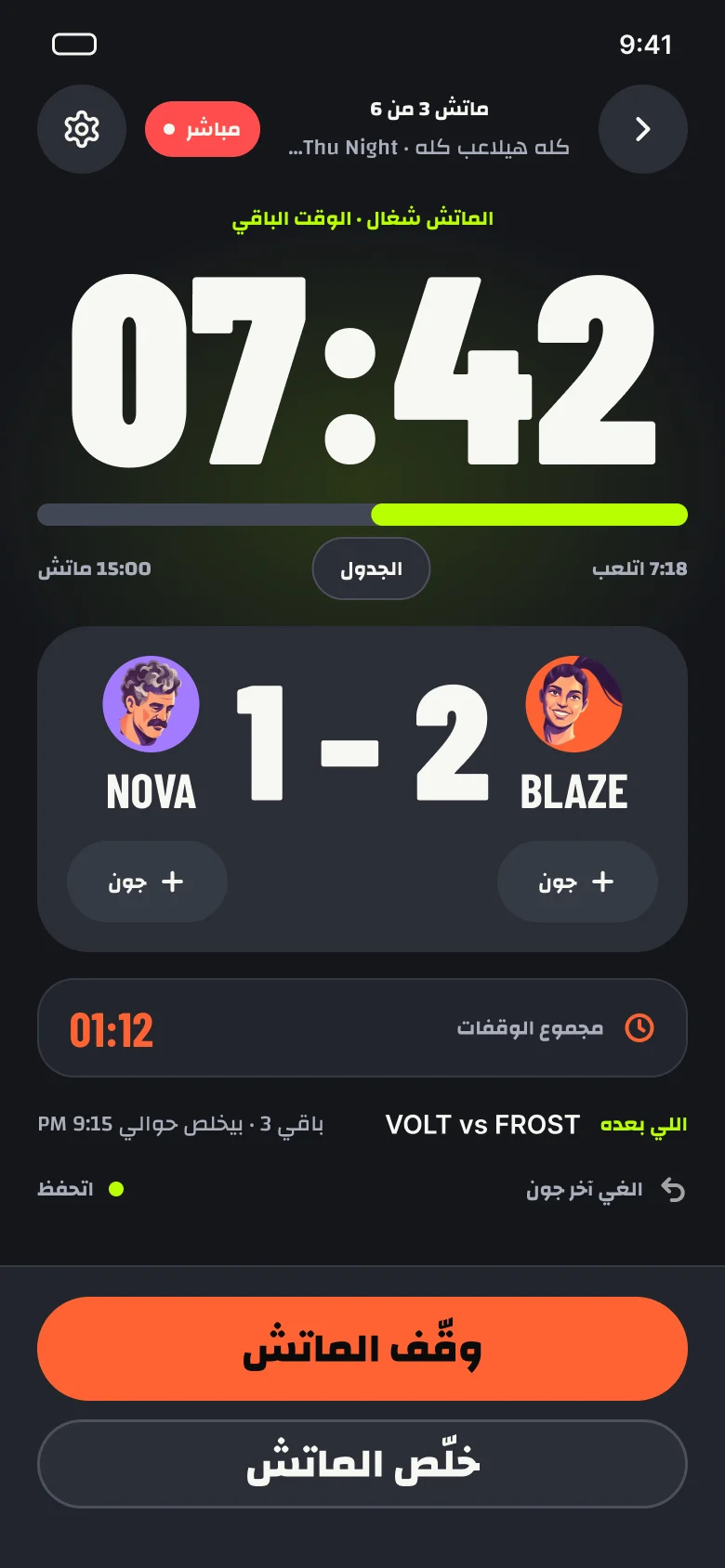
08Live · Arabic
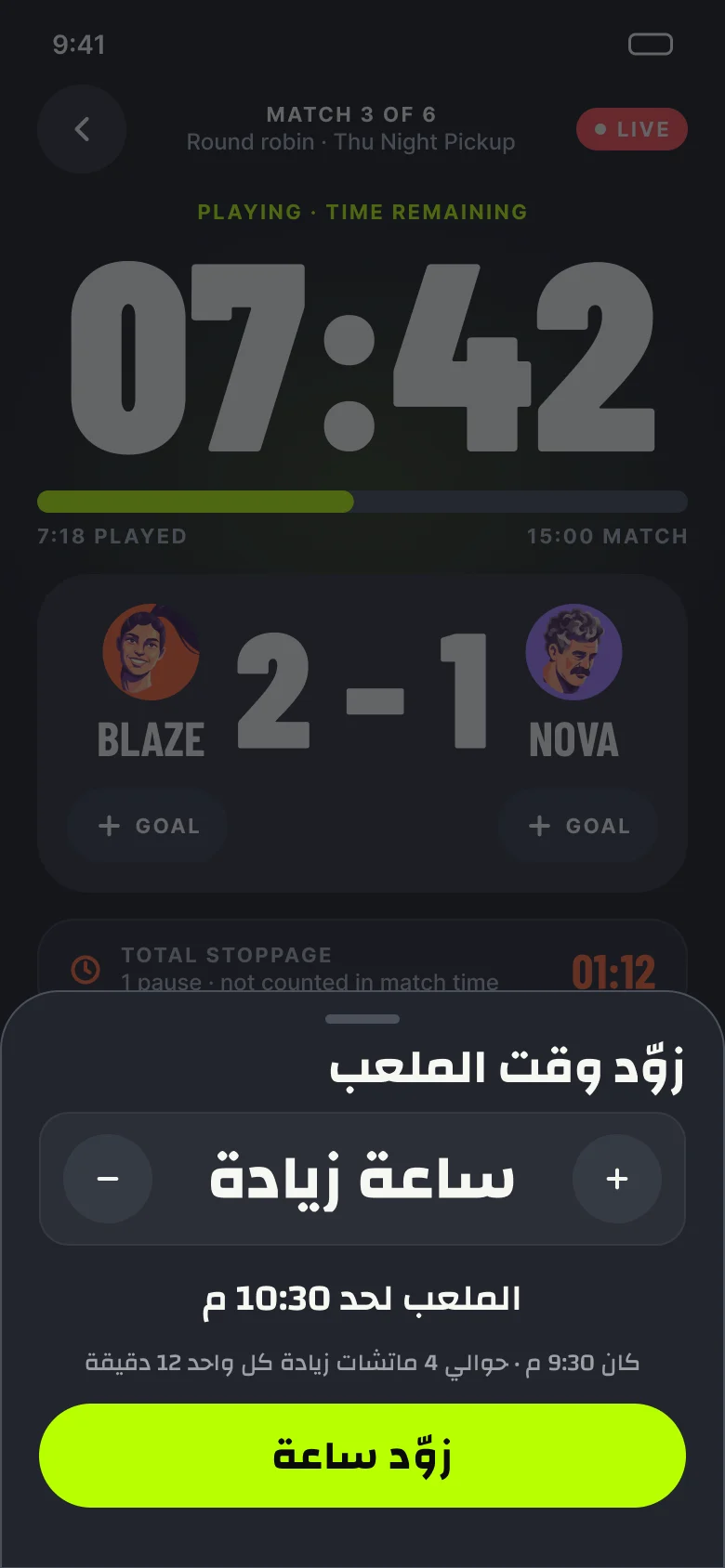
09Add pitch time · Arabic
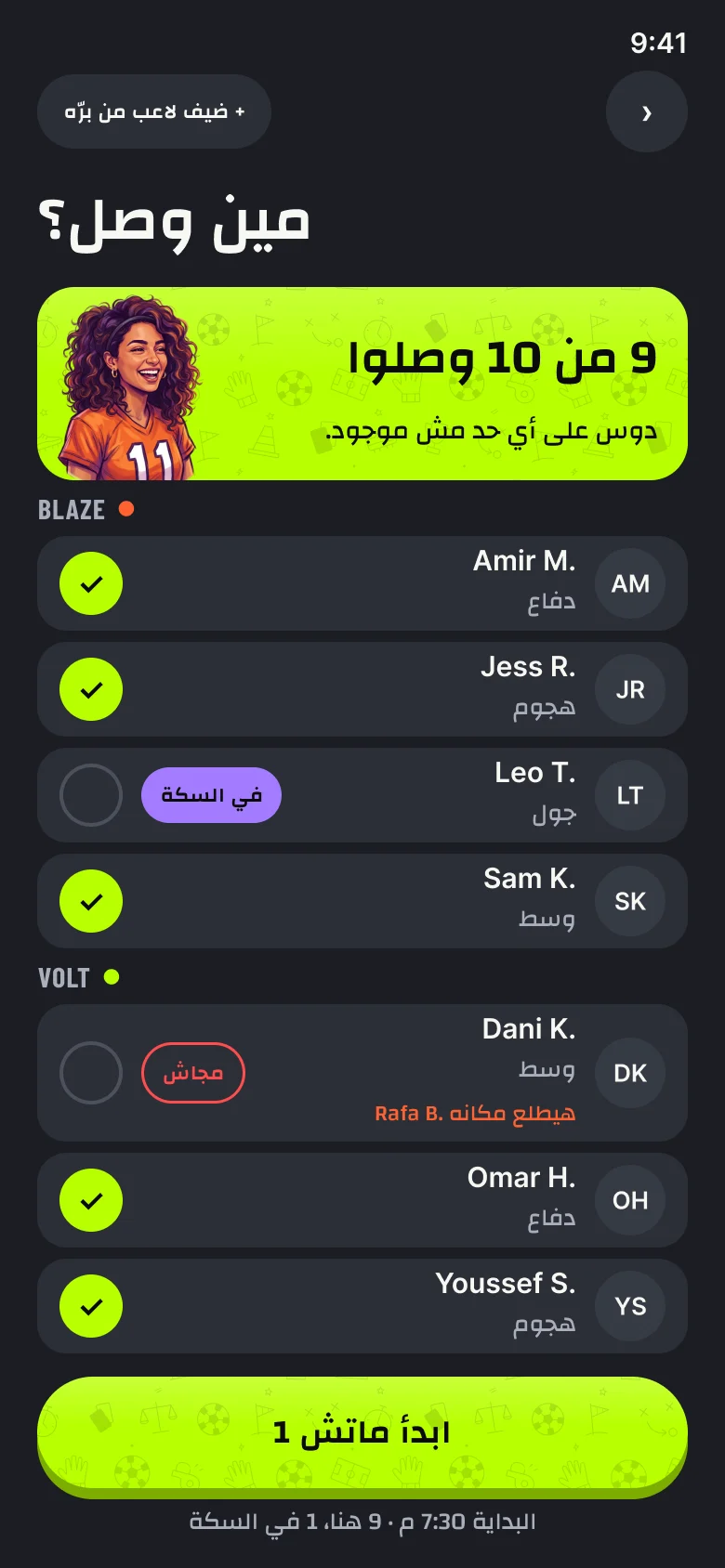
10Who’s here? · Arabic
The host gives each player a private skill tier from 1 to 5. FairFive uses the tiers to balance the teams, and only the host ever sees them, enforced in the database. Players can state their own level as a hint, but it never counts. Try a simplified version below.
I wrote the rules as tables for the build to follow, not just screens. Each format defines who plays whom, what happens on a draw, when the night ends and what happens when time runs short, so the app never gets stuck in a state nobody planned for.
01 · Live
Everyone's phone shows the same time. The timer digits never animate, in any setting, so the number is always readable at a glance. One main button: pause.
02 · Paused
Injury, dispute, ball lost. The bar and glow turn orange instantly, so nobody wonders whether the clock is running.
03 · Stoppage
Time lost to pauses is added back, played once at zero if it fits, and always taken from the session time. The summary reports any match that didn't fit.
04 · Table
It opens on top of the live screen while the clock keeps running. The running match counts once it's confirmed.
05 · Hand over
Another player runs it on their own phone and account. One timekeeper at a time, and the host can take it back instantly.
06 · Lock Screen
A Live Activity on the Lock Screen and the Dynamic Island shows the score and time. Red in stoppage, orange when paused.
These are from the decisions log in my user-flows file. Each one closes a question that would otherwise turn into an argument at the pitch.
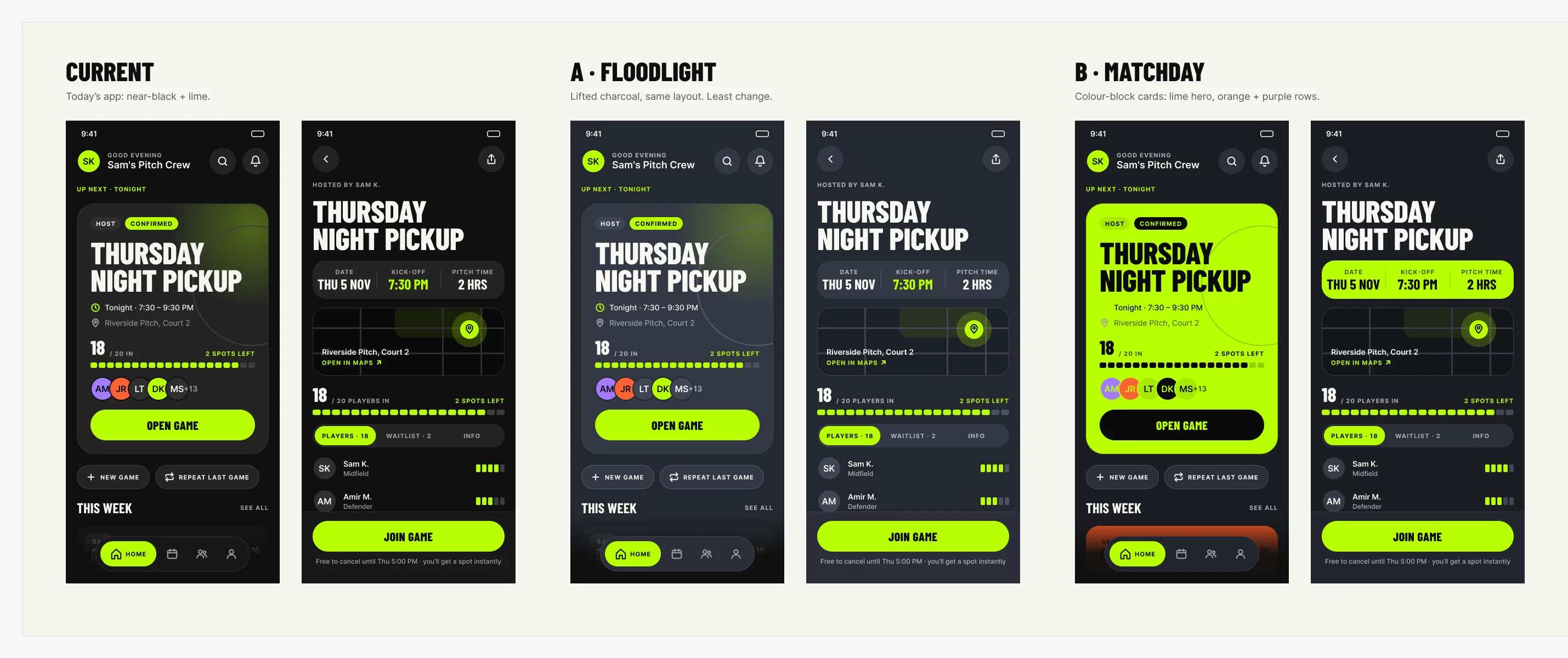
The first high-fidelity screens worked, but they read like a dashboard: lime cards, small type, every option at the same volume. Over the following rounds the app got louder where it matters and quieter everywhere else. Drag to compare.
My own note on 4 November: "80% black and lime, use the other accents." Early boards tested a lifted charcoal and colour-blocked cards, then the Play now screen went through rounds of its own: soft colour cards, outlined cards, a scoreboard layout and tiles, before settling on one rule: solid colours, no gradients, and only the main button is raised.
v2 A
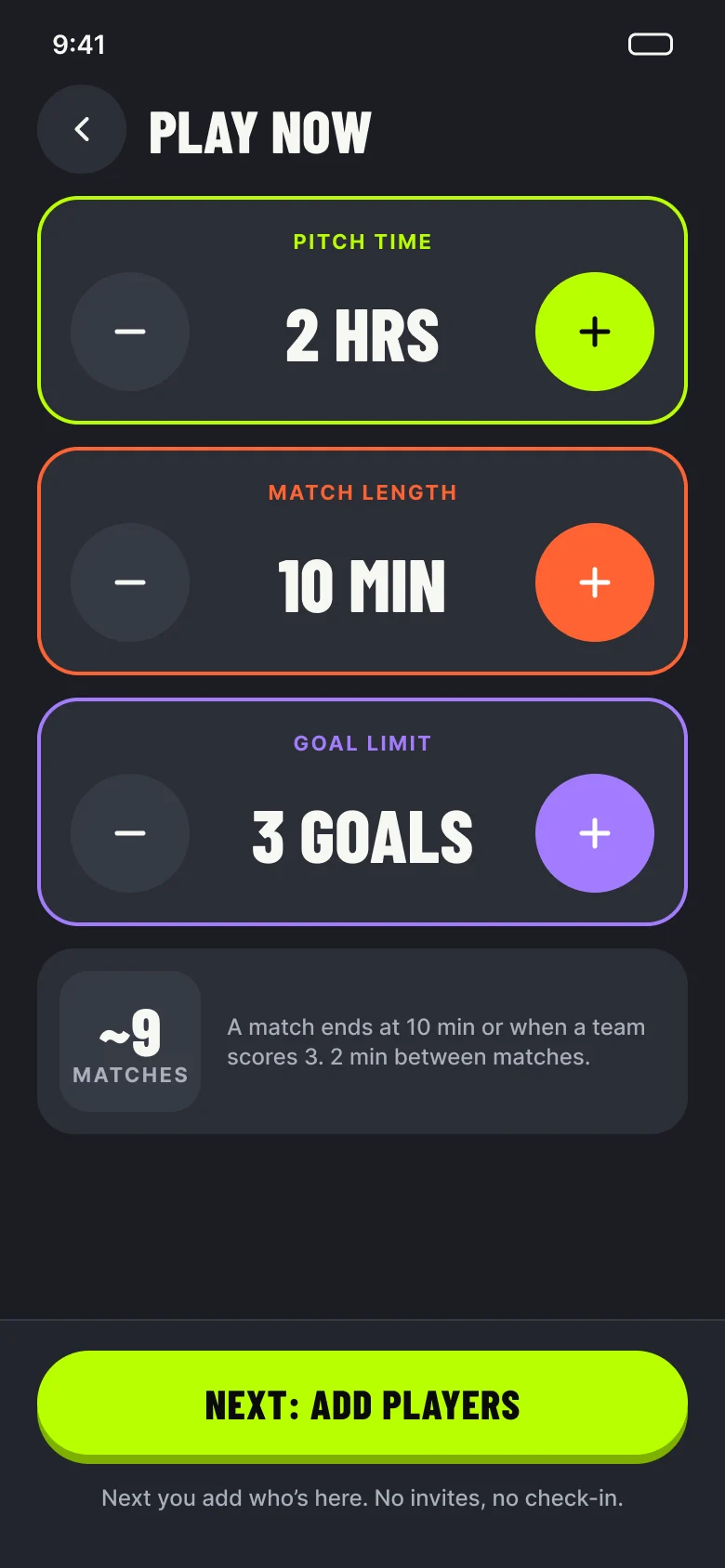
v2 B
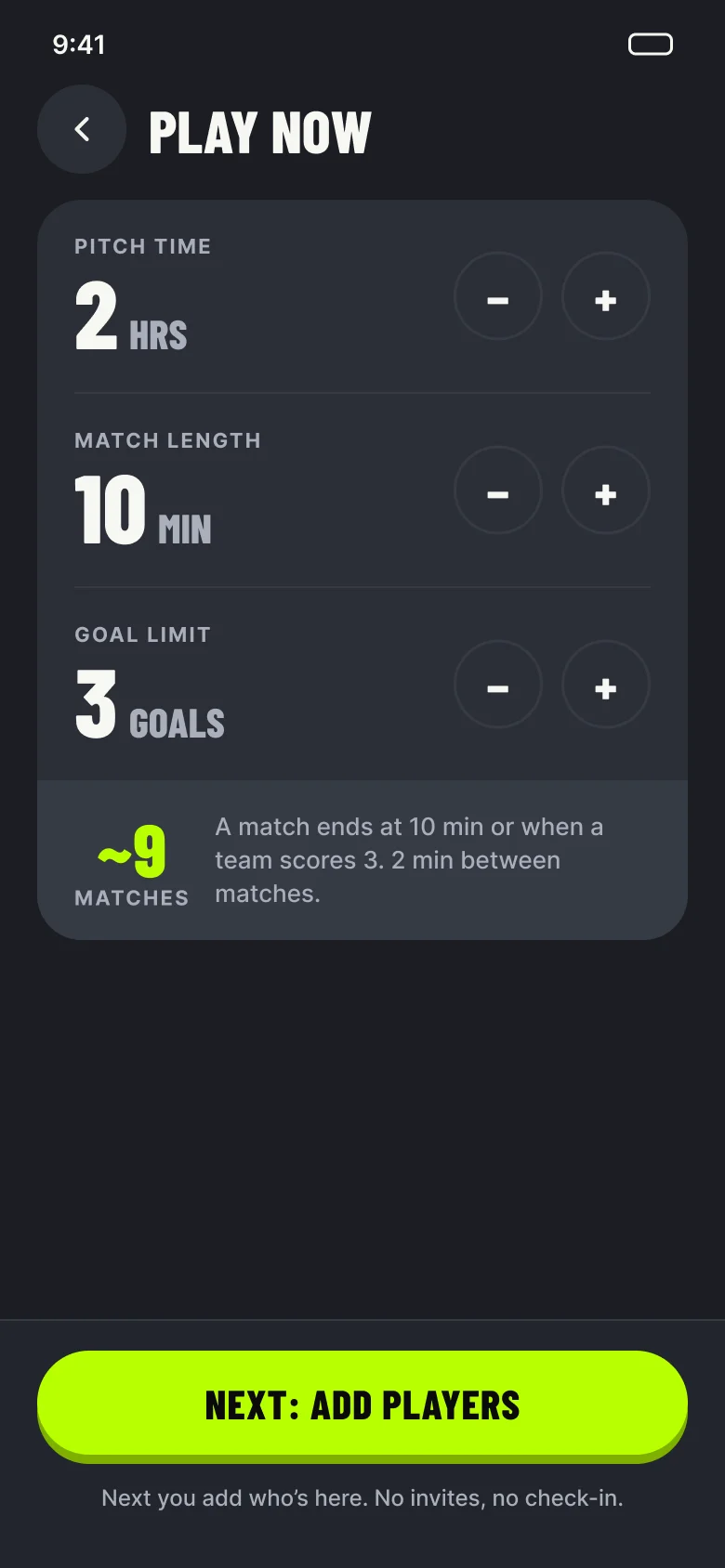
v3 scoreboard
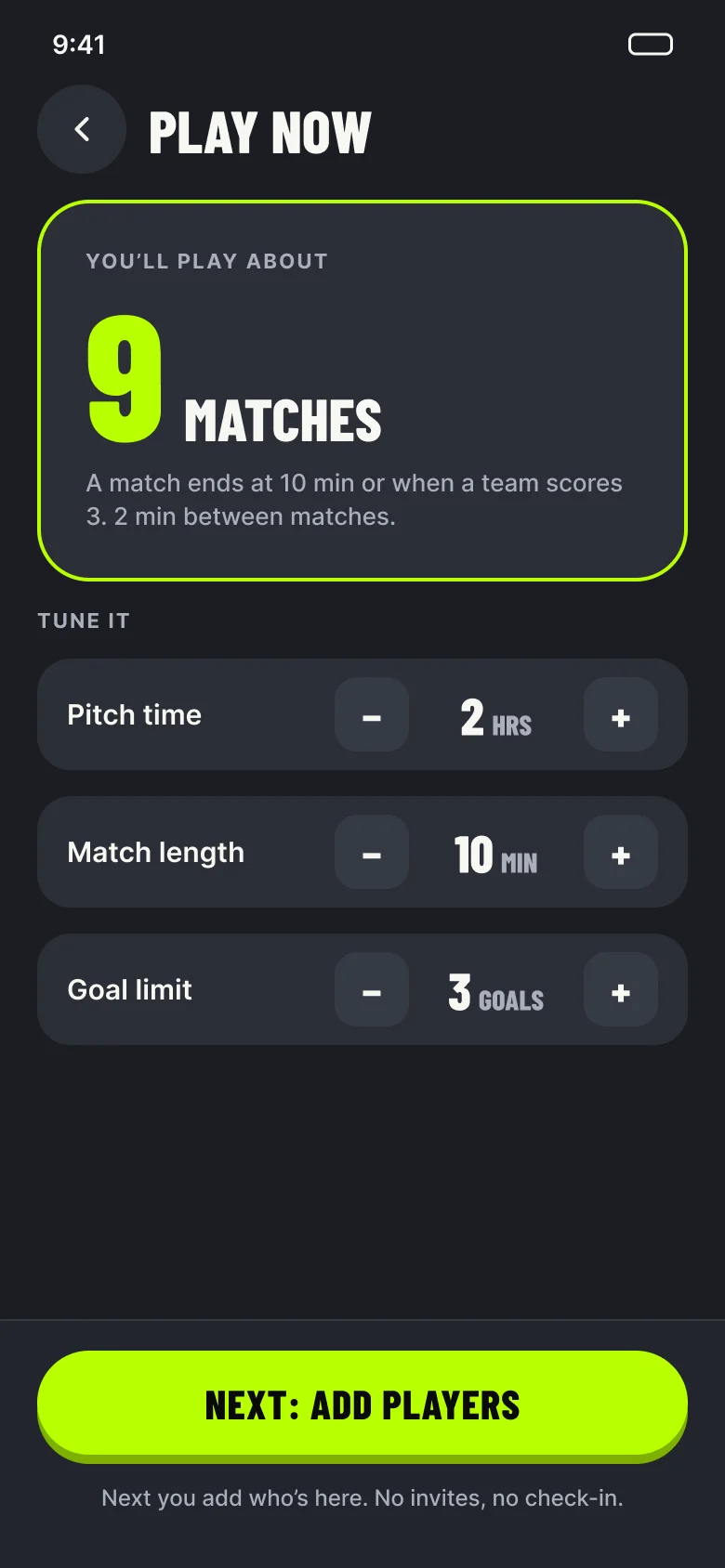
v3 result first
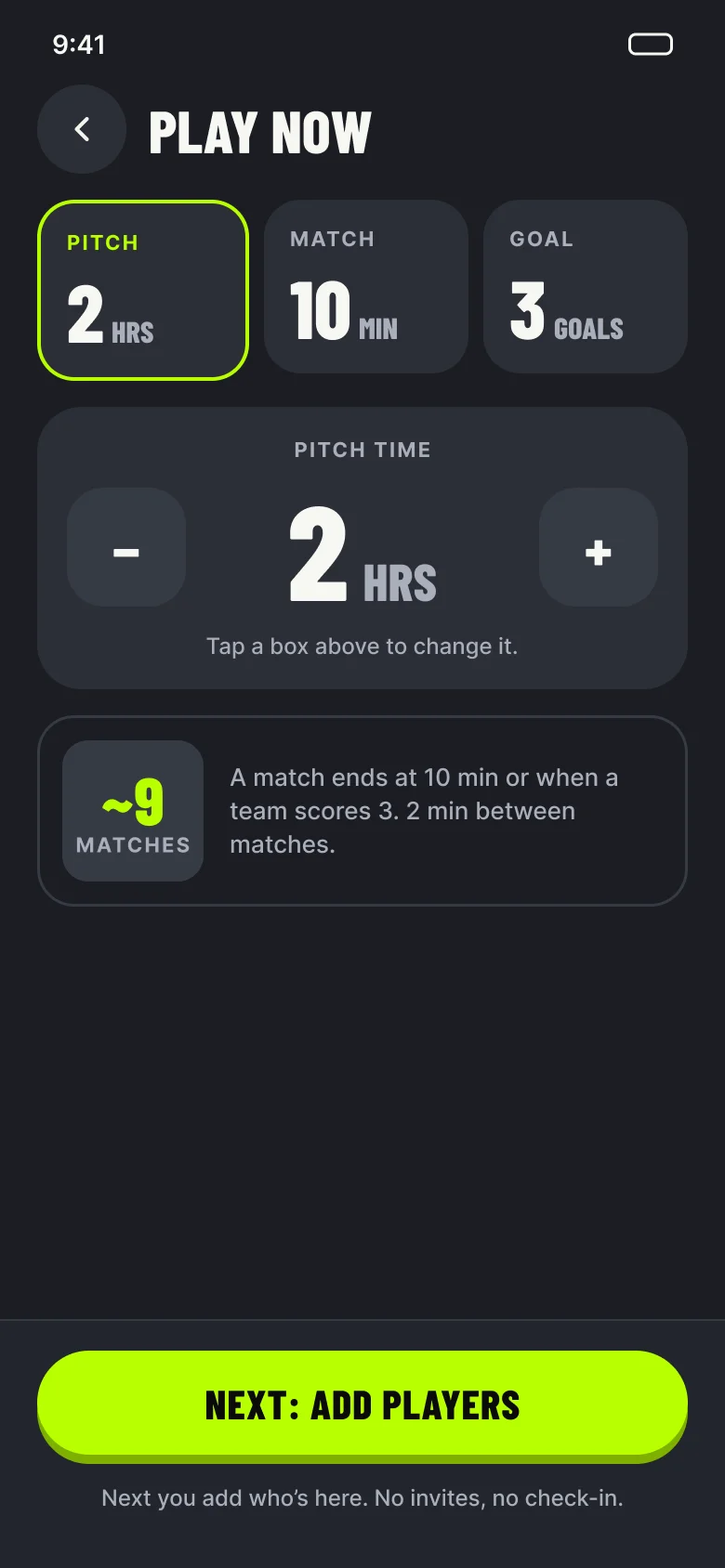
v3 tiles
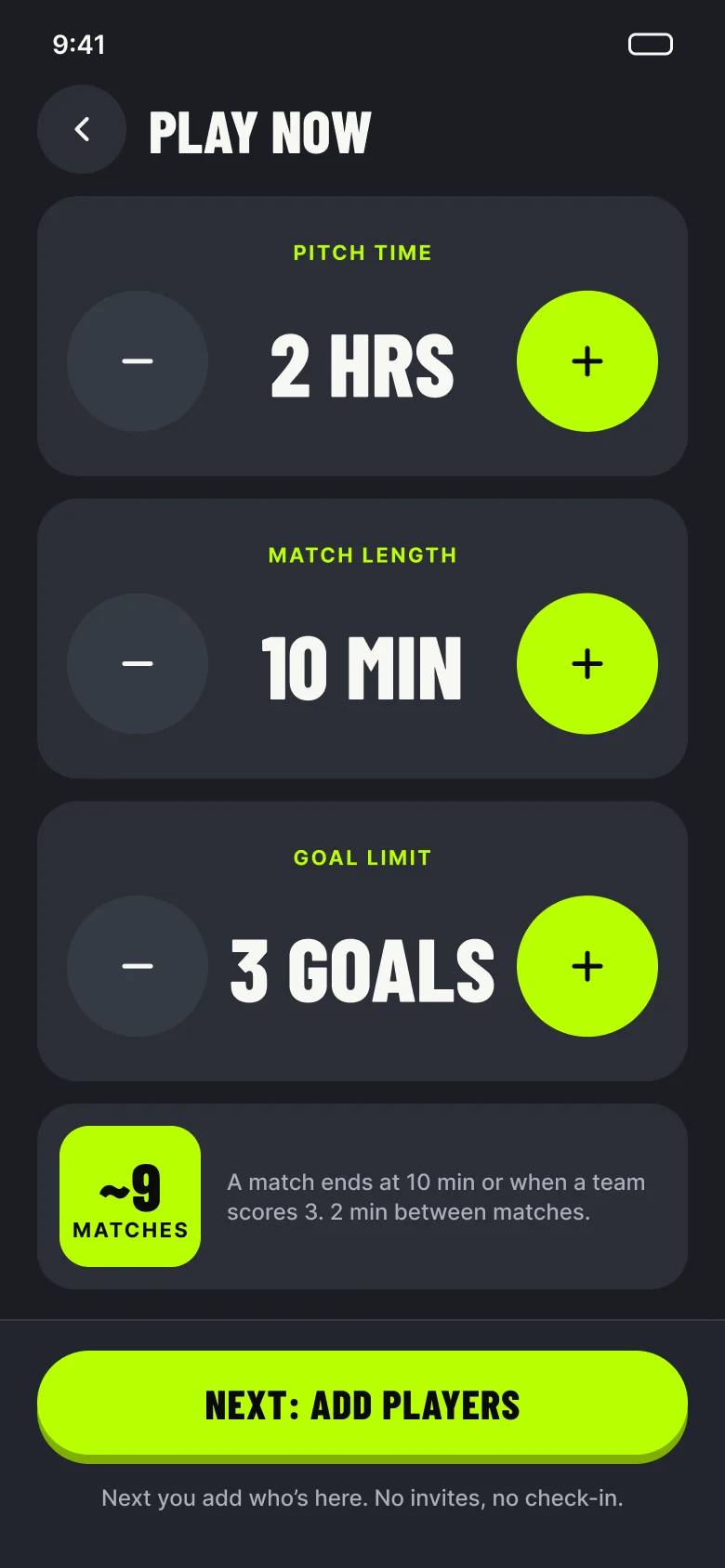
colour v3 lime accents
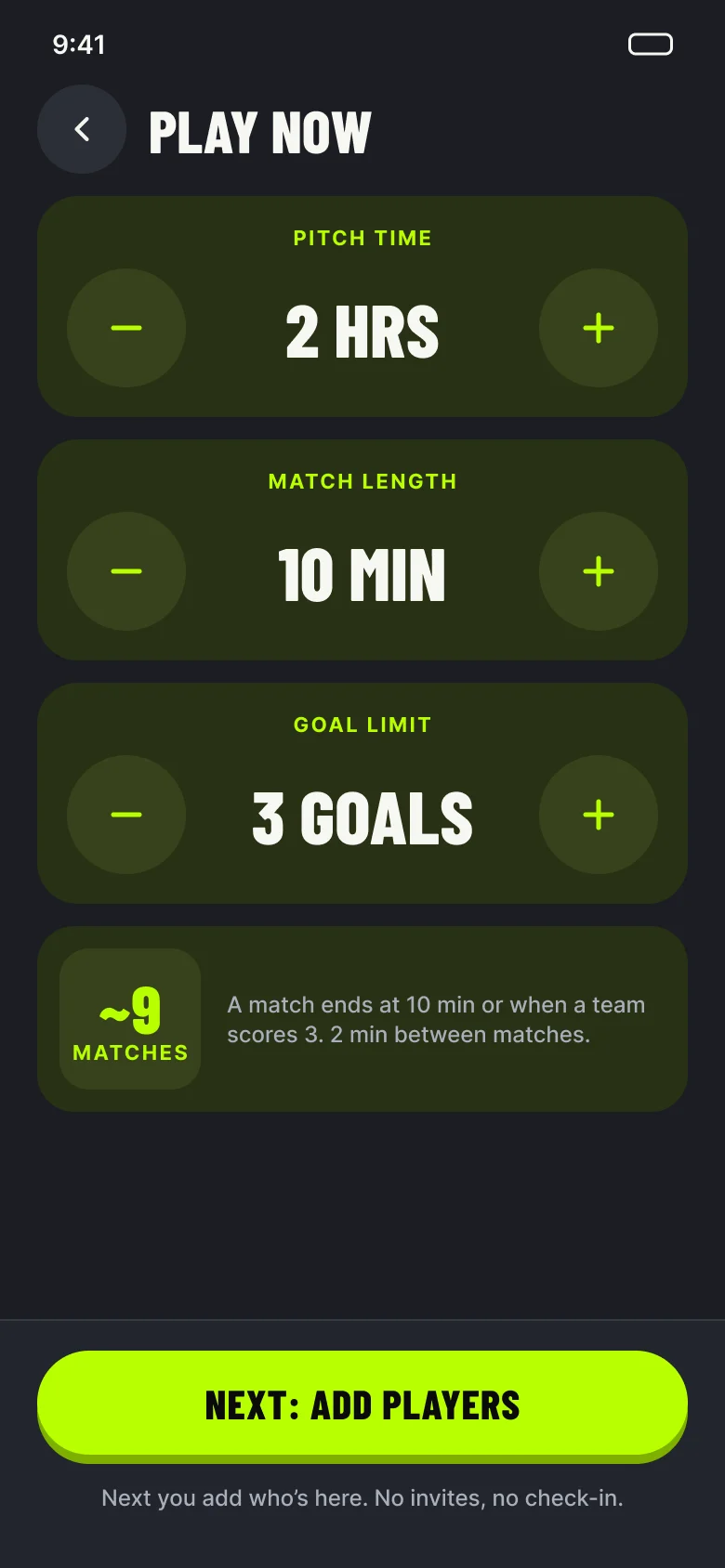
colour v3 lime tone
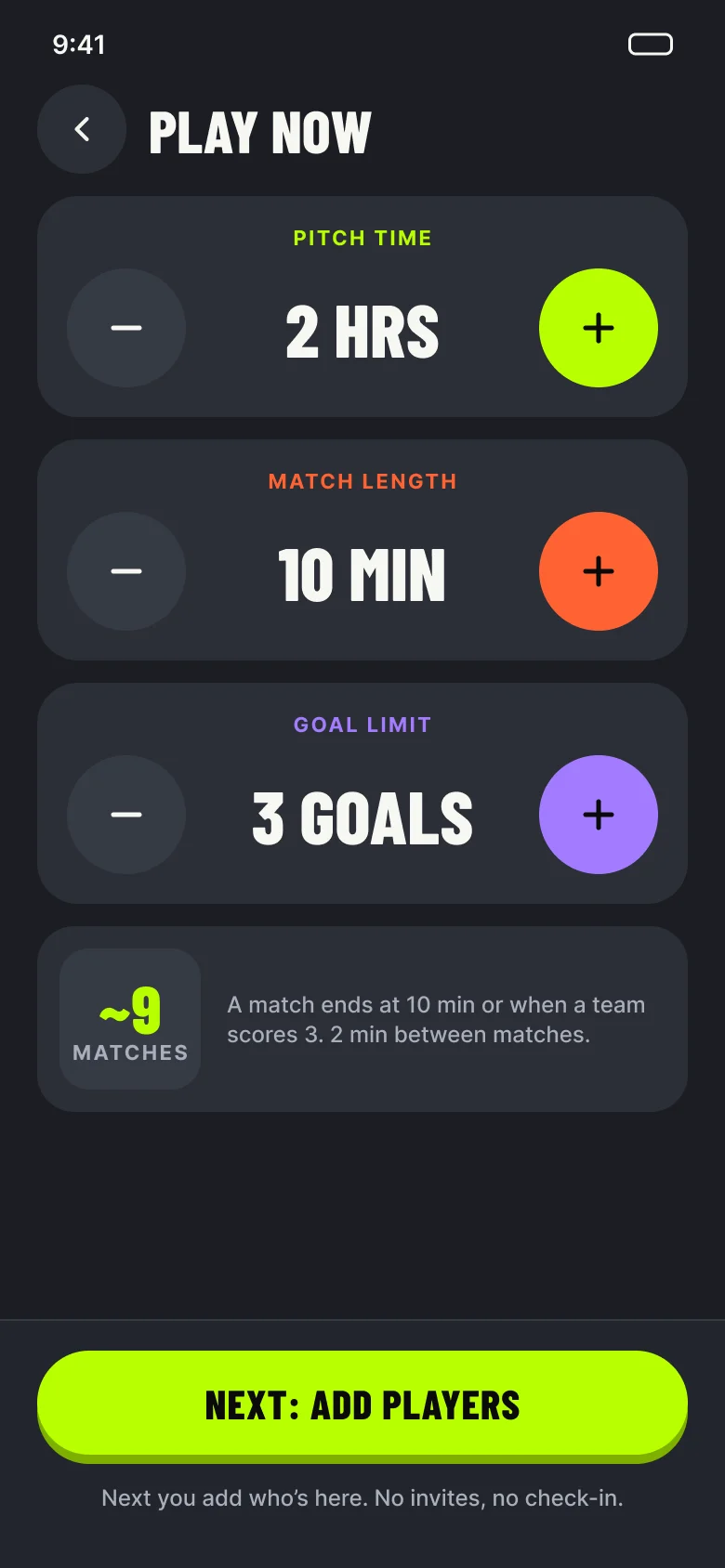
colour v3 one colour each
Final
I used the app on my own iPhone every day, first in Expo Go, then development builds, then TestFlight, with changes going out in minutes. More than 30 testers, friends and regulars from my games, joined real planned games and sent screenshots and screen recordings of problems, often with the problem circled. I also ran usability tests, watching people try to join with a code, and hosts ran real games and told me what they needed.
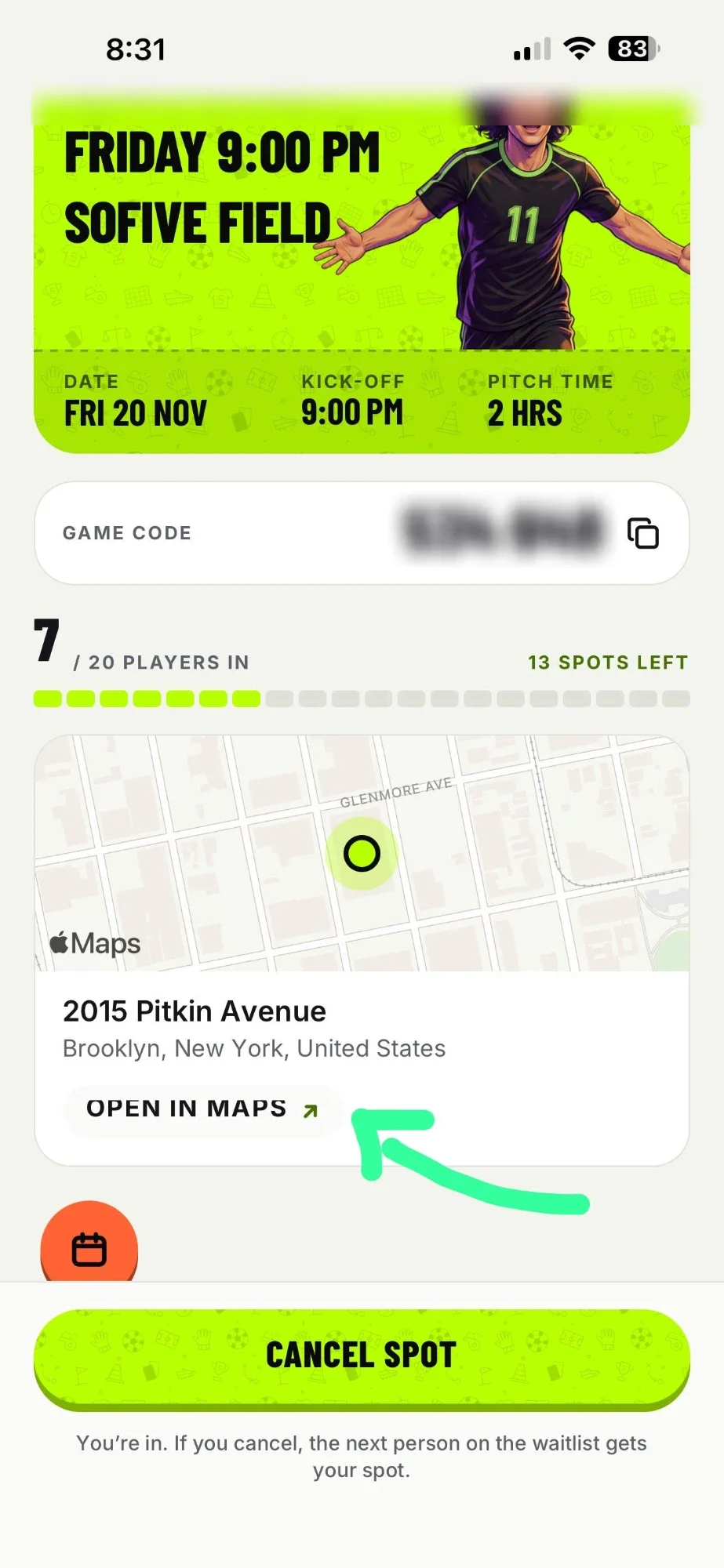
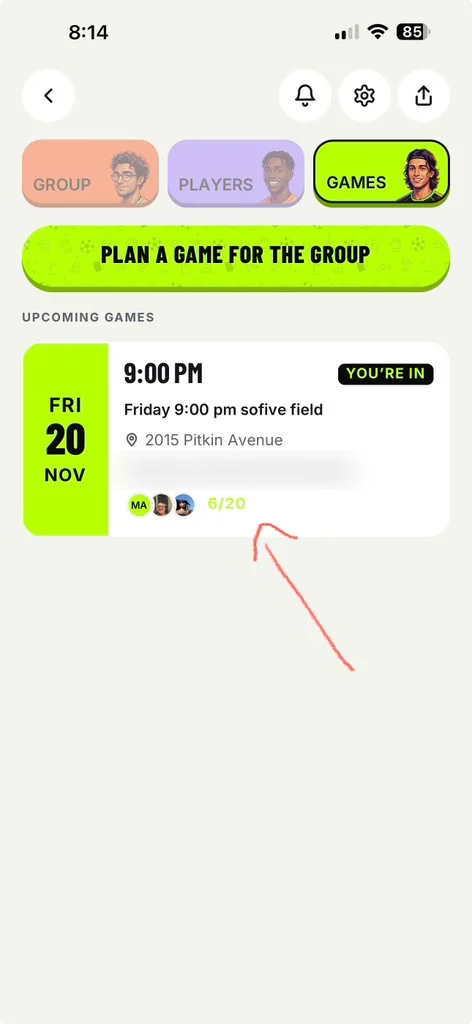
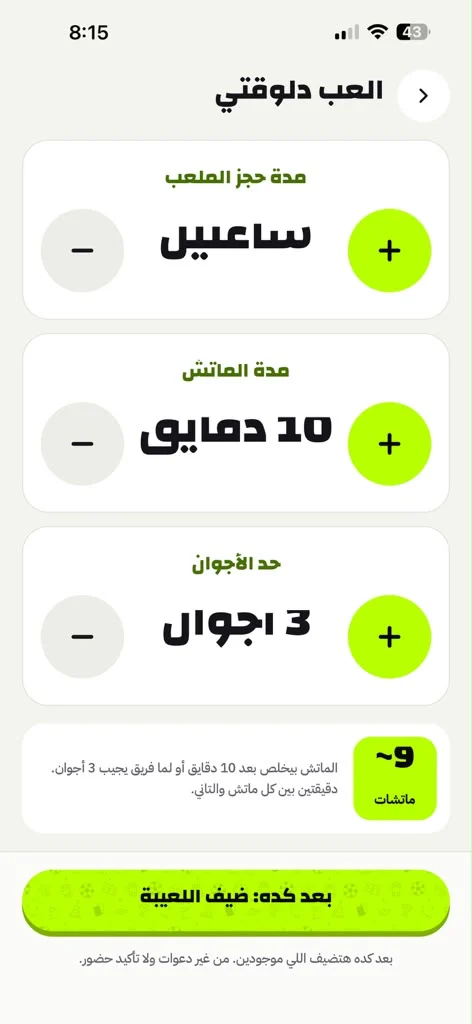
Screenshots from testing. Names and game codes are blurred.
A tester's iPhone 16 screenshot: the layout looked squeezed.
Layouts scale with the screen width everywhere.
A tester: every crew has a group chat of about 40 people.
Groups, with codes, links, invites, admins and game alerts.
Testers: most installs were 2 or 3 versions behind.
The app checks for updates at launch and shows a New version notice.
Usability test: people typed group codes into Join a game and thought it failed.
One Have a code? box for every kind of code.
A host: "I can't remove anyone who joined."
Remove from game, for the host and co-hosts.
A host: make teams as soon as the game is full, and send them out early.
Teams early: Make teams now or Later, then Send to players.
"A real keeper gives his team a big edge."
In-goal tiers and a keeper bonus in the balance.
Names too small, and "lots of people are called Mohamed".
Bigger names, full names, and a way to tell the same names apart.
Late arrivals changed the balance, but the teams didn't react.
Arrived, Didn't come, subs move up, and the balance label updates.
The keyboard covered the Location field.
Keyboard-aware forms across the app.
Lime text on white fails accessibility; buttons overflow at some sizes.
Readable colour variants, and buttons checked at 320 pt, Larger Text and Arabic.
Add pitch time only offered 15 or 30 minutes. "We usually add an hour."
A stepper from 15 minutes to 3 hours, starting at an hour.
Helper text under every option felt cluttered.
Helper text moved behind a small ⓘ.
Testers kept landing on old TestFlight builds. It was the most common issue, and led to the in-app update check.
Late arrivals, removals, extra pitch time, early teams. Hosts kept finding situations the first design didn't cover.
Screen sizes, Light mode contrast, Arabic type, a keyboard covering a field.
People don't know what kind of code they have, and they shouldn't have to.
The rules engine has 230 unit tests. A concurrency test has 20 people join at once, with the last spot claimed in one database transaction, and every screen is checked in Light, Dark, Arabic, 320 pt width and Larger Text before it ships.
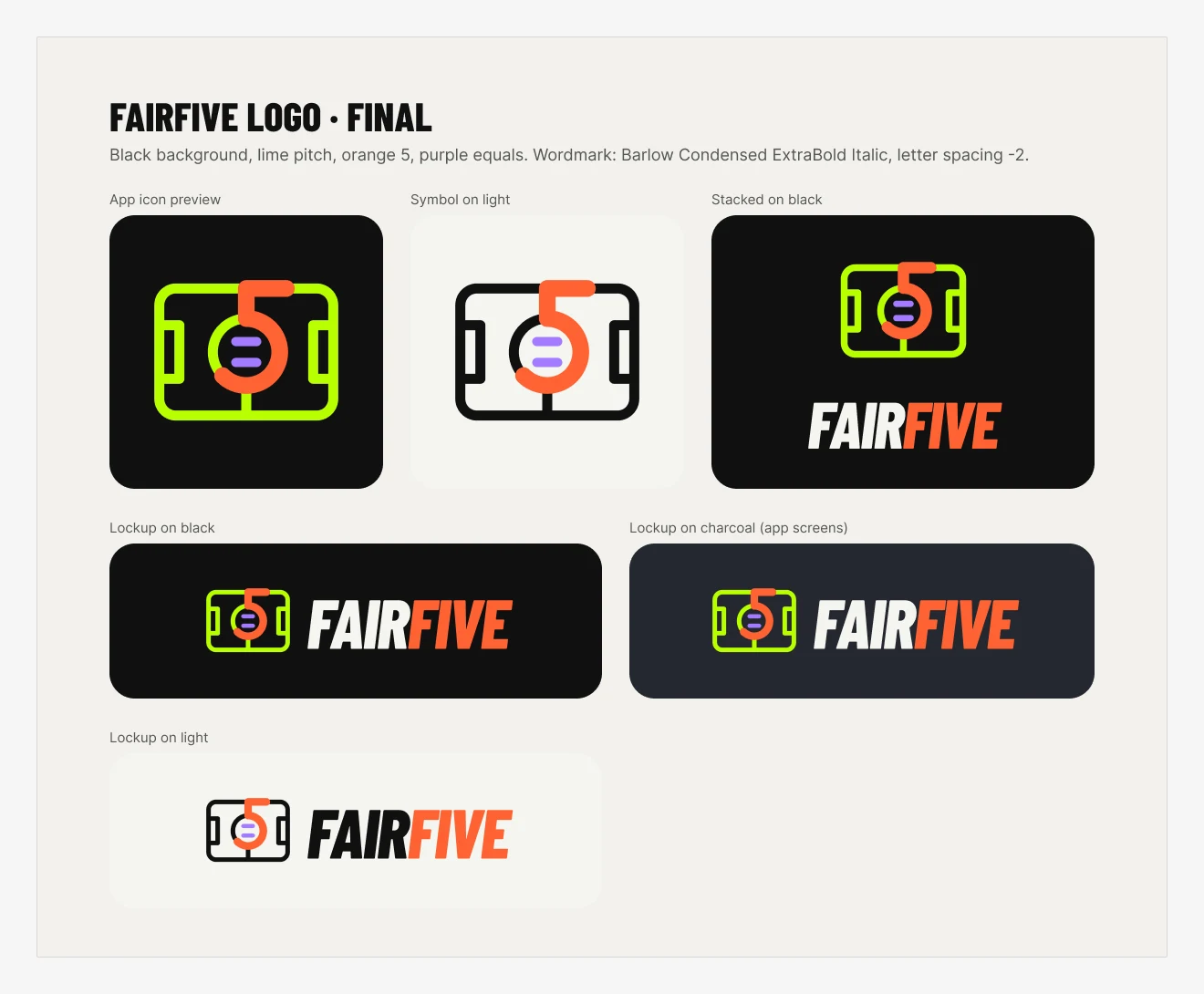
The working title was Pitchside. I renamed it FairFive because 5-a-side is the real target, and fairfive.app was available. The brand direction, "Matchday", came from my own mood board. Three ideas for the mark to start: a stopwatch ball for the fair clock, a number 5 shirt for five-a-side, and a pitch whose centre circle is an equals sign. The final mark combines the last two: the top touchline, the halfway line and half of the centre circle draw a 5, with the equals sign inside it.
07:42
Barlow Condensed · headlines, timer, scoresLoud, tall and condensed, so a timer reads from across the pitch.
Inter · body and labelsNeutral and legible at small sizes, for everything you read up close.
The app needed warmth for its big moments: welcome, you're in, teams ready, winners, loading. The style took four rounds to find.
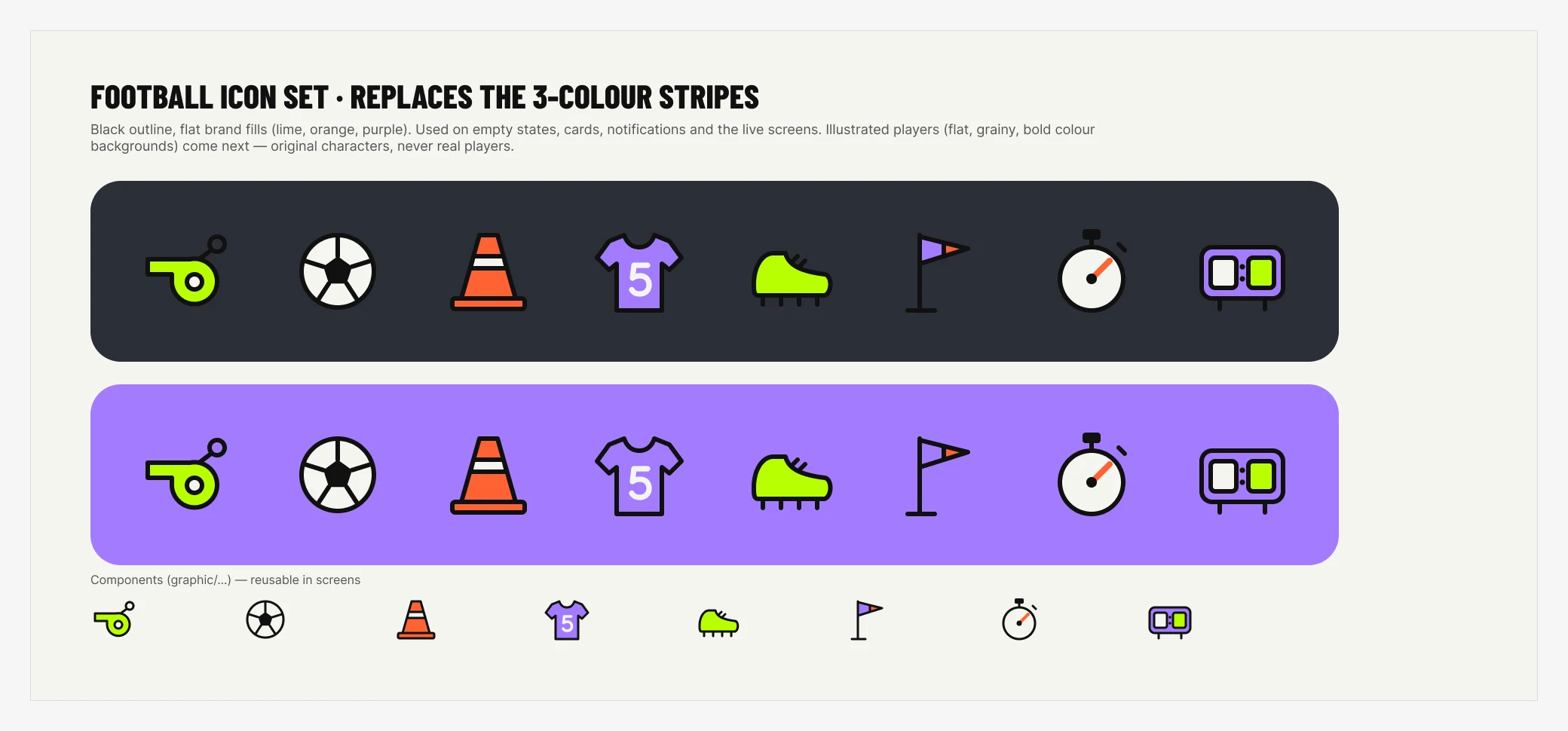
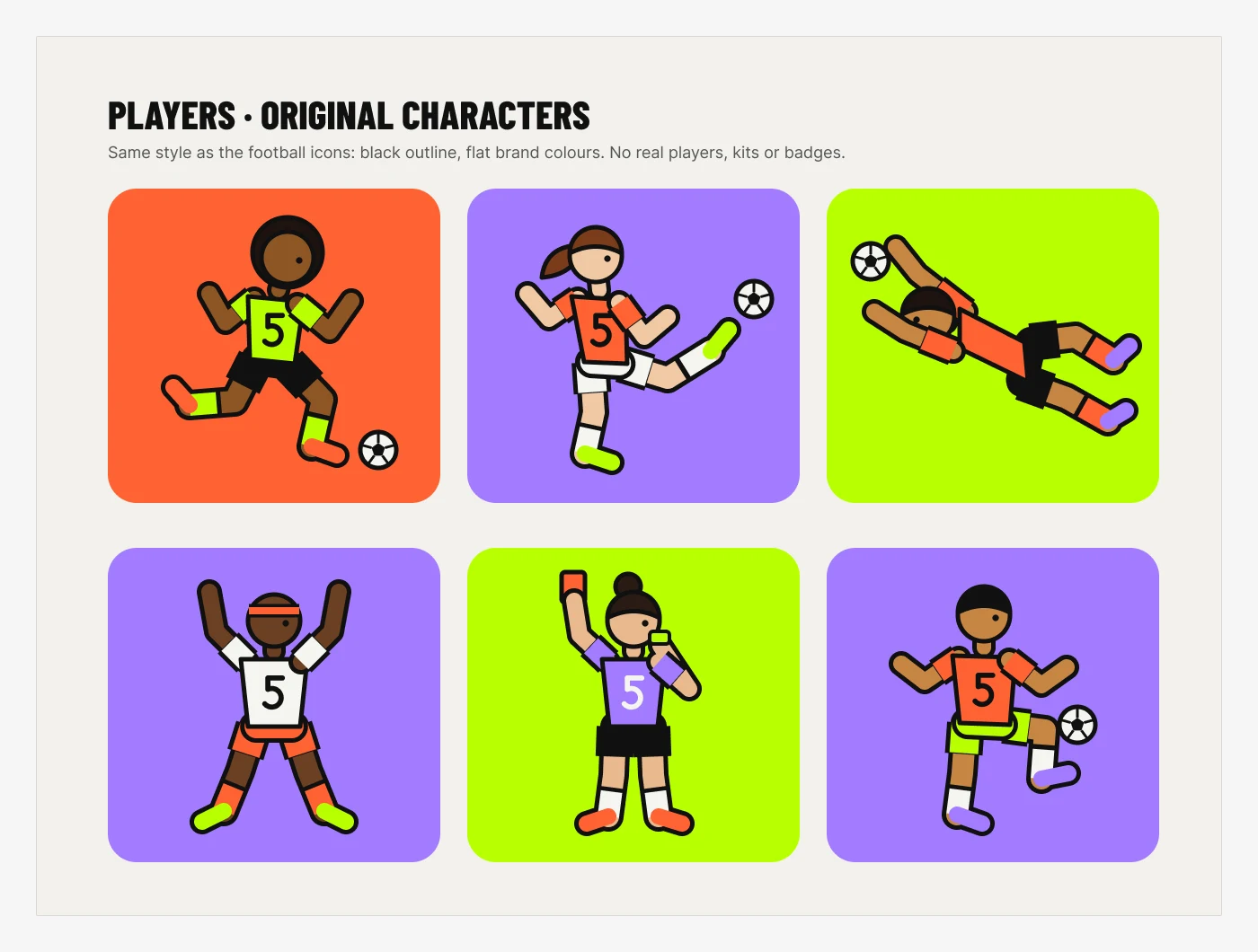
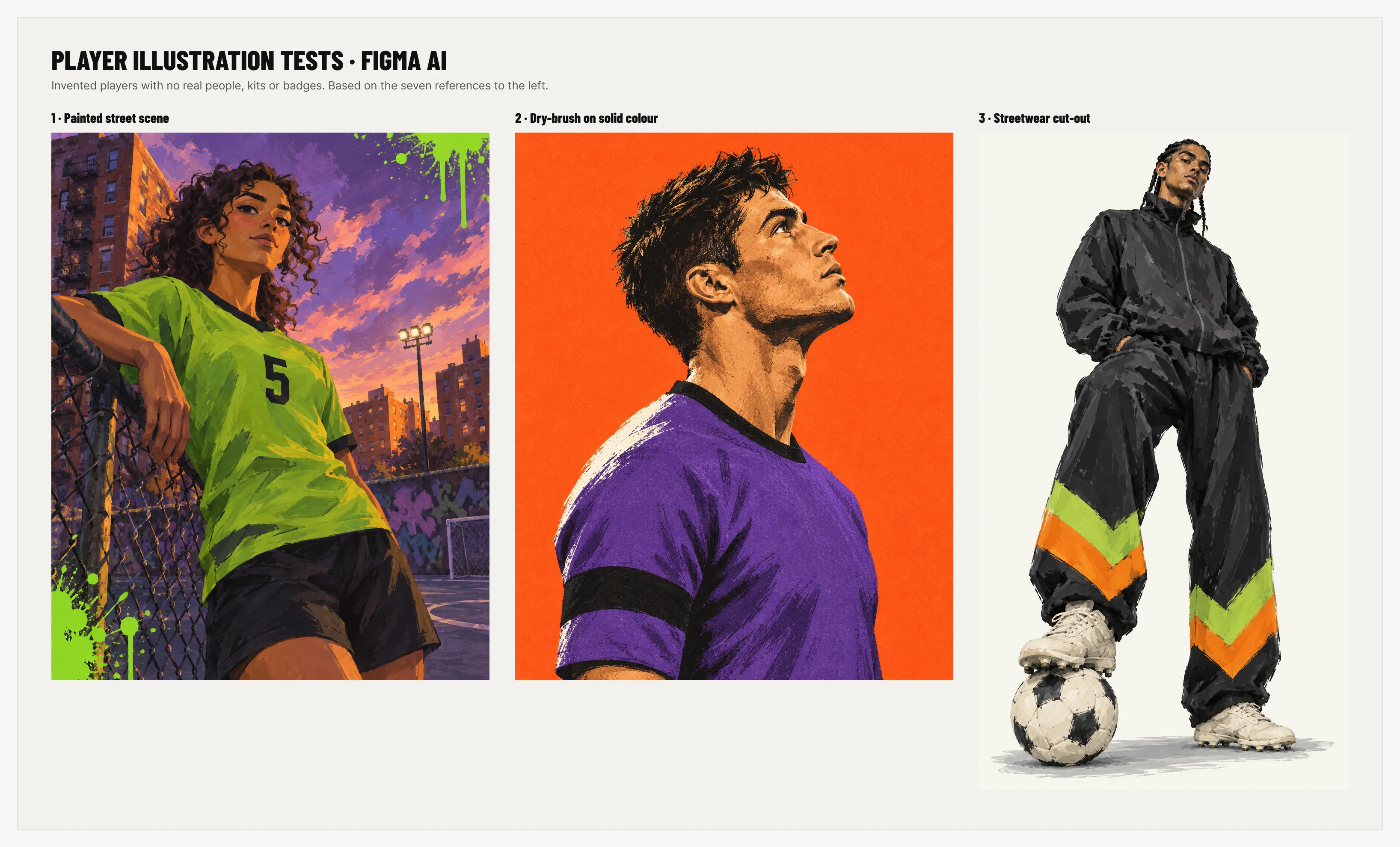
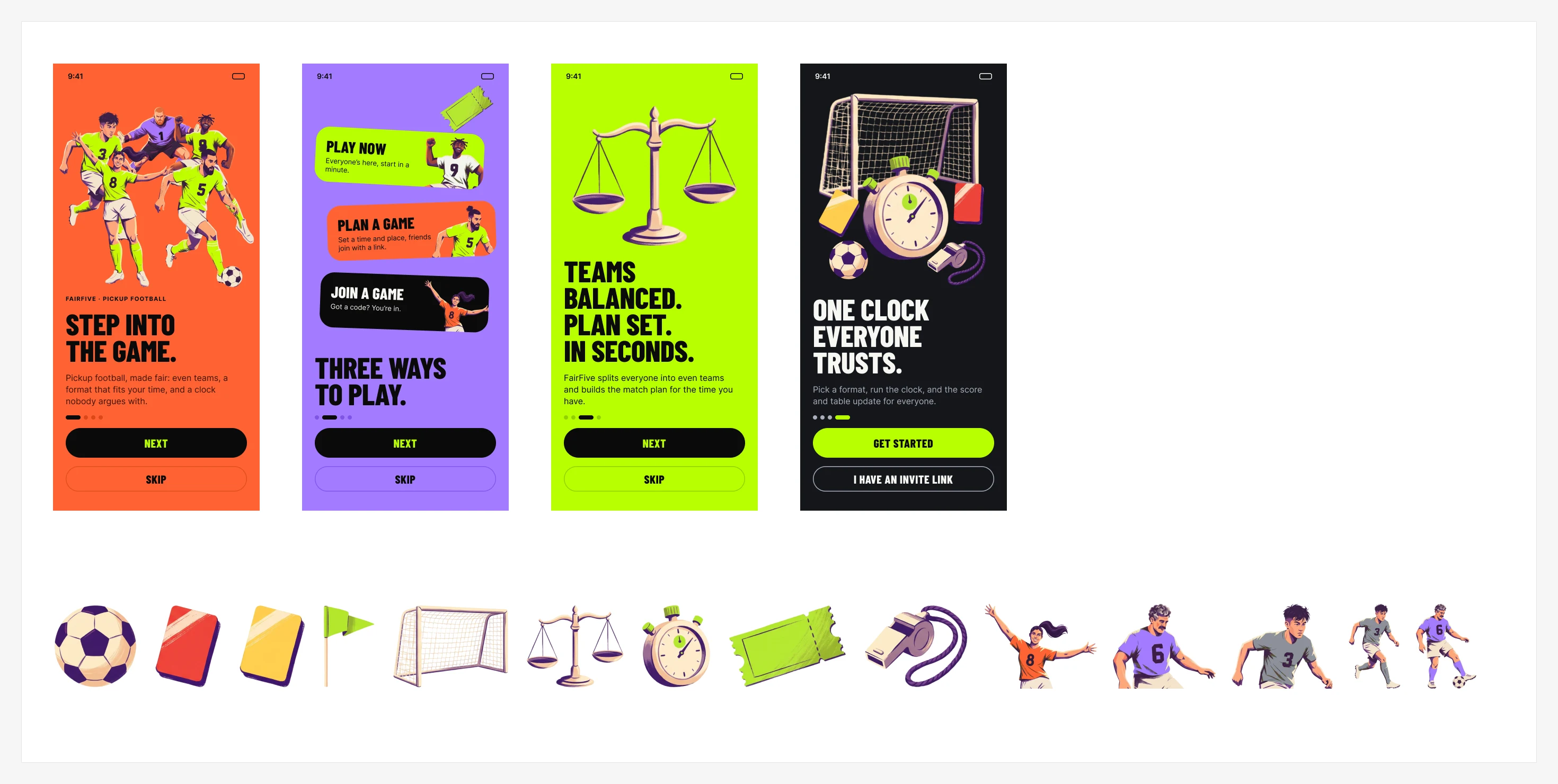
Early tests used caricatures of famous players. I dropped them: I didn't like the funny, naive feel, and real people raise rights questions. Pickup football isn't about stars anyway. The final cast is eleven invented, everyday players from the places pickup football is played, each with a job in the app.

Light mode uses warm paper and deeper colour for thin text. Egyptian Arabic runs right to left, with timers and scores kept in English digits and the names people type left untranslated.
I'm building FairFive on my own. No software engineers, no team: just me and AI. I make every product and design decision, direct the build, test it on my own phone every day, and ship the updates to testers.
The problem, personas, rules and fairness research, and the testing with 30+ people.
Eleven flows, the edge cases and the decisions log.
Four formats, uneven counts, late arrivals and the clock.
97 screens, components, Light mode and Arabic.
Logo, colour, type and motion.
The illustration style, the cast and the rules for using them.
Built and shipped solo with AI: 148 commits, 6 builds and dozens of updates to testers.
FairFive is built with Expo, React Native, TypeScript and Supabase. I build it alone, with AI (Claude Code) writing the code under my direction. The research, UX, UI, flows, brand, characters and the reasoning behind each decision are mine. Names, teams, pitches and scores in the screens are example data. The characters are invented and don't depict real people.